
A 7-Day Slow Travel Itinerary in Taiyuan | A Slow Travel Itinerary for Families and Retirees, Including How to Choose a Route at a Suburban Crossing
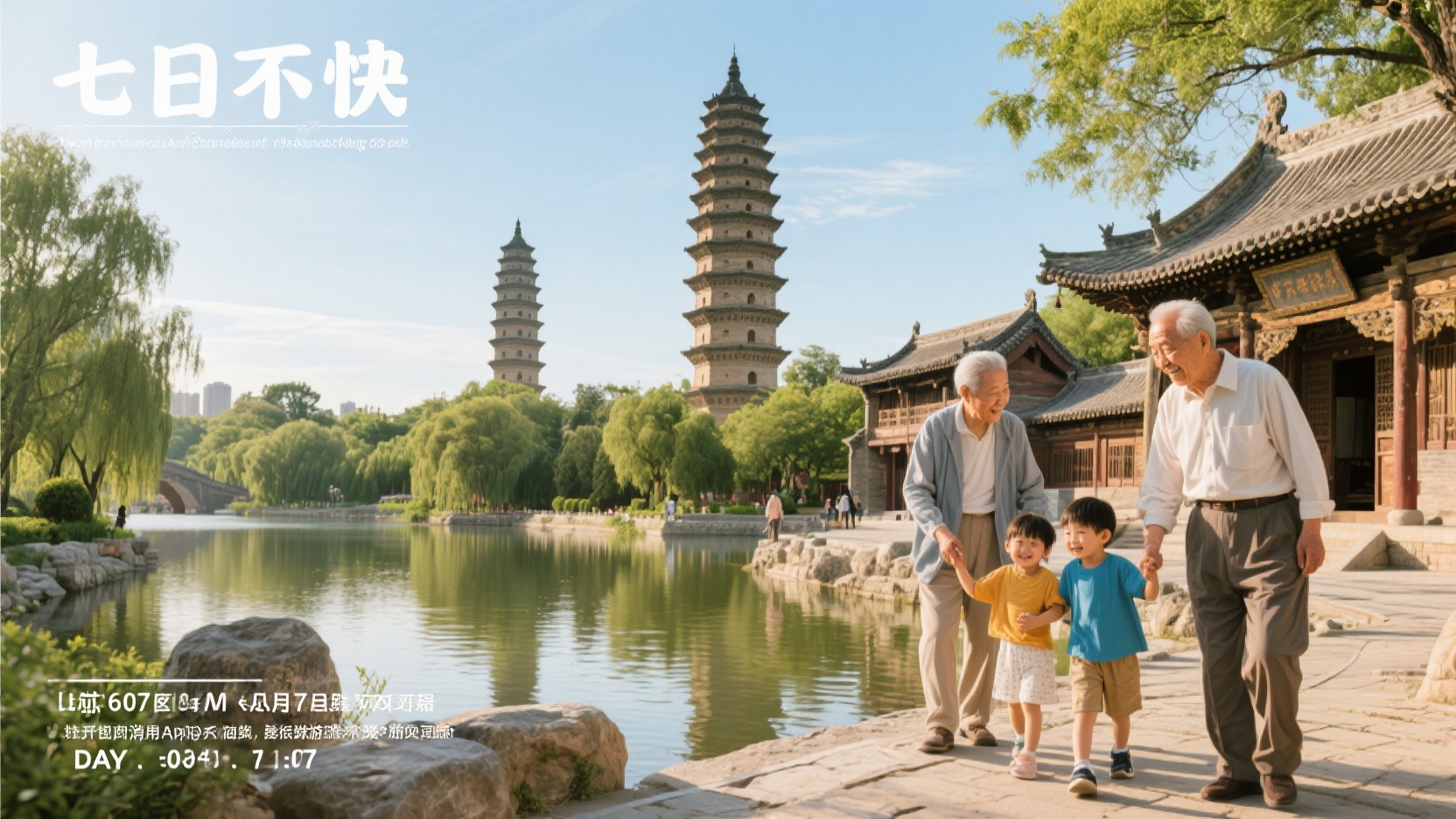
Splitting Taiyuan into seven days isn't about the number of places to visit, but about truly experiencing the slow pace of life, from the ancient cypress trees of Jinci Temple and the evening breeze along the Fen River to the nearby hot springs and ancient towns. The following itinerary assumes accommodation in Yingze District or Changfeng Business District, and only two to three key locations are selected each day, making it suitable for families, groups of children, and retirees taking time off work.
Day 1 | After landing, I only did two things: a walk on Zhonglou Street and a night cruise on the Fen River.
Arrive in Taiyuan in the afternoon and check into hotels in the Liuxiang-Zhonglou Street area. Zhonglou Street and the Food Street are within walking distance. Zhonglou Street is a renovated old commercial district with flat surfaces, suitable for strollers or elderly people walking slowly. In the evening, head to the Changfeng section of the Fenhe River scenic area or near Jifen Bridge to see the lights along the banks of the Fenhe River. Indoor attractions are not recommended; save your energy for the next day.
Day 2 | Dedicate the whole day to Jinci Temple
Jinci Temple is the most significant destination in Taiyuan. It's recommended to enter as soon as it opens in the morning, first visiting the Offering Hall, Fish Pond Flying Bridge, and Holy Mother Hall, then strolling leisurely through Jinci Park. The free area of Jinci Park is flat with many ancient trees, making it a good place to linger. Don't rush through Jinci; you can have lunch outside the scenic area. Return to the city in the afternoon to rest, and don't plan any activities for the evening.
Day 3-Day 4 | Choose one of the following: a suburban ancient town route or a hot spring nature reserve route.
This is the only part of the entire seven-day trip that requires a choice: if your companions prefer streets and city walls, choose Route A; if they want to relax and enjoy the mountains and forests, choose Route B. It is recommended to check the weather and opening status of both routes one day in advance.
Route A: Suburban Ancient Town Route: Day 3: Morning - Qinglong Ancient Town, Afternoon - Taiyuan Ancient County Town. The main street of Qinglong Ancient Town has a gentle slope, and the courtyards on both sides are worth seeing; there's no need to climb high. The city wall of Taiyuan Ancient County Town is relatively flat, but if elderly people have limited physical strength, they can choose to walk only a short section from the South Gate to the crossroads. Day 4: Morning - Jinyang Lake Park, Afternoon - Taiyuan Botanical Garden. The lakeside walking path around Jinyang Lake has no steep slopes, and the greenhouses and elevators in the Botanical Garden are friendly to those with mobility issues.
Route B: Hot Springs and Nature Reserve Route: Day 3: Morning: Tianlongshan Grottoes or Tianlongshan National Forest Park; Afternoon to Evening: Shentanggou Hot Springs. The mountain roads at Tianlongshan are winding; it is recommended to hire a car to the grottoes entrance and walk slowly along the scenic trails, avoiding continuous uphill climbs. Shentanggou Hot Springs can relieve the fatigue from the previous two days of walking. Day 4: Morning: Mengshan Giant Buddha; Afternoon: Fenhe Wetland Park. The Mengshan Giant Buddha trail is mainly gentle slopes, taking about two hours round trip. Fenhe Wetland Park is suitable for quiet sitting or bird watching before returning.
Day 5 | Shanxi Museum and Jin Merchants Museum
The Shanxi Museum requires advance reservations. In the morning, focus on the permanent exhibitions such as "The Hegemony of the Jin State" and "The Melting Pot of Nationalities." The museum has many rest areas, making it easy to manage your time. In the afternoon, visit the Jin Merchants Museum (formerly the Governor's Mansion), a collection of gardens and modern architecture. The route is short and gentle, allowing seniors to sit down easily. Lunch between these two visits can be had in the Jiefang Road area; it's not recommended to include a third attraction.
Day 6 | Twin Pagoda Temple and Old Town Confucian Temple
In the morning, the Twin Pagodas of Yongzuo Temple are a landmark of Taiyuan. The courtyard is flat, but the steps to climb the pagodas are quite steep. The elderly and children can skip climbing the pagodas and simply enjoy the twin pagodas and peonies from the courtyard. In the afternoon, depending on your energy, choose one or two of the following: the Confucian Temple, Chongshan Temple, and Chunyang Palace. All three are located in the old city and can be reached on foot or by a short drive. The temples and courtyards are quiet and suitable for leisurely exploration.
Day 7 | Only Yingze Park was left before returning home
If you have half a day after checking out, you can take a walk around the north gate area of Yingze Park. The walkway, lake, and scripture hall are all flat and the area is close to the train station. Don't plan a shopping trip; use the last half day as a buffer.
Gentle slope route suitable for the elderly and children
Prioritize Jinci Park, Jinyang Lake Ring Trail, Taiyuan Botanical Garden Greenhouse, Yingze Park, Changfeng Section of Fenhe Scenic Area, and the section of the trail in front of Mengshan Giant Buddha. These areas generally have no continuous steep slopes, well-paved roads, and a high density of rest benches. Note the following about Qinglong Ancient Town and Tianlong Mountain: While the main street of Qinglong Ancient Town is gentle, some courtyards have many thresholds; Tianlong Mountain Grottoes have many steps, but you only need to reach the platform.
Local frequently used apps list
Use "Taiyuan Metro" or "Chelaile" for subway and bus fares; use the official mini-programs of "Shanxi Museum" and "Jinshang Museum" for museum reservations; use "Didi Chuxing" and "Gaode Map" for taxis and car rentals; refer to "Gaode Map" for real-time location information on restrooms and accessible pathways. Before you go, take screenshots of the "opening hours" and "last entry time" for each location and save them.
Clothing suggestions for rainy and dry seasons
Taiyuan has a temperate semi-arid continental climate, with the rainy season concentrated in July and August. The dry season, spring and autumn, is windy with large temperature differences between day and night. During the rainy season, bring a folding umbrella and non-slip shoes, preferably sneakers with deep treads. The stone steps in mountainous areas like Tianlong Mountain and Mengshan Mountain become slippery after rain, so it's not recommended for the elderly or children to visit on rainy days. During the dry season, especially April to May and September to October, layer clothing is necessary: a windproof jacket in the mornings and evenings, and long-sleeved clothing in the afternoons. Winter is not the best season for leisurely travel; if you do visit, bring a down jacket, hat, and non-slip shoes, prioritizing indoor museums and hot springs.