
Avoid Paid Attractions in Quanzhou | Local Testimonial: Exploring Quanzhou More Than Any Guidebooks - Four Days Without Paying for Entrance Fees
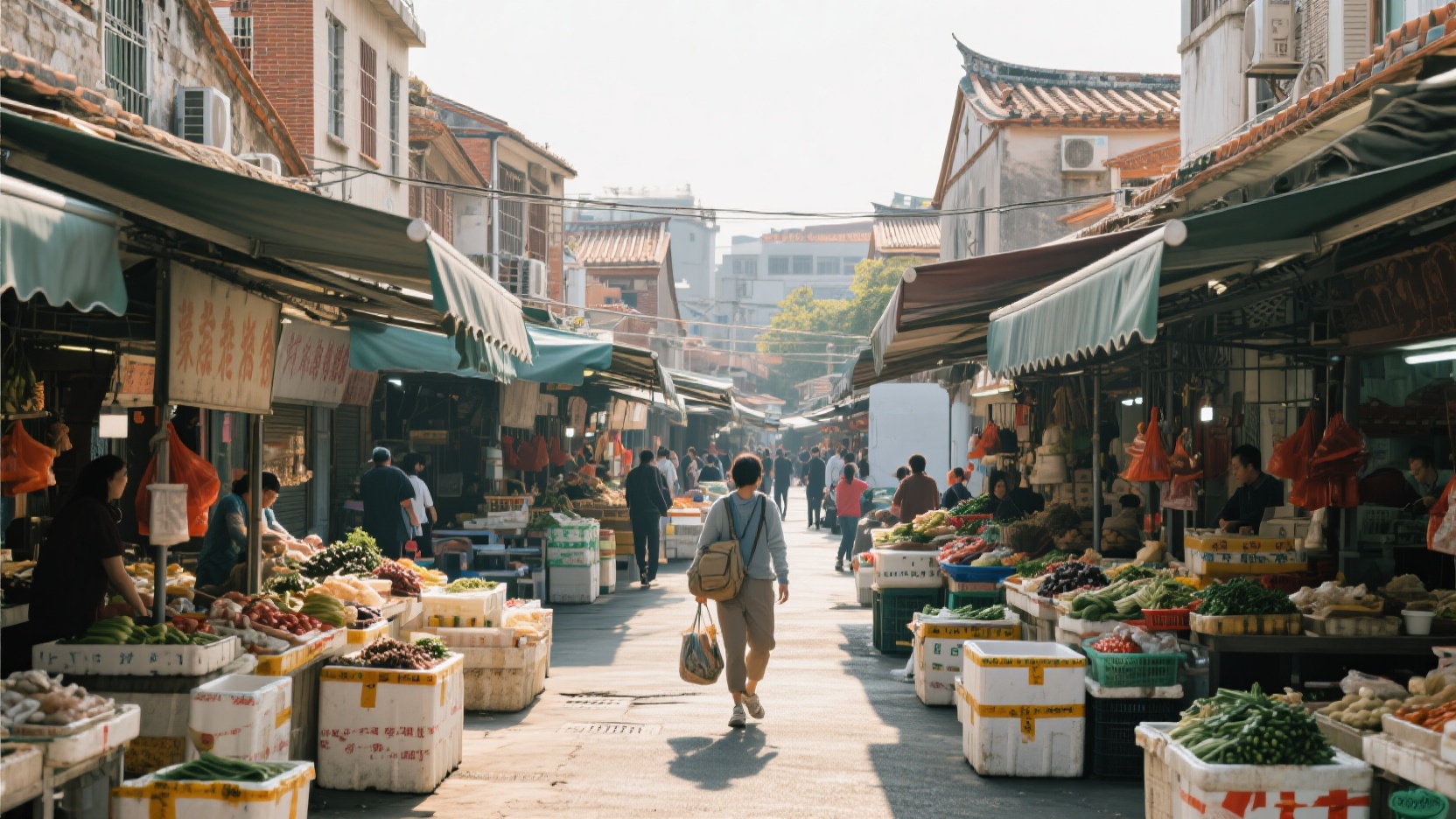
Spending your entire ticket budget in Quanzhou is a huge misconception about the city. Having lived in Quanzhou for over five years and traveled there at least twenty times, the last thing I'd recommend is queuing at paid attractions. This four-day leisurely itinerary avoids any ticket booths, relying solely on walking, shared electric scooters, and public transportation to fully experience Quanzhou.
Don't get me wrong, this isn't about budget travel and hardship; it's about subverting expectations. The true essence of Quanzhou lies in its farmers' markets, old alleyways, university back gates, and redeveloped old factory areas. Those ancient towns and museums that charge admission fees actually filter out the most vibrant parts. Come alone, switch scenes day by day, spend very little money, and follow the most popular local routes.
Day 1: Market Day, starting with the shouts and calls from the East Market.
Head straight to the "East Vegetable Market" after 7 a.m., and don't bother queuing up at those noodle soup stalls that've become popular through short videos. The freshly made fried rice cakes, deep-fried pork with vinegar, and peanuts still covered in mud in the market are far more convincing than the food streets in tourist attractions. You can eat as you walk for just a few yuan, and the vendors will even give you an extra half spoonful of soup if they see you're alone.
Under the arcades on the outer edge of the market, several dessert stalls have no signs, just a few low plastic stools. Order a bowl of seaweed jelly or mung bean soup, and listen to the next table chat about the renovation of the ancestral hall and fuel subsidies for fishing boats. There's no entrance fee, but every word spoken in Hokkien is like an oral history of the city.
In the afternoon, we continued strolling around the "Xinmen Street" area. Some old grain shops still retain their wooden cabinets and abacuses. Don't just look down at the map; the stained glass windows on the second floor of the arcade buildings and the shop signs above the doorways are often much more interesting than the shops on the ground floor. When you get tired, just pop into any Shaxian snack shop, and you can experience the local flavor for just a few yuan per person.
Day Two: Day in the Old Town's Alleyways - Turning off navigation actually prevents getting lost.
"The most charming part of Quanzhou's alleyways is the first Hokkien phrase you hear after you get lost." This isn't just a pretentious statement; it's a fact. Choose any alley near the Bell Tower, such as "Goldfish Alley," "Pei Alley," or "Old Inn," and without even using navigation, just head towards where the clothes are hanging out to dry.
These alleys lack a unified facade; brick and stone walls, oyster shell walls, and small temples that suddenly appear are all crammed together. Many old houses only have a plaque with the hall name hanging at the entrance, without any explanatory plaques, but if you stand still and look for a while, an old lady will come out and tell you why the house is called "a branch of a certain lineage".
In the evenings, keep an eye out for Nanyin music societies in the alleyways. They don't necessarily sell tickets; sometimes they just entertain themselves. Listening to a piece of "Straight into the Garden" from outside is a much more relaxing experience than paying to go to the theater. Afterward, walk back to the main street, have a bowl of beef soup, and you've spent almost nothing that day.
Day 3: University Surrounding Area Day – Students vote with their feet to find the real gems in the little shops.
Forget about squeezing into those "must-eat" lists; just take a bus to the back gate of Huaqiao University or Quanzhou Normal University. The food streets around the universities may not look fancy, but any stall that's survived for five years has its own loyal customers. Try a little of everything: fried pork with vinegar, Fuding pork slices, and four-fruit soup—it'll be more satisfying than a proper meal.
There are no entrance fees or designated routes here, only the flow of students after class. Just go into any shop that's full of electric scooters and boys in flip-flops. The owner might not be particularly welcoming, but the portions and prices are definitely worth the students' money.
If you don't feel like leaving in the afternoon, just grab a cheap milk tea and watch the students come and go. Hidden in the old neighborhoods surrounding the campus are a few secondhand bookstores and print shops; their storefronts are small, and you can occasionally find local publications. I wouldn't write a travel guide for these places, but these unexpected discoveries are what make travel feel like.
Day 4: Old Industrial Zone Renovation Day - Red Brick Chimneys Are More Attractive Than Instagram-Worthy Walls
The transformation of Quanzhou's old industrial areas is not just about creating "cultural and creative parks" for taking photos. "Yuanhe 1916" is a converted flour mill and hemp spinning mill, open to the public free of charge, with its red brick chimneys and old workshop steel frames still standing. Don't just crowd around the art museum's exterior; go inside and see the warehouses covered in vines and the unrenovated loading docks.
These spaces retain the raw texture of modern industry, telling the truth more honestly than many paid exhibition halls. You can see another timeline of Quanzhou: the once roaring machines, grain trucks, and female factory workers leaving get off work are now slowly being covered by cafes and studios, but the traces have not completely disappeared.
If you have enough time, you can also visit the "East Asia Window" area, which was converted from an old machine tool factory. It's quieter there, with fewer shops, making it perfect for daydreaming alone. The charm of the old factory isn't in producing the nine-square grid, but in the tactile feel of the red bricks when you touch them.
If you have an extra half day: Take the bus to the fishing port, but avoid the beach where they charge a washing fee.
Quanzhou is a coastal city, but you don't necessarily have to go to those well-equipped, paid beaches. Take a local bus from the city center towards the mouth of Quanzhou Bay, get off at any small town with a fishy smell, and the docks, mudflats, drying seaweed, and fishermen mending their nets will be the best scenery.
There are no lifeguards or changing rooms here, making it more suitable for watching the tides and fishing boats return than for taking photos in the water. Standing alone on the breakwater, listening to the Hokkien shouts carried on the wind, is much more comfortable than spending money to rent a parasol. Don't be too late on your way back; keep an eye out for the last bus.
In conclusion: This is the easiest way to play alone.
1. Don't book accommodation near the entrance of the scenic area. Choose accommodation near Nanjun Road or Xinmen Street in the old town. You can walk to the market and alleys, and the time saved is worth more than the transportation cost.
Second, for city transportation, shared electric bikes and buses are the preferred options. The roads in the old city are narrow, and taxis are often stuck in traffic near the Bell Tower; an electric bike is enough to travel for three days.
Third, when choosing a restaurant, look for places that are "full of local electric bikes parked outside, have outdated decor, and don't have a menu for tourists." The higher the restaurant's rating, the more likely you are to encounter a bad one.
Fourth, the best daily rhythm is to go to the vegetable market in the morning, the old alley or old factory area in the afternoon, and the back gate of the school in the evening, so as to avoid tour groups and the rush hour.
5. Don't bring too much equipment if you're traveling alone. A mobile phone, power bank, and collapsible water bottle are enough. The arcade can provide shade and shelter from the rain, so you can even bring less of an umbrella.
6. Ask less "Where are the fun places to go?" and more "What are you having for lunch?". The directions given by locals are often not in any travel guides, but they are definitely more authentic than those of popular tourist spots.