
Avoid Delicious Food in Quanzhou's West Street: A Local's Guide to Avoiding Pitfalls - Don't Be Fooled by Travel Guides!
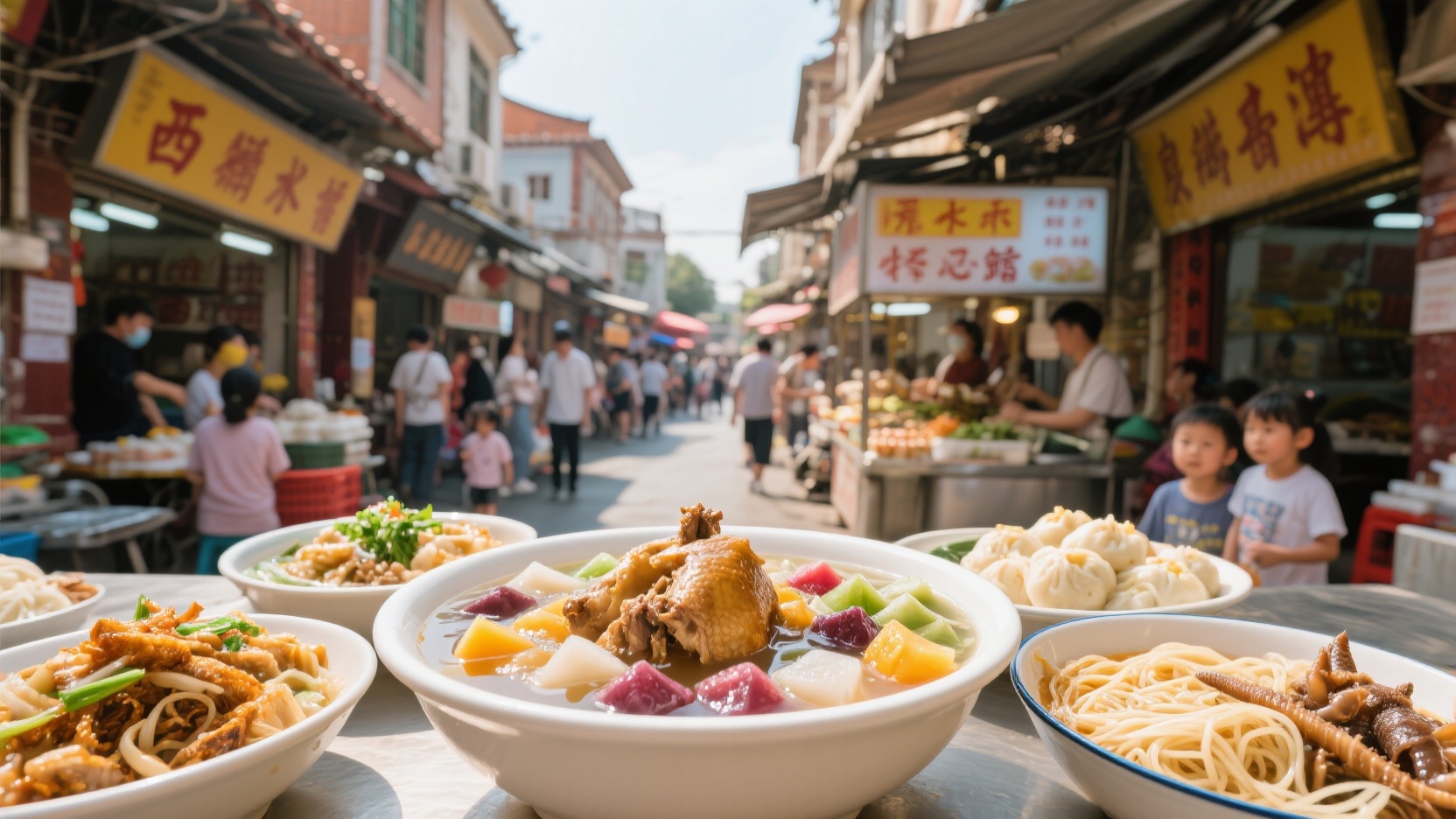
In Quanzhou, locals often quicken their pace when passing by those "must-eat" time-honored restaurants on West Street that always have long queues. It's not sour grapes; they genuinely don't want to pay inflated prices for tourists.
Having lived in Quanzhou for over five years and traveled there more than twenty times, I've eaten my way from the early morning noodle soup stalls in Shuimen Lane to the late-night ginger duck at Fuqiao. I know very well which shops rely on the phrase "traditional flavor" to survive. This article won't list the top ten must-eats; instead, it will debunk a few "must-eat" spots that are rarely visited by locals on online lists, and then give you a local's checklist from morning till night.
Let's start by talking about the five "must-eat" restaurants that locals rarely visit.
The first one is a "Minnan snack collection shop" on the main street of West Street. The signboard dares to list anything: oyster omelet, sea worm jelly, rice noodle soup, beef soup, all in one place. Locals basically avoid this kind of shop because the worst thing about Minnan snacks is "all-in-one". The soup base of the rice noodle soup is powdery, the vinegar pork is too soft, and the oyster omelet uses frozen pearls. The texture is like eating from a tourist food truck.
The second one is the "Centennial Meat Dumpling" near the Bell Tower. The dipping sauce is sickeningly sweet, and the glutinous rice is pressed as tightly as a brick. Biting into it doesn't feel like a meat dumpling; it's more like biting into a savory rice cake drizzled with syrup. Quanzhou meat dumplings should be loose yet not crumbly, with the glutinous rice soaked in meat juice but still having a grainy texture. This place does the complete opposite, and queuing for half an hour is definitely not worth it.
The third is a certain chain of ginger duck restaurants. Almost every online guide mentions it, but locals rarely go. The problem isn't the ginger, but the duck meat is tough and salty, relying heavily on dark soy sauce for color, leaving you thirsty until midnight afterward. The soul of ginger duck should be the slow-roasting of old ginger slices and duck fat, not a bowl of soy sauce-soaked duck.
The fourth type is the "freshly caught and cooked" food stalls by the sea. Many of these so-called "freshly caught" items are actually sourced from the market, and there are no clear prices listed when ordering, leaving room for negotiation by using the word "market price." Locals who go to the seaside for oyster omelets or steamed seafood will go to small, hole-in-the-wall restaurants near the fishing village that only serve two or three dishes, rather than going to ocean-view restaurants.
The fifth is a popular online chain selling "Four Fruit Soup/Seaweed Jelly". The ingredients are a mix of canned goods, and the seaweed jelly isn't handmade; it has a texture like jelly powder. The syrup is one-dimensionally sweet, lacking the clear, refreshing aftertaste of honey water or iced water. People in Quanzhou eat Four Fruit Soup wanting the seaweed jelly to have a slightly fishy smell and the syrup to be icy cold and not too sore.
Don't go to West Street in the morning, go to Shuimen Alley to eat rice noodle soup and fried rice cakes.
The rice noodle soup stall at the entrance of Shuimen Alley sets up before dawn. The broth is made by simmering pork bones and shrimp bran until it clings to the spoon without breaking. Freshly fried pork belly is cut into pieces and added to the soup, crispy on the outside and soaking up the broth inside. How to order without making a mistake: First, order "rice noodle soup with pork belly, pork intestines, and fried dough sticks." Ask the owner to cut the fried dough sticks into small pieces and soak them in the soup. Then sprinkle with white pepper and a spoonful of scallion oil. Don't be greedy and add too much seafood, otherwise the flavors will clash.
The manjiangao (fried rice cake) stall at the entrance of the nearby vegetable market is only open in the morning. The batter is spread on a round iron pan, sprinkled with peanut brittle or sesame brittle in the middle, and fried until a crispy crust forms around the edges. How to order without making a mistake: buy "half a manjiangao" with a piece of pickled radish, alternating between sweet and sour. Don't buy the pre-cut and packaged kind, as the sweetness becomes cloying after it softens.
For lunch, instead of the ginger duck near the Bell Tower, head to the floating bridge for freshly braised duck and beef soup.
The ginger duck specialty restaurant near the floating bridge uses only local free-range ducks, braised in a clay pot. The duck skin is sautéed in ginger slices until slightly curled, and the duck meat is juicy when torn apart. How to order without making a mistake: order half a duck and a bowl of white rice. Don't throw away the ginger slices; mixing them into the rice is the key. After finishing the duck meat, add broth to blanch vegetables. Don't add a lot of dried bean curd at the beginning, as it will overpower the flavor.
The beef stew and steak restaurant behind Qingjing Mosque on Tumen Street has been open for many years, specializing in Chinese-style curry steak, savory rice, and beef stew. The steak is bone-in and has tendons, and the curry sauce isn't the sweet Japanese style, but rather has a Minnan (Southern Fujian) spice flavor. How to order without making a mistake: order small portions of the steak, savory rice, and beef stew, and ask the owner to pour an extra spoonful of curry sauce over the savory rice. Don't pick out the ginger slices from the beef stew.
Don't be fooled by dessert shops for afternoon tea; the local market stalls are the real secrets.
The four-fruit soup stall next to the vegetable market in the old town offers agar jelly made by hand, resulting in uneven texture and a slightly yellow color. Two types of syrup are available: honey water and iced water. To avoid a bad choice: choose honey water as the base, and select agar jelly, taro balls, mung beans, and other toppings. Add less candied fruit and canned fruit, otherwise it will mask the natural sweetness of the agar jelly.
The stalls selling pickled radish and garlic sticks nearby have the best selection around 3 or 4 pm. The pickled radish slices are thin, sweet, sour, and crunchy; the garlic sticks are coated with sugar frosting and have a garlicky aroma, but not overly sweet. How to order without making a mistake: buy small bags of pickled radish, and choose short, plump garlic sticks. Don't buy too much at once; pairing them with a cup of Tieguanyin tea will prevent them from being too greasy.
Dinner and late-night snack: How to order oyster omelet and sea worm jelly from the fishing village
Small shops near fishing villages like Xunpu or Xiangzhi in Shishi serve oyster omelets made with sweet potato starch batter and large, plump oysters. The traditional method uses minimal eggs, frying until the edges are crispy. A safe bet: order a "sweet potato starch omelet" with less egg, served with sweet chili sauce and pickled radish, and a bowl of oyster soup. Avoid the version with a thick layer of egg covering the oysters.
To enjoy true sea worm jelly, you should have clearly visible sea worms and a slightly translucent, gelatinous texture, not a jelly-like consistency. Stalls in the alleys of the old town usually only sell a few varieties. A good guide: two small pieces per person, served with minced garlic and a little mustard. Eat the plain pieces first, then dip them in the sauce. Don't buy the large mixed boxes; the smaller portions are fresher.
In conclusion
Don't ask if it's spicy or not. Quanzhou snacks are very mild in spiciness, but the key is the pungent sensation from the white pepper powder and minced garlic.
Avoid going during mealtimes, as many hidden gem shops only open in the morning or afternoon and close after noon. If you go at noon, you're likely to be turned away.
Don't wear white clothes, as they are prone to splattering oil when eating rice noodle soup, ginger duck, or oyster omelet, especially when sitting on a low stool at a food stall.
Don't use reviews to find restaurants; the ratings for old restaurants in Quanzhou are generally not high. The way to find locals is to look for menus with only two or three items and owners who don't speak Mandarin.
Don't order the large portion; try the small portions at several different stalls. Quanzhou has a high density of snacks, and ordering a large portion will only make you miss the next one.