
Avoid these Nanjing accommodation pitfalls | Local testimonials: These 3 trendy spots are not worth staying at; these 4 are truly comfortable.
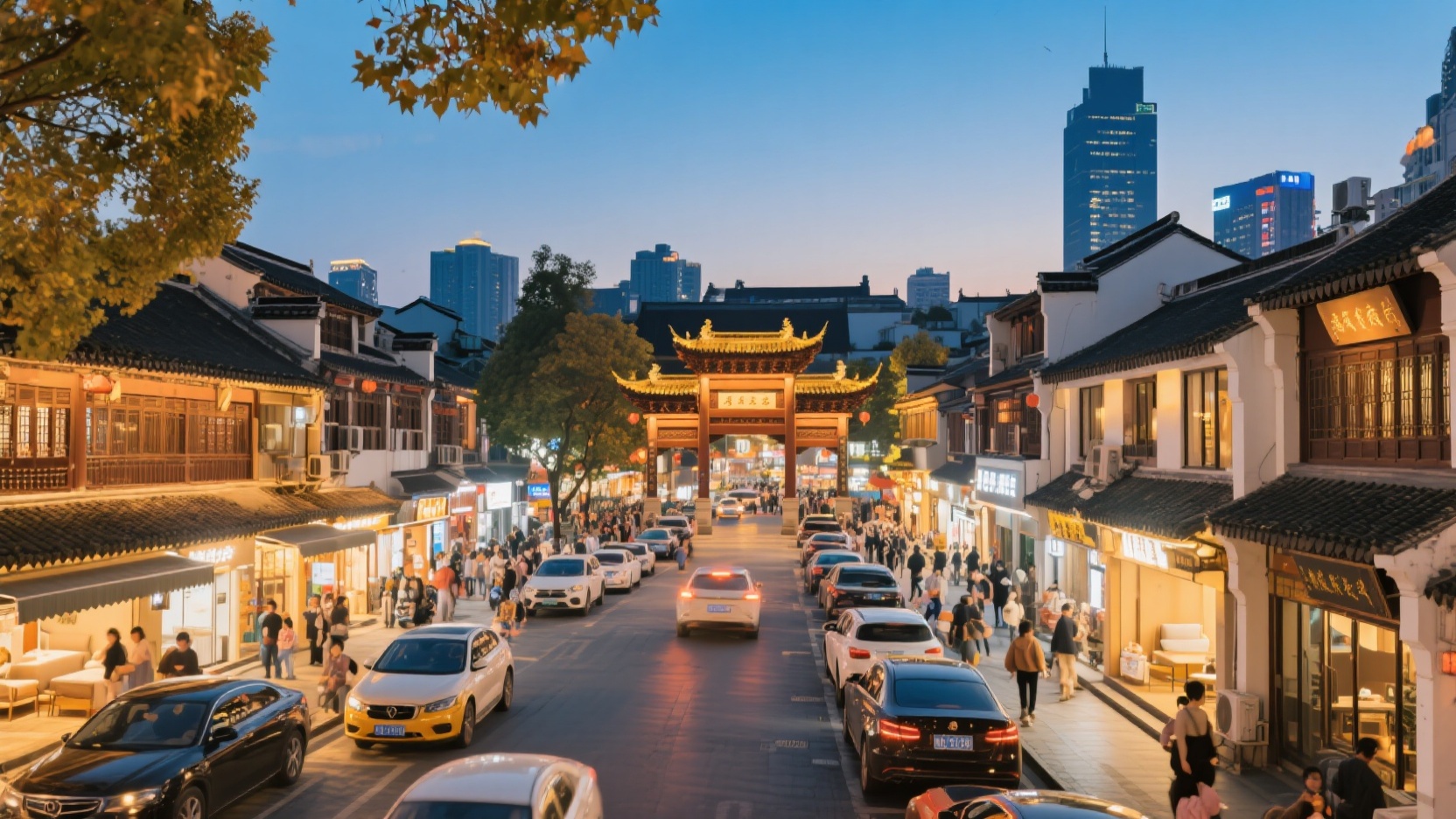
If you're about to book a hotel in Confucius Temple, Xinjiekou, or Laomendong, please hold on a second—a local who has lived in Nanjing for seven years can tell you definitively that these three areas are precisely the places we would least want our friends to stay.
The idea in travel guides that "staying near attractions is the most convenient" is actually a trap in Nanjing. Nanjing has a vast subway network, and the core attractions are scattered across the east, south, and north of the city. There's no single place where you can "sleep right at the entrance of an attraction" and cover all your travel needs. Ironically, the few core areas that are truly overcrowded by tourists suffer the most from noise, congestion, and difficulty hailing a taxi at night. This article won't list hotel names; it will only analyze from a local's perspective which areas are best to stay in and which areas truly deserve to be called "comfortable accommodations."
I. Confucius Temple Scenic Area and Surrounding Area: Close to the Qinhuai River, but too far from a good night's sleep.
Many travel guides list Confucius Temple as the top choice, citing its beautiful night view and proximity to the Qinhuai River. However, the actual soundproofing within the scenic area and along the riverside old houses is extremely poor. Even at 11 PM, areas like Wuyi Lane and Gongyuan West Street still have guided tours on boats, loud music from bars, and other noisy tourists. Dragging suitcases through the cobblestone streets and pedestrian areas can easily wear out the wheels, and taxi drivers frequently refuse to answer your calls.
Most importantly, Confucius Temple is not close to Sun Yat-sen Mausoleum, Ming Xiaoling Mausoleum, or Nanjing Museum. You might think you're staying in the core area, but getting to the eastern part of the city requires subway transfers and shuttle buses to the scenic spots, often taking more than forty minutes one way. Parking nearby is a disaster; on holidays, surface parking spaces are extremely scarce. Locals would rather arrange for their friends to stay in Sanshan Street or Jiqingmen than have them sleep in the scenic area.
II. Xinjiekou Core Business District: A commercial center by day, a noise center by night.
Xinjiekou has been marketed as the "center of the universe," and its more than 20 subway exits sound convenient. However, living here reveals a constant flow of traffic: unloading goods at shopping malls, early morning food delivery, and traffic on main roads. In particular, the older buildings enclosed by Zhongshan South Road, Huaihai Road, and Hongwu Road have poorly soundproofed windows, and construction and cleaning vehicles are still present after 10 p.m.
It's extremely difficult to get a taxi here during peak hours, and transferring within the subway station involves a long walk. For tourists, it's indeed close to Confucius Temple, Laomendong, and the Presidential Palace, but sacrificing a night's sleep for a mere ten-minute subway ride isn't worthwhile. Locals only come to Xinjiekou for shopping and dining and wouldn't choose hotels near these major roundabouts.
3. The popular guesthouse area of Laomendong/Xiaoxihu: romantic stone-paved streets, but a nightmare of dragging suitcases.
Laomendong and Xiaoxihu have been photographed in a very artistic style in recent years; the narrow alleys, old walls, and lighting are indeed photogenic. However, many guesthouses are hidden deep in the alleys, with insufficient lighting at night, navigation errors, and women walking alone back to their hotels can feel uneasy. The cobblestone streets are extremely unfriendly to suitcases, and become even more slippery on rainy days.
This area is packed with tourists during the day, but closes early in the evening. If you want to find something hot after 9 pm, you have to walk to Confucius Temple or Zhonghua Gate. The saying "tourist attractions are right outside your door" only applies to Laomendong itself; to get to other places, you have to walk a long way and then take a bus. Locals never recommend staying here, especially for first-time visitors to Nanjing or those with a poor sense of direction.
4. Daxinggong/Changjiang Road: The safest choice for first-time visitors to Nanjing
This is suitable for first-time visitors to Nanjing who want to include the Presidential Palace, the Six Dynasties Museum, and the 1912 Street in their itinerary but don't want to stay in a bar-themed accommodation. It's a few minutes' walk to the Presidential Palace, and easy access to Xinjiekou, Confucius Temple, and Nanjing Museum via Metro Line 2 or 3. To get to Sun Yat-sen Mausoleum, you'll need to go to Muxuyuan or Xiamafang for a shuttle bus; the whole trip takes about half an hour. Nearby Hongmiao, Kexiang, and Beitingxiang are full of local eateries, offering dishes like duck blood soup, pork belly noodles, and roast duck for tens to hundreds of yuan per person.
Returning to the hotel late at night feels safe; the main streets of Changjiang Road and Taiping North Road are well-lit, there are many 24-hour convenience stores, and the area remains lively but not noisy even after 10 pm. Regarding parking, many mid-range hotels have underground parking spaces, but the number is limited. The streets in the old city are narrow, so drivers are advised to check parking availability in advance.
5. Drum Tower/Hunan Road: Suitable for those who prefer a quiet environment but don't want to leave the old city.
This area is suitable for those who want to visit Nanjing University, Librairie Avant-Garde, Xuanwu Lake, or those traveling with parents who prefer a quieter environment. Gulou Station is a transfer point for Line 1 and Line 4. From there, it's about a walk or one stop to Xuanwu Lake, two stops to Xinjiekou, and about 15 minutes to Confucius Temple. A taxi ride to Sun Yat-sen Mausoleum takes about 20 minutes. While Hunan Road isn't as bustling as it used to be, Shiziqiao, Tongjiaxiang, and Matai Street still retain local favorites and eateries, with prices ranging from tens to hundreds of yuan per person.
The area is relatively safe late at night, with good security around Gulou Square and many people taking walks or jogging there. Parking is better than in Xinjiekou, with mid-range hotels having their own parking spaces, but some entrances are narrow, so large SUVs should exercise caution.
VI. Hexi Olympic Sports Center/Yuantong: A comfortable zone for families with children and those traveling by car.
Suitable for families with cars, children, concert attendees, or those seeking a spacious and quiet stay. While not close to old town attractions, Metro Line 2 provides direct access from Yuantong to Xinjiekou, Daxinggong, and Muxuyuan. A taxi ride to Sun Yat-sen Mausoleum takes approximately 25 minutes, and to Confucius Temple approximately 20 minutes. Nearby shopping malls like Huacai Tiandi and Renhengli offer a wide variety of restaurants with prices around 100 RMB per person, many catering to local families and less touristy.
The biggest advantage of this area is safety. The new town has wide roads, bright streetlights, and separate pedestrian and vehicle traffic, making it very safe to return to the hotel late at night. Parking is almost never a problem, as most hotels have ample parking spaces, and street parking is relatively regulated. The downside is that it's a bit far from the vibrant atmosphere of southern Chengnan, so those who want to stroll around Laomendong at night should consider the cost of taking a taxi.
7. Sanshan Street/Jiqingmen: This is a place for people who want to be close to the old city south but don't want to be drowned out by noise.
This place is perfect for those who want to experience the vibrant atmosphere of old Nanjing without being overwhelmed by the noise of Confucius Temple. It's about a 15-minute walk or one subway stop from Confucius Temple, about a 20-minute walk from Laomendong, and about a 10-minute subway ride from Xinjiekou. Nearby Jiqing Road, Laifeng Street, and Wufu Street are popular spots for locals who have grown up eating their way through Nanjing. There are numerous restaurants serving duck, potstickers, wontons, and noodles, where you can enjoy a comfortable meal for just a few dozen yuan per person.
The sense of security when returning to the hotel late at night was above average. There was traffic and streetlights on the main road of Jiqingmen Street, and some shops were still lit up after 10 pm. Parking was more convenient than in Confucius Temple. Some hotels had surface parking spaces, but there were many one-way streets around the old residential areas, so if it was your first time driving here, you should drive slowly if you follow the navigation.
In closing: Five things I didn't tell you, don't ask the locals.
1. Spring (March/April) and autumn (October/November) are the best months to visit Nanjing. Choose hotels in secondary core areas along subway lines; it's much more comfortable than staying near scenic area entrances. 2. For authentic Nanjing flavors, head to markets and residential areas. Avoid eating near the main gate of Confucius Temple, as it's expensive and you're likely to have a bad experience. 3. If driving, prioritize areas around Hexi and Jiqingmen. Parking in the old city south and Xinjiekou is far more difficult than you might imagine.
4. Traffic congestion and one-way streets are common in the old city on weekends. If staying near Daxinggong or Gulou, try to use the subway and don't overestimate the efficiency of taking a taxi. 5. When returning to your hotel late at night, avoid the deep alleys and nameless streets of Laomendong. Hotels along the main roads offer greater safety and convenience.