
Avoid these places in Jinhua | Don't be fooled by 3-day, 2-night itineraries, here's a local's list of places to avoid.
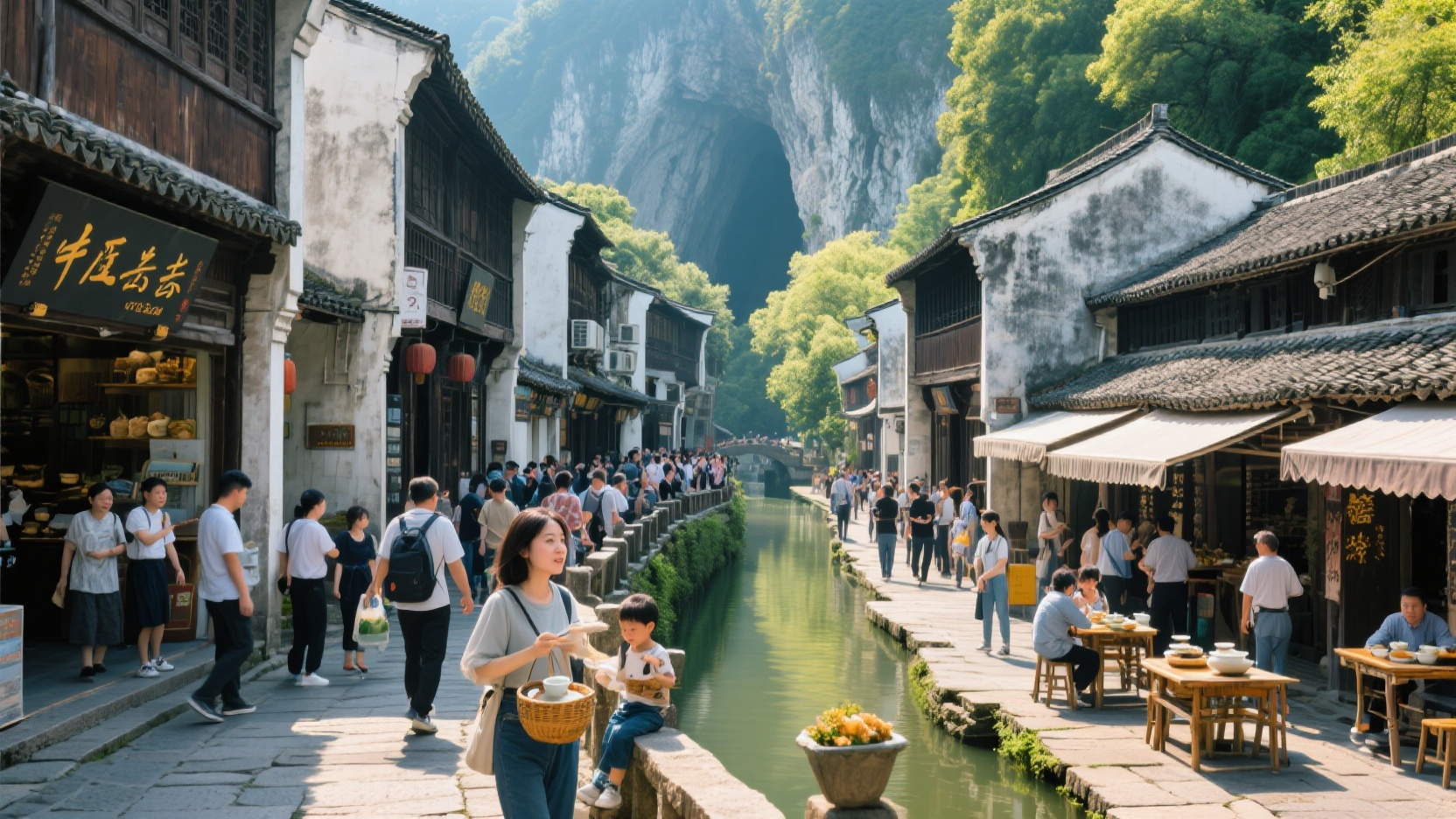
Having lived in Jinhua for eight years, I dread receiving screenshots of "Jinhua 3-day 2-night classic itinerary" from friends—because following that means spending two and a half days of those three days queuing, rushing, and eating half-finished meals. Don't rush to save those itineraries that cover four or five places in a day. Jinhua's city center isn't large, but its appeal lies not in the number of places you visit, but in whether you're willing to turn into a quiet alley with few tourists.
Online travel guides often compress Jinhua into "Shuanglong Cave + Ancient City + Youbu Morning Tea + Hengdian or Yiwu," which sounds comprehensive, but in reality, it's like rushing from one place to another. Below, we'll break it down item by item, pointing out which should be removed, which should be replaced, and which places locals would never even consider visiting.
Shuanglong Cave: It's not that it's bad, you just chose the wrong time.
The most dangerous thing about Shuanglong Cave is the tourist road after 9 am on holidays; the traffic jams starting from Luodian can be unbelievable. Especially on summer weekends, the stretch from the ticket office to the cave entrance can make you wonder if the entire Zhejiang province has come. The boat ride inside the cave only takes a few minutes, and half an hour is enough for a proper visit, but during peak season, waiting in line for two hours is common.
Locals typically head up the mountain before 7:30 AM, or even choose to go on a weekday afternoon to avoid the crowds. The cave is most beautiful after a summer rain when the water level is high, but this is also when the queues are at their longest. Winter is less crowded but colder. If you must go, focus on the Deer Lake and Twin Dragon Stream outside the cave; many people rush through the cave and leave, wasting the beautiful scenery halfway up the mountain.
Ancient City and Ten Thousand Buddha Pagoda: Don't follow the main street; turn into the alleys to find the best spots.
During peak season, Bayong Road is packed with people, and the shops along the street sell similar goods to those in other ancient towns across the country. Thirty minutes is enough to see Bayong Tower, and a photo of the Wanfo Pagoda from the outside is sufficient; buying a ticket to climb the pagoda is not worthwhile. The view from afar is much better than up close when the lights are on at night. At night, locals often set up tea stalls along the ancient city wall; sitting down for a cup of tea is more comfortable than queuing at the Wanfo Pagoda.
The truly worthwhile places to visit are the corners of Jiufang Lane and Xichun Lane, where traces of old Jinhua residents still remain, with local eateries and teahouses tucked away beneath residential buildings. Shiwang Mansion is more captivating than Bayong Tower; its architecture and gardens can be explored at a leisurely pace for an hour. Don't treat the ancient city like a commercial street; the proper way to experience it is to simply choose any alleyway and turn in.
Youbu morning tea, Hengdian World Studios, and Yiwu International Trade City: Three overestimated efficiency black holes
Youbu morning tea is often described as a "mini-Hong Kong in Jiangnan," but it's a long drive from downtown Jinhua, with queues starting at two hours on weekends. The food is mostly soy milk, pork belly dumplings, and chicken jelly, many of which are pre-made semi-finished products reheated. Locals only go there if it's on their way; they won't specifically get up early for it. For authentic breakfast, the established shops near the city's wet markets are more reliable, cheaper, and less risky.
Squeezing Hengdian into a three-day, two-night trip is even more absurd. You can only visit one or two scenic spots per day, and the time spent traveling in and out is wasted, essentially treating Jinhua city as a service area. Yiwu International Trade City is extremely unfriendly to ordinary tourists: it's huge, has limited retail, and is easy to get lost in. It's more practical to visit the Imported Goods Hall in Zone 5 or the International Restaurant Street. These three places aren't off-limits, but don't cram them into a three-day, two-night trip where they all waste time.
Remove these checkpoints and replace them with an hour for a local.
You can remove the plan to "go to Yanweizhou during the day to photograph the China Wuju Opera House." It's scorching hot and there's no shade during the day. Instead, take a walk along the Wujiang Greenway in the evening and watch locals fishing and flying kites—it's a more authentic glimpse into daily life in Jinhua than just checking off tourist spots. I don't recommend taking a Wujiang River cruise during the day; it's sunny and boring.
Alternatively, you could abandon the expectation of "treating Huhaitang like a mini West Lake" and instead climb Jianfeng Mountain to the halfway point pavilion, where you can overlook Jinhua city in forty minutes. On rainy days, replace these outdoor spots with the Jinhua Museum or the Jinhua Ham Museum—less crowded, free, and you can learn about Jinhua's geography and history. The beauty of Jinhua often lies in these quiet little places where you don't have to queue.
Indigenous Optimized Version: 3 Days 2 Nights + 1 Day Flexible Alternative
Day 1: Explore the ancient city. Arrive near the ancient city before 8:00 AM, have breakfast around the market, then stroll through Jiufang Lane, Shiwang Mansion, and Bayong Tower. Have local stir-fries for lunch in the Shengli Street area. In the afternoon, visit the Jinhua Museum or Wuzhou Kiln. In the evening, take a walk along the Wujiang River and have Jinhua hot pot at a restaurant downstairs in a residential area.
The next day, hike up Jinhua Mountain. Arrive at Shuanglong Cave before 7:30 AM, descend the mountain at noon to visit Zhizhe Temple or Lunu Lake, then go to Huang Daxian Ancestral Temple in the afternoon, and return to the city in the evening. On the third day, choose between Lanxi and Wuyi: have beef noodles and visit Zhuge Bagua Village in Lanxi city, or go to Wuyi for a hot spring bath but don't stay overnight. Leave a flexible day for Yiwu's international restaurant street, Wuyi Ancient Village, or an indoor museum on a rainy day. Don't spend three consecutive days hiking outdoors; the pace in Jinhua is half a day exploring and half a day relaxing.
10 things you shouldn't do in Jinhua
1. Do not drive to Shuanglong Cave after 9:00 AM on weekends; 2. Do not wait in line for more than 20 minutes at Youbu morning tea; 3. Do not buy a platter of freshly sliced ham and candied fruit from the main street of Guzicheng as a souvenir; 4. Do not consider buying a ticket to climb Wanfo Pagoda as a must-do.
5. Don't live near Yiwu International Trade City hoping for convenient market access; 6. Don't believe the claim that "half a day is enough to get to Jinhua city center"; 7. Don't climb Jianfeng Mountain at noon in the summer, even the locals stay at home.
8. Don't go out of your way to queue for the popular Jinhua hot pot; it's safer to go downstairs in a residential area. 9. Don't eat overpriced set meals on the Wujiang River cruise ship. 10. Don't go to the ancient village's stone-paved roads during the rainy season; they're slippery and stuffy.
In conclusion
Five tips locals didn't tell you: The best time to visit is from mid-October to mid-November, when the osmanthus and ginkgo trees are in full bloom and the weather is stable; March and April are rainy, but the misty rain over the ancient city is more beautiful. Don't combine Shuanglong Cave and Jianfeng Mountain on the same day if you're traveling with elderly people or children.
Locals only recognize the old, established breakfast shops near the market, regardless of the size of the signboard. In the city center, shared electric bikes or buses are sufficient; for trips to Lanxi and Wuyi, intercity buses are an option. Finally, don't ask "Where is the most worthwhile place to go?", ask "Would you go there right now?"