
Don't go to bed early on the Wujiang River at night | A recommended 5-hour night tour route in Jinhua during spring and autumn, from riverside lights to Wuju opera teahouses.
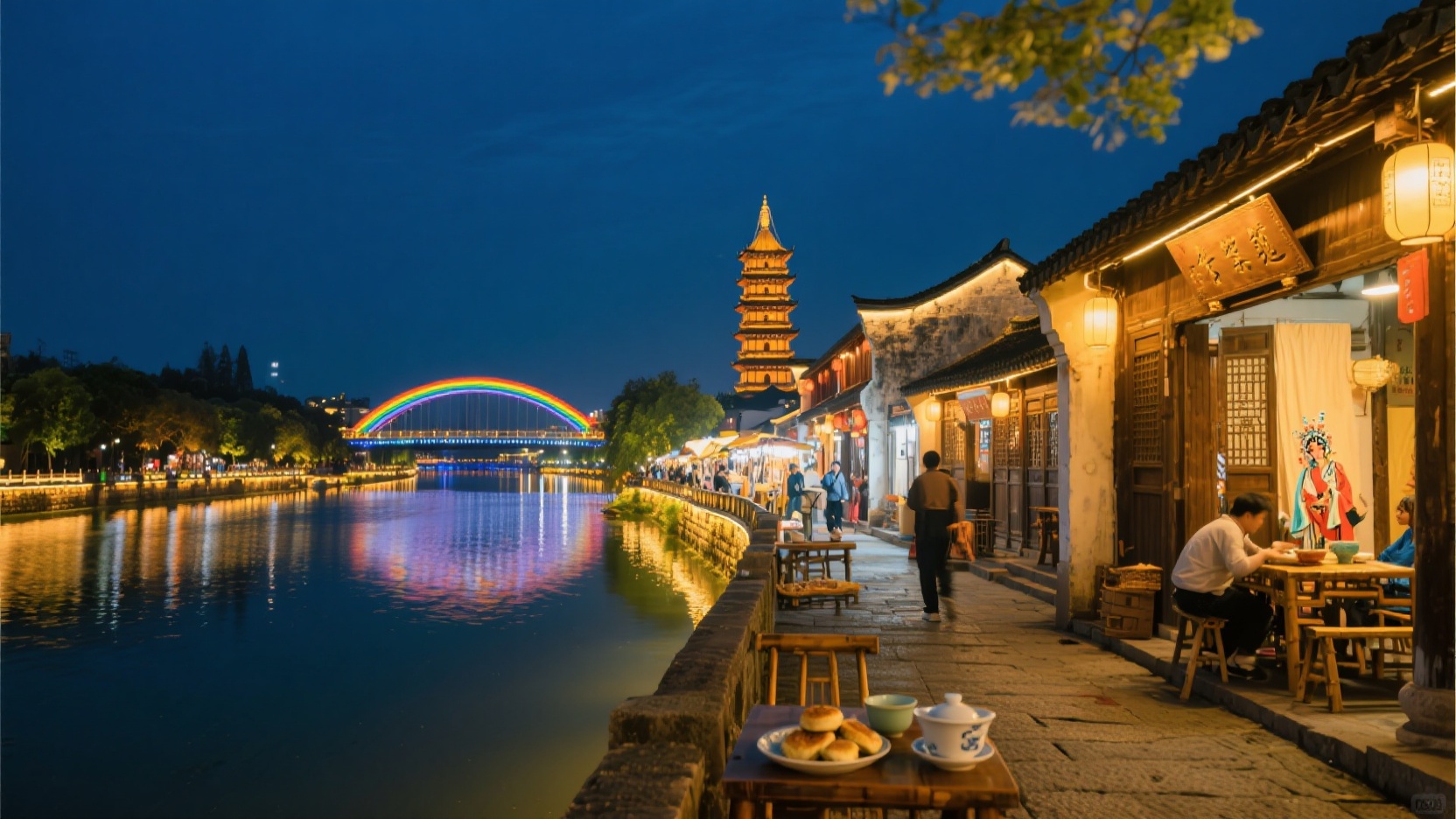
The biggest pitfall when exploring Jinhua at night is spending all your time on the main street of the ancient city and then taking a taxi back to the hotel at 9 pm. I made this mistake twice before finally figuring out a truly local "after-get off work" route on my third visit: start by watching the lights up along the Wujiang River, then head into Jiufang Alley for a late-night snack, then go to an old teahouse to listen to a Wuju opera performance, and finally end at the Wanfo Pagoda. The entire trip is done on foot and by shared bikes, starting at 6 pm and ending at 11:30 pm.
18:00-19:15 Wujiang River and Yanweizhou Island: Check out the lights first, don't rush into the ancient city.
The first stop is the riverside walkway in Wuzhou Park. Around 6:00 PM, as dusk falls, the landscape lights along both banks of the Wujiang River gradually illuminate, making the China Wuju Opera House and Rainbow Bridge the best spots for photos. Walk along the north bank for a while to find a spot where the reflection in the river is complete, then ride a shared bicycle for about 5 minutes to the entrance of Yanweizhou Park. After crossing the Rainbow Bridge, walk to the north side and turn back to take photos of both the Wanfo Pagoda and the skyline of the ancient city.
The lighting hours vary with the seasons; in autumn, it's generally fully lit from 6:00 PM to 6:15 PM. It's best to check before you go to see if there's any maintenance scheduled for the day. The riverside walkway has many steps, so avoid using your phone while walking after dark.
19:25-21:00 Guzicheng Night Market: Walk only half of the main street; the lively atmosphere is hidden in Jiufang Alley.
It's about a 10-minute walk or bike ride from Yanweizhou Park to the Ancient City. The main street is crowded with tourists, but the best places to eat are near the intersection of Jiufang Lane and Xichun Lane. Try a little of everything: Jinhua shortbread, chicken egg cake, meat dumplings, and cold noodles; a decent meal costs only a few dozen yuan per person. It's recommended to arrive before 7:25 PM, as some vendors will be closing up shop later.
Tips to avoid: Avoid "tourist pastry shops" with long queues and extra-large signs. The real aroma comes from small shops that bake freshly, usually hidden in alley corners.
21:10-22:30 Wuju Opera Teahouse: The soul of a nighttime visit is listening to a classic opera.
About a 5-minute walk from the night market, turn into an old teahouse with a courtyard in the ancient city. This is what makes Jinhua's nightlife so different from other cities: instead of relying on bar streets to attract customers, it uses local Wuju opera to keep people entertained. The teahouse shows excerpts of opera in the evenings, and the actors are likely retired teachers from a local Wuju opera troupe. Listening in the courtyard is very immersive.
Tea prices are mid-range, more friendly than most small bars. I recommend ordering local green tea or jasmine tea, paired with a freshly bought pastry. If you're not a fan of opera, you can sit for only half an hour, but based on my experience, you'll at least hear a segment from "The Meeting of Monks and Nuns" or "The Broken Bridge," and you can hear the Jinhua dialect pronunciation in the recitation. The performance ends around 10:30 PM.
22:40-23:30 Finale: City Wall and Ten Thousand Buddha Pagoda - All the best night view shots are in this half hour.
From the teahouse, walk about 8 minutes to the foot of the Bayong Tower city wall, then walk along Jiufang Lane towards the Wanfo Pagoda. The tourists will have mostly dispersed, allowing you to capture clean streets and the pagoda's silhouette. You don't need to enter the main attraction; the outer plaza and the area along the city wall will provide excellent photo opportunities. After 11 PM, some of the Wanfo Pagoda's lights may be turned off; to capture the full illumination, it's recommended to arrive at the plaza below the pagoda before 10:40 PM. After that, darker, longer exposures are more suitable.
This stretch of road isn't long, but if you slow down, you'll discover that the city walls, stone-paved roads, and lanterns at the alley entrances, often overlooked during the day, have a distinctly "old Jinhua" feel at night. Finally, walk back to the riverbank from the Bayong Park side, completing a full loop.
Blogger's Summary
This route is suitable for travelers who don't rush through tourist attractions and enjoy the local atmosphere; it's suitable for couples, solo travelers, or groups of friends. The total walking distance is approximately 10,000 steps, and with shared bike connections, it won't be too tiring. Spring and autumn are the best seasons to visit. There are more mosquitoes in summer, and some teahouses may reduce evening performances in winter, so it's best to check in advance.
If you're only staying in Jinhua for one night, I don't recommend spending your time in shopping malls or chain restaurants. This route, from the riverside lights to the night market and then to the Wuju opera teahouse, basically encapsulates the most authentic aspects of Jinhua's nightlife.
Night shooting: 5 camera positions + 4 safety tips
Camera Position 1: At the stone railing along the riverbank in Wuzhou Park, use the reflection in the river to photograph the Wuzhou Opera House and Rainbow Bridge. Camera Position 2: Slightly north of the middle section of Rainbow Bridge, framing both the Wanfo Pagoda and the lights on both banks; suitable for a wide-angle phone camera. Camera Position 3: South entrance of Jiufang Lane in Guzicheng, with red lanterns and stone-paved roads in the background; almost deserted after 9 PM. Camera Position 4: Steps on the city wall east of Bayong Tower, a high-angle shot of the rooftops of Guzicheng and the distant pagoda's reflection. Camera Position 5: In front of the pool at the northwest corner of Wanfo Pagoda Square, a low-angle shot of the pagoda's symmetrical reflection; best taken 15 minutes before the lights turn off.
Safety Tips: 1. The riverside walkway has many steps at night, so wear non-slip flat shoes and avoid looking at your phone while walking. 2. The stone-paved roads in the Ancient City and Wine Shop Alley can be slippery after rain, and the dew can be heavy on autumn nights, so watch your step. 3. Do not ride shared bicycles into the pedestrian street or the core area of the ancient city; return them at the riverside parking area and walk. 4. After 11 PM, some sections of the road are less crowded; women walking alone should try to stay on the main roads, and when taking night photos, avoid entering abandoned city walls or areas without railings near the water.