
Eat Jinhua according to the solar terms | My seasonal limited list that I collected after traveling through all four seasons (personally tested to avoid pitfalls)
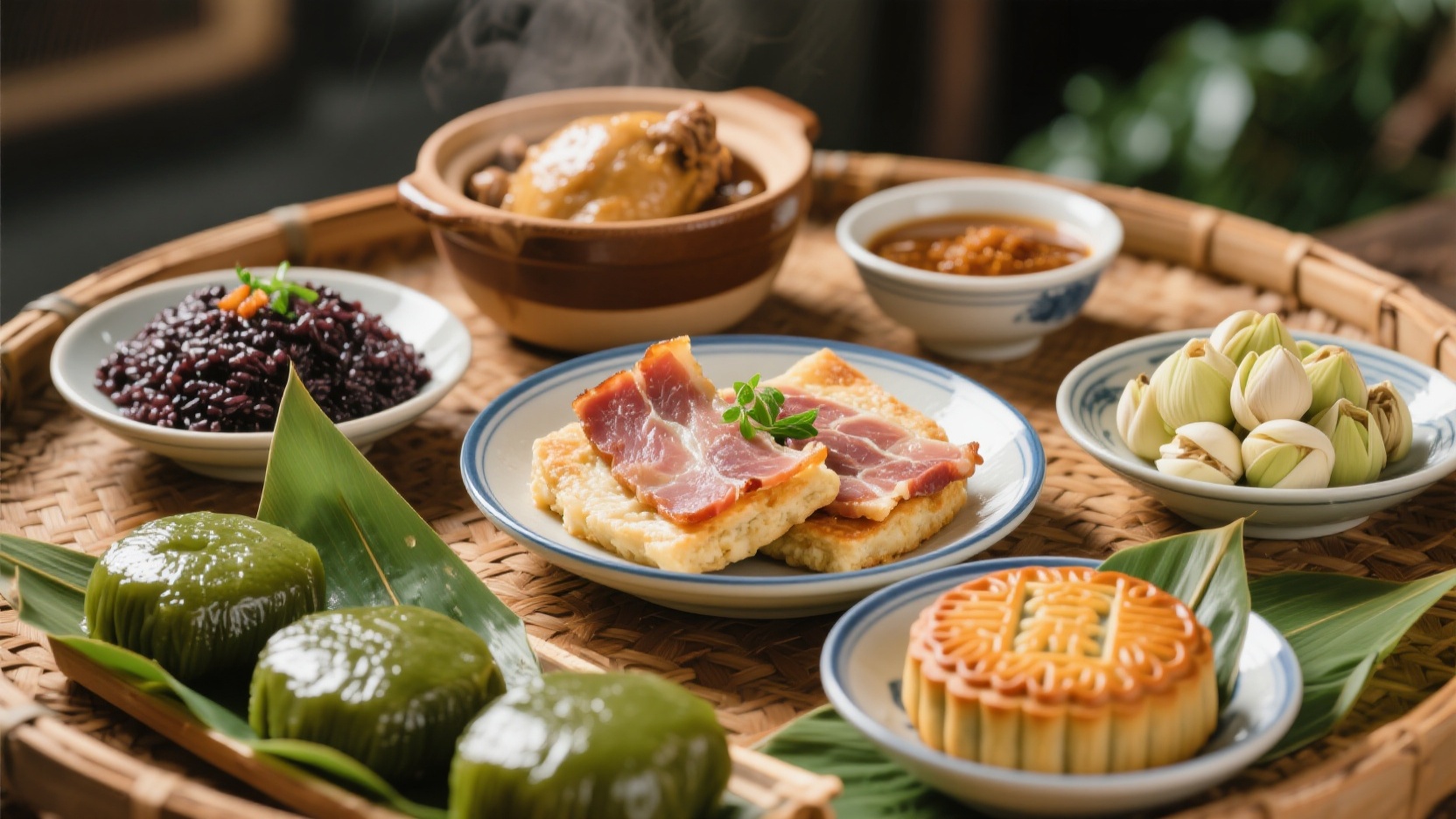
Having spent over four years in Jinhua, my biggest takeaway is that the food here isn't ranked by trendy spots, but by the seasons. For example, the mugwort cakes you get around Qingming Festival are only available after a few days when the mugwort leaves are too old; and the newly minted brown sugar from Yiwu is only available around the winter solstice. This list, organized by the seasons, is based on my own experience, including some disappointments. Each dish is at its best during a very short window of opportunity.
Spring: Qingming cakes are made while the mugwort is tender, and spring bamboo shoots should be stewed with ham.
In Jinhua, Qingming cakes are not a year-round alternative to qingtuan. Local mugwort is made only from the tender leaves that sprout before Qingming Festival. The juice is extracted and mixed into a dough made from glutinous rice and regular rice, resulting in a fragrant, wild aroma. The fillings come in two varieties: savory, made with diced bamboo shoots, pickled mustard greens, dried tofu, and minced meat; and sweet, made with sesame seeds, white sugar, and osmanthus flowers. After Qingming, the mugwort fibers become coarser and the juice turns bitter; seasoned diners can easily taste the difference.
Locals have a particular way of eating Qingming cakes: "Savory ones should be eaten hot, while sweet ones are pan-fried until fragrant." Savory ones should be eaten fresh out of the steamer, when the skin is chewy and the filling is juicy; sweet ones should be cooled and then pan-fried with a little oil until both sides are crusty, allowing the sugar filling to melt and flow. Freshly made cake stalls will only appear at the market a week before Qingming Festival; don't buy vacuum-packed ones at tourist attractions.
Another irreplaceable dish in spring is ham stewed with bamboo shoots. After the Awakening of Insects, the bamboo shoots sprout, their stems tender and slightly astringent. When combined with the salted bones and skin of Jinhua ham, no salt is needed, and the soup naturally turns milky white. Locals prefer to use "aged ham bones" cured the previous winter, as the rich, salty aroma of fresh ham cannot be replicated by new ham. By the end of April, the bamboo shoots turn into hairy bamboo shoots, with a coarser texture and more fiber, so they can only be dried.
Summer: Black rice must be infused with the fragrance of southern candles, and tofu made with selected seeds must rely on well water.
Around the eighth day of the fourth lunar month, black glutinous rice appears in the countryside of Jinhua. It is made by pounding the leaves of the *Nymphaea rubra* (a type of glutinous rice plant) to extract the juice, soaking glutinous rice in it, and then steaming it until it turns black and shiny. The leaves of the *Nymphaea rubra* only have a delicate fragrance when they are young in spring; once summer arrives, they become old, and the juice becomes thick and loses its aroma. The steamed black glutinous rice is chewy on the outside and sticky on the inside, with a very faint herbal fragrance.
The most traditional way to eat it locally is to sprinkle a spoonful of granulated sugar on top, letting the heat of the rice dissolve the sugar; some people also like to pair it with pickled mustard greens and stir-fried bamboo shoots for a savory flavor. Black rice is not easy to digest, and the elderly in Jinhua will advise against eating too much. It can only be found occasionally in city markets during the week of the eighth day of the fourth lunar month, while it is more reliable in rural markets.
When the summer heat truly arrives, street corner stalls will display Zezi Tofu. Zezi tofu comes from the fruit of oak trees in the mountains, boiled until it becomes an amber-colored jelly, and then chilled thoroughly with well water. It only tastes right in the height of summer; the essence lies in that bowl of "chilled with well water" and the drops of peppermint oil and osmanthus sugar. As soon as the weather turns cool, the stall owners will close up shop and stop selling it.
Autumn: Yiting earthen mooncakes are only made before the Mid-Autumn Festival, and Wuyi Xuanlian lotus seeds must be peeled in season.
Yiting's traditional mooncakes are a typical "short-lived" product, only available during the solar term. The traditional kilns in Yiting Town, Yiwu, are generally only used from mid-July in the lunar calendar until the Mid-Autumn Festival. The mooncakes are made with lard for flaky pastry, and the fillings are mostly sesame seeds, white sugar, mixed nuts, or salt and pepper. They have a simple, rustic appearance, and when broken open, you can see the oily, flaky crust. After the 16th of August, you have to wait until next year to enjoy them again.
Locals don't eat it cold; instead, they take it home and bake it in a pan over low heat for two or three minutes to bring out the aroma of lard, then pair it with strong tea to cut through the richness. A common misconception on first-timers is that it tastes best fresh out of the oven. Actually, after letting it sit for about half a day to allow the oil to seep back in, the pastry and filling meld perfectly.
Also available in the same season is Wuyi Xuanlian. Lotus seeds in the Xuanping area are harvested in late summer and early autumn, and freshly peeled lotus pods are often sold by the roadside. The fresh lotus flesh is crisp, tender, and sweet, and the lotus heart has not yet turned bitter. Locals eat it directly as fruit, or steam it with rock sugar and osmanthus to make lotus seed soup. After the White Dew solar term, fresh lotus seeds are no longer available, and only dried lotus seeds remain, with a completely different flavor.
Winter: Yiwu brown sugar is pressed starting on the Winter Solstice, and Dongyang clay pot chicken warms you up during the coldest days of winter.
Yiwu brown sugar is only produced around the winter solstice each year. Sugarcane must accumulate sugar after frost, and the low temperature also facilitates the condensation of the sugar liquid. The new sugar is deep red in color and has a fresh sugarcane aroma. Brown sugar twists, brown sugar shortbread, and brown sugar glutinous rice cakes coated with syrup can only be truly appreciated during this window of opportunity. Locals will buy brown sugar twists that are still warm from the factory; when you bite into them, the sugar coating is half soft and half crisp. After the first month of the lunar calendar, the new sugar oxidizes and becomes stale, and the aroma becomes dull.
The final dish is Dongyang clay pot chicken. Only free-range chicken and a very small amount of Shaoxing wine are placed in the clay pot, and the chicken is simmered until tender and the broth is clear. In the depths of winter, farmers in Pan'an will add Polygonatum, Dendrobium officinale, and Poria cocos to make a medicinal chicken stew. This dish might feel greasy in summer, but in the depths of winter, the medicinal aroma warms you from your stomach to your feet.
Blogger's Summary and Practical Tips
Tip 1: It's best to find Qingming cakes and black rice at the market during the week of the festival. The market is busiest in the morning, and they are often sold out by locals on weekends.
Tip 2: Yiting earthen mooncakes should be ordered two weeks before the Mid-Autumn Festival; do not refrigerate them after taking them home, as the crust will become soggy after refrigeration.
Tip 3: Yiwu brown sugar production starts around the winter solstice. You can go to the site to watch the juicing and sugar boiling, but don't get too close to the large pots.
Tip 4: Most of these seasonal delicacies are hidden in towns or farmers' markets. Don't be misled by the pedestrian streets in scenic spots. You can eat a very authentic version for just a few dozen yuan per person.
After falling into the trap of eating at the wrong time of year, I realized that many flavors aren't changed by the technique, but by the timing. Eating according to the seasons is the right way to experience a city.