
These 7 hidden gem restaurants in Qingcheng Mountain | A list I compiled after three trips, not just for internet celebrities (with tips on avoiding pitfalls)
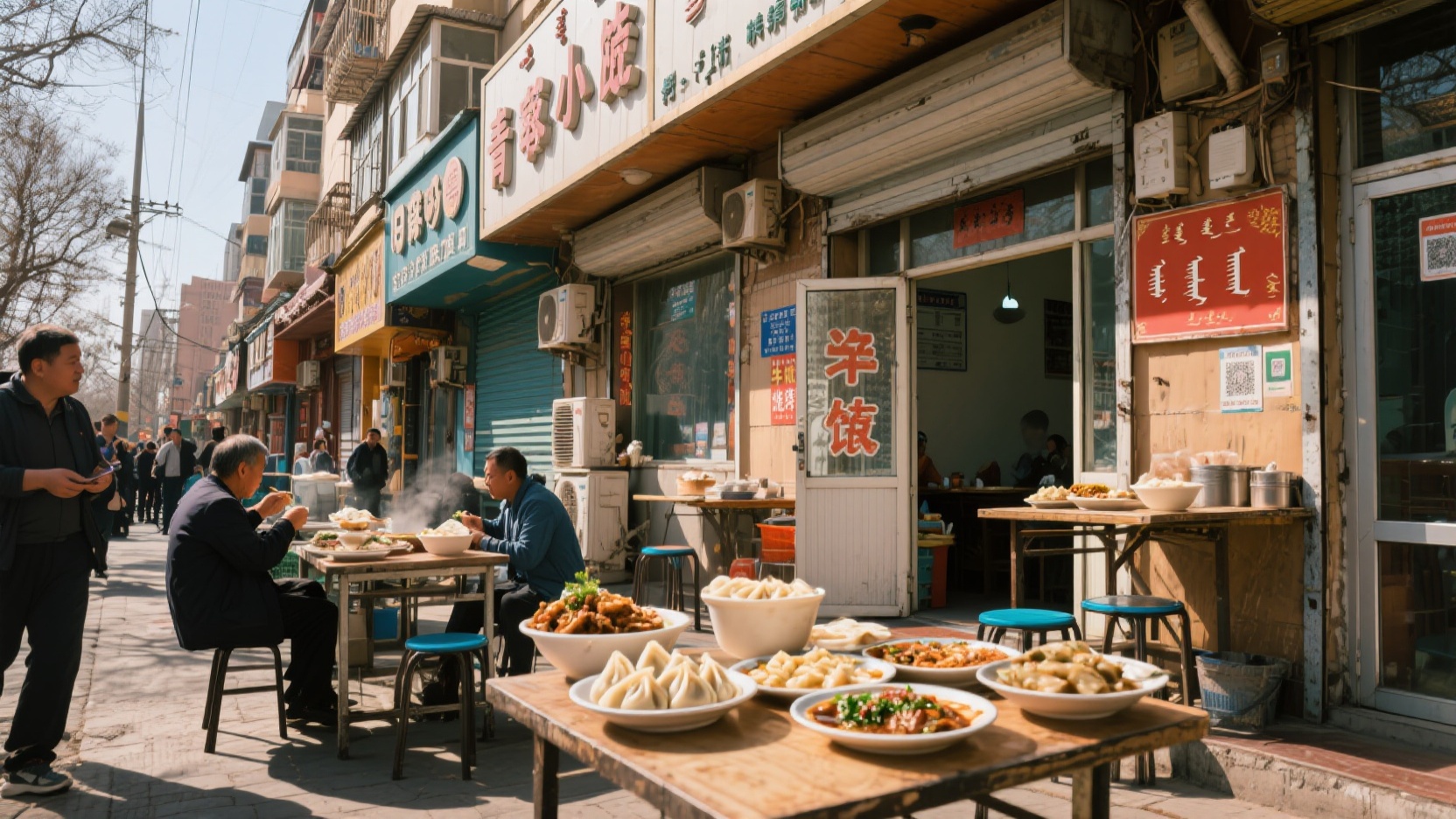
I made three trips to Hohhot, comparing reviews on Dianping (a Chinese review platform) and the must-eat list in reverse order, before finally digging up this list with the help of local foodies. There are no chain stores here, no restaurants featured in short videos, and some are even only open for half a day or accept cash only. But I only dared to include each one after repeatedly visiting and eating my fill. This list doesn't cover touristy eateries on Shaomai Street and Kuan Alley; it focuses on local hidden gems in neighborhoods, on the edge of the old city, and at late-night street stalls. It's perfect for first-time visitors to Hohhot who want to avoid the crowds.
First, a note: This recommendation is not organized by region, but by time of day (morning, noon, and evening). You can choose three or four restaurants to combine for a half-day trip, or you can follow the route and eat your way through the city.
Old Town at Dawn: Two Main Food Shops That Only Operate in the Morning Market
The first shop is "Old Cui's Shaomai Restaurant," located west of the North Gate of the old city. The storefront is so old the signboard is peeling. They start steaming at 6:30 AM, and by 9:30 AM, there's practically nothing left. Their shaomai wrappers are thin but don't collapse, and the mutton and scallion filling is generous; the juice drips into the dish when you bite into it. The owner doesn't cater to first-time customers, but if you order the right thing, he'll give you an extra pot of strong brick tea. How to order: Order a basket of mutton and scallion shaomai by yourself, along with a free pot of brick tea. Don't order the fried ones, just eat the steamed ones. Don't order too much on your first visit; shaomai is much more filling than you might imagine. Nearby: Turn left after exiting the gate, and you'll find a mobile cart selling "Xi Guo Geng" (a type of sweet soup). Grab a cup to go; it's perfect for cutting through the richness.
The second place is deep in Niujie Street, called "Ermin Lamb Offal Soup." There's no menu, just a pot of bubbling lamb offal and a bunch of freshly grilled beef tongue cakes. The owner only serves breakfast and lunch, closing at 1 PM. The lamb offal soup is milky white, and you scoop the chili yourself; the offal is cleaned thoroughly. How to order: order a bowl of lamb offal soup and a beef tongue cake. Add chili sparingly at first, then add more halfway through the soup; the broth will become richer and more flavorful. You can also buy some "sugar-coated sesame leaves" nearby; freshly fried ones are ten times more fragrant than takeout, but don't buy too many, as they'll wilt when they cool.
Noon Community: A Canteen for Old Hohhot Residents
The third restaurant, tucked away in a residential building on Xiluofeng Street, is called "Lao Hai Stewed Dishes Restaurant." It only has six tables, and at lunchtime, it's full of regulars who have finished their early shifts. Their signature dish is braised pork ribs with sauerkraut; the sauerkraut is stewed until it's soaked in the meat juices, and the potatoes are so soft they practically stick to a spoon. How to order: For two or three people, order a medium-sized braised dish, a plate of stir-fried vegetables, and two bowls of rice. Don't order anything else; the portion is already quite large. The first time I went, I ordered too much and ended up taking the leftovers home and eating them again. Nearby: There's a small window selling "Mongolian Yogurt Pancakes" just outside the alley. Buy one as a dessert; the milky flavor is equivalent to half a cup of yogurt.
The fourth place is called "Sister Wulan's Noodle Shop," located opposite the guardhouse of an old residential complex in the new city. They only serve mutton soup noodles and braised noodles. The noodles are handmade, uneven in thickness, which helps them hold the broth. The mutton soup noodles have a clear broth but a strong mutton flavor, while the braised noodles are flavorful with green beans and potatoes. How to order: If it's your first time, try the mutton soup noodles first, with a side of pickled shallots; if you have a group, order a pot of braised noodles to share. You can also buy a bag of freshly fried "Mongolian fried rice" at the entrance of the complex nearby, which is convenient for making milk tea at home.
Afternoon sweets and baked goods: the locals' afternoon tea code
The fifth stall is "Sister Ma's Fruit Porridge," located at the back alley entrance of Kuan Alley. It has no fixed storefront; a small blue cart provides relief from the heat for countless people. The porridge is made with dried apricots, persimmons, and jelly, with a restrained sweetness and juicy fruit pieces. How to order: Simply order a large cup of porridge, add a spoonful of apricot juice, and don't stir it too much; sucking the fruit pieces at the bottom is the most satisfying. Nearby: There's an unnamed fried cake stall next door, where they wrap red bean paste in millet flour and fry it fresh. Two are enough, as they'll harden when cold.
The sixth shop, "Bai Ji Baked Bun Shop," is located on a corner of an alley in the Hui Muslim district. Its sign only reads "Baked Buns." Fried dough twists, beef tongue baked buns, and sugar-coated sesame leaves are displayed in a glass case, and it's usually sold out by 4 PM. The beef tongue baked bun is highly recommended; it's crispy on the outside and soft on the inside, with distinct layers when broken apart. How to order: Buy two beef tongue baked buns—one to eat on its own, and the other to sandwich any braised beef or pickles you buy along the way. You can also buy "Hohhot Old-fashioned Yogurt" nearby; pairing it with baked buns is a local afternoon tea.
Late-night stalls: barbecue stalls without storefronts
The seventh place is the hardest to find, located at a T-junction in Yuquan District. It's called "Erhousheng Barbecue," and it only starts smoking after 10 PM. There's no storefront, no signboard, just a yellow lamp and a row of low tables. They specialize in grilled lamb kidneys, grilled tendon, and grilled lamb skewers—these are their three main offerings. The charcoal sizzle is intense, and the kidneys are cleaned thoroughly without any gamey smell. How to order: One skewer of lamb kidneys per person is enough. Order less tendon first, and eat it while it's hot, as it will be tough on your teeth when it cools down. Nearby: The convenience store at the intersection has "Dayao Jiabin" (a local favorite), a must-have for locals with barbecue, better at cooling down the spiciness than any other drink.
If you only have one day, I suggest starting your day by going to the old town for shaomai or mutton offal, then strolling around the neighborhood for stew for lunch, and finally buying baked buns and fruit porridge in Kuan Alley in the afternoon. Finish your meal at a barbecue stall around 10 pm. This way, you won't have to queue or check online reviews; you'll experience the authentic daily life of Hohhot locals.
After three trips, my biggest takeaway is that the hidden culinary gems of Hohhot aren't on the must-eat list, but rather in the steam of the old city's morning markets, in the stew pots under the residential buildings, and under the flickering light bulbs at night intersections. None of these seven shops require you to queue to the point of frustration, but each has its own quirks—some are only open for half a day, some only accept cash, and some don't restock once they're sold out.
Finally, here are three tips to avoid pitfalls, based on my experience using the local dialect and three wasted trips: First, don't go at the peak of mealtimes, especially for shaomai and mutton offal shops. Either go early or after 10 pm, otherwise you'll have to stand and wait for a seat. Second, don't just stick to the signs. For example, you should order brick tea with shaomai, stir-fried second course with stew, and Da Yao Jia Bin with barbecue. If you make the wrong pairings, the taste will be halved. Third, remember to bring some cash. Some old shops in Niujie and the old town only accept cash, or the signal is so bad that you can't scan the QR code. Don't let paying take longer than eating.