
Avoid paid attractions in Hong Kong | A local's firsthand experience: a 4-day itinerary with no entrance fees – don't be fooled by travel guides!
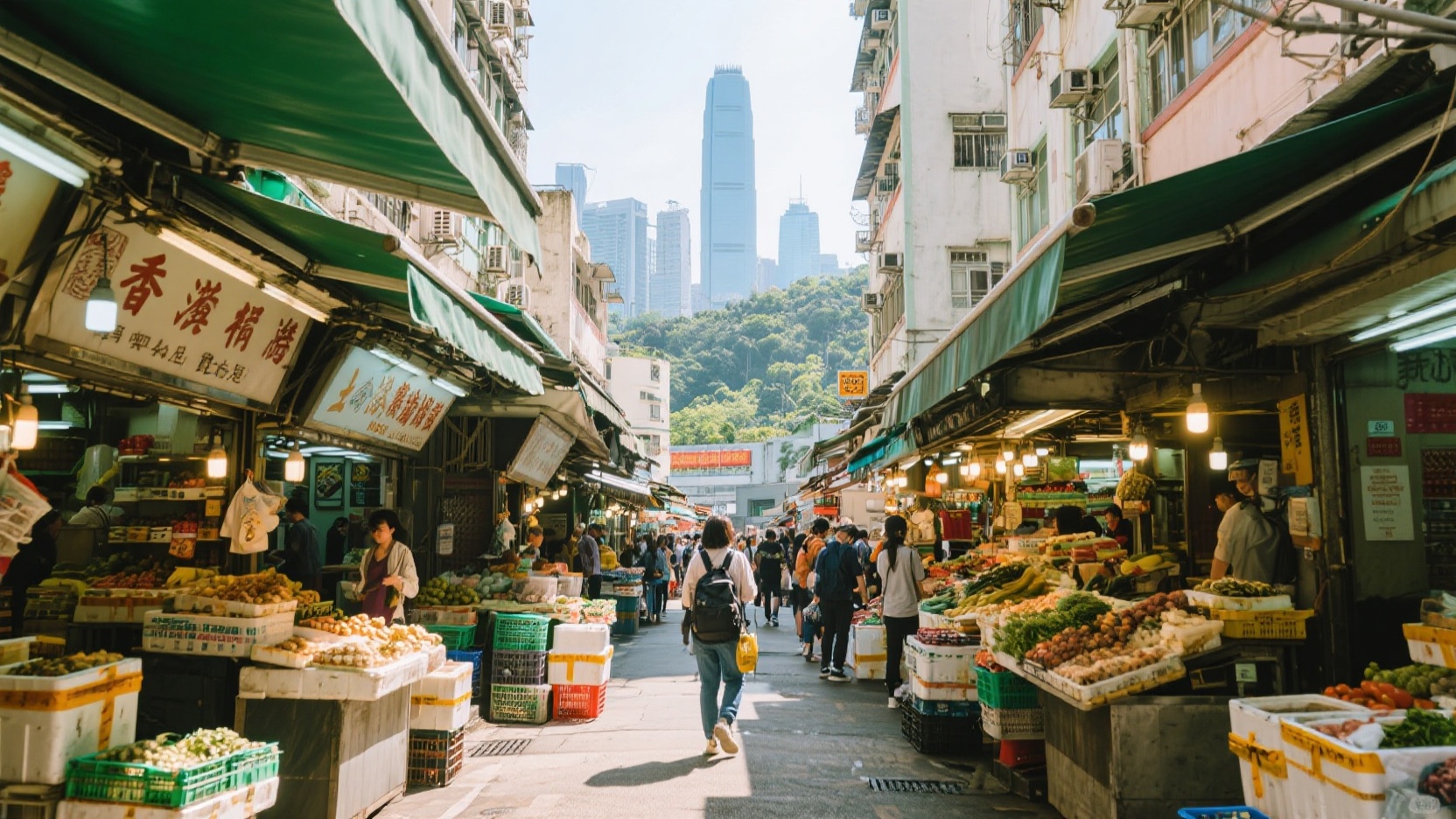
Having lived in Hong Kong for six years, I dread friends asking, "What time is it less crowded to go to Victoria Peak?"—the answer isn't about what time to go, but rather, "Don't go." Paid tourist attractions have shrunk Hong Kong to the size of postcards. The real Hong Kong is scattered throughout wet markets, university back hills, old textile factories, and tenement buildings and alleyways, free of charge, yet far more worthwhile than any observation deck.
This four-day itinerary avoids all paid attractions, relying solely on trams, subways, buses, and walking, leaving the budget for street food and an iced lemon tea. It's not romantic, even a bit noisy, but that feeling of "I'm not on vacation" is what I most want you to take away.
Day 1: Sham Shui Po Wet Market Day – Waking up to the smell of fish and the shouts of prices
Emerging from Sham Shui Po MTR station, head straight into the market area around Pei Ho Street. Vegetables, freshwater fish, roasted meats, and hardware are crammed into the narrow streets, with elderly women haggling in Cantonese amidst the sounds of trucks unloading goods and chopping bones. You don't need to buy anything; just stand in front of a cooked food stall, eat a plate of rice noodle rolls or a bowl of shark's fin soup, and you'll immediately understand the saying, "The market is like a martial arts world."
Walking from Apliu Street to YK Street, you can browse secondhand radios, old jade items, and discontinued tools. The shopkeepers here are too lazy to solicit tourists, and because of this, you see an unadorned, down-to-earth Hong Kong. Strolling around for two or three hours, even buying a cup of sugarcane juice feels overly commercialized.
The expenses for the day were almost entirely for transportation and food; there were no entrance fees or souvenir shops. The most memorable experience was watching how locals haggle over small change, rather than taking photos of graffiti on walls.
Day 2: University Surroundings Day – Free Scenic Views of HKU Back Hill and Sai Wan
Many people visit the University of Hong Kong just to take pictures of its red brick walls, but the uphill path from the MTR University of Hong Kong station to Lung Fu Shan is far more worthwhile. The campus is built into the hillside, and even the escalators resemble urban hiking trails. Crossing University Street and taking the path next to the Graduate School into Lung Fu Shan Country Park, you can easily transition from classrooms to the mountains in just half an hour without spending any money.
Walking from the back gate of HKU to Sai Wan, past the old trees of Pok Fu Lam Road and the suddenly open sea, you'll find yourself surrounded by old-fashioned tea restaurants and paper craft shops along Belcher Street and Decker Street. Sitting by the sea at 3 pm watching the boats is a more authentic experience than crowding the railings of Victoria Harbour. This isn't just a trendy spot for taking photos; it's a shared lifeline for students and residents alike.
The surprise of the day was the off-peak season: the mountains were almost deserted in the morning, and in the afternoon, you could go back to the foot of the mountain and have a bowl of affordable cart noodles. You would find that your understanding of Hong Kong has shifted from a shopping city to a mountain and sea city.
Day 3: Tsuen Wan Old Industrial Area Transformation Day – New Communities Emerging from the Textile Mills
The Nan Fung Textile Factory in Tsuen Wan is one of the least commercialized redevelopment sites in the old industrial area. The old factory's concrete staircases, iron gates, and delivery truck lanes have all been preserved. The atrium hosts free exhibitions, and the rooftop has public space and a planting area. When I visited, I encountered local students rehearsing a play, with old machinery on display right next to them—that kind of eclectic mix is very Hong Kong.
Leaving the textile factory and walking along Pak Tin Pa Street to the vicinity of Tsuen Wan Market, you'll see many industrial buildings hiding coffee shops, woodworking workshops, and vintage clothing stores. They're tucked behind freight elevators, requiring a bit of courage to push open the fire doors. Many shops are only open on weekends, and if you go alone, the owners are more likely to strike up a conversation, telling you which cart noodle shop they've been eating at since childhood.
There are no entrance fees or sightseeing routes here. The significance of redeveloping old industrial areas lies in the fact that cities can transform themselves without tearing down their memories. Compared to enjoying the air conditioning in a shopping mall, the semi-open spaces in industrial buildings make people feel Hong Kong's ruggedness and resilience.
Day 4: To Kwa Wan Old Town Alleyway Day – One last walk before the MTR opens
To Kwa Wan is probably one of the last remaining old districts in Hong Kong that hasn't been completely transformed by the MTR. Walking from Kowloon City Ferry Pier to Hung Fook Street, you'll find old tenement buildings, iron gate shops, corner herbal tea stalls, and decades-old pastry shops. Many signs retain the fonts of the 1980s, the smell of soup wafts from the stairwells, and neighbors chat through the iron gates. There are no signs, but you'll want to stop at every turn.
Walk from Mei Jing Street to Lok Shan Road, then circle around the outside of the Cowpen Art Village. The cowpen is free to enter, but the real charm lies in the old slaughterhouse next to it and the uncles playing chess in the small park. These alleyways aren't pretty, but they have a warm, lived-in feel, more genuine than any nostalgic themed street.
Walking alone in To Kwa Wan requires a slow pace; many shops only open in the afternoon and close by evening. A simple egg and beef sandwich and milk tea at a roadside tea restaurant is enough to sustain you for a while, and the cost is negligible. This place hasn't been thoroughly covered in travel guides, making it a perfect spot to take a final look before it disappears from your travel list.
Transportation is the main attraction: trams, Star Ferry, and Kowloon Motor Bus.
Many people use public transport as a means of getting around, but in Hong Kong, the tram itself is a scenic viewpoint. From Sai Wan to Shau Kei Wan, you board from the back door, pay at the front, and sit in the front row on the upper deck, watching the market signs flash overhead. The tram's speed is just right; it crosses the north coast of Hong Kong Island in two hours, costing very little, yet offering the most complete view of the city.
The Star Ferry runs from Tsim Sha Tsui to Central or Wan Chai; choosing the lower deck will result in more swaying and you'll be more likely to hear the crew pulling the ropes and the seawater lapping against the hull. For Kowloon Motor Bus, you can try a longer route, taking it from Mong Kok towards the New Territories, watching the skyscrapers gradually transform into mountain views and housing estates. Public transport tickets aren't expensive; the key is patience—don't treat your commute like a rush.
If you want a more local experience, you can buy an Octopus card, ignore the route guide, hop on any bus heading towards the mountains, ride to the final stop, and then turn back. This kind of "getting lost" travel is the cheapest and often the most surprising.
In closing: 5 things you shouldn't ask locals about that I didn't tell you
1. Avoid weekend markets and go on Tuesday to Thursday mornings when the stalls are most complete, there are fewer people, and the transactions are more genuine. 2. Don't just go to the main building around the university; the back hill and nearby old areas are the free gems. Wearing shoes that can climb hills is more important than reading guides.
3. Many shops in the old industrial buildings do not accept photo groups. If you buy a drink first and then chat, the owner will tell you the hidden routes. 4. The Star Ferry and trams are less crowded after 3 pm, but they also have a local feel during the evening rush hour, so don't be afraid of the crowds.
Fifth, this route doesn't require any tickets, but it does require physical strength and curiosity. Don't fill your itinerary; leaving half a day to wander around the streets is the best way to respect Hong Kong.