
Hidden Menu in Xining Markets: Sneaking into the Cooked Food and Pickles Stalls at Mojia Street and Xia Nanguan Street
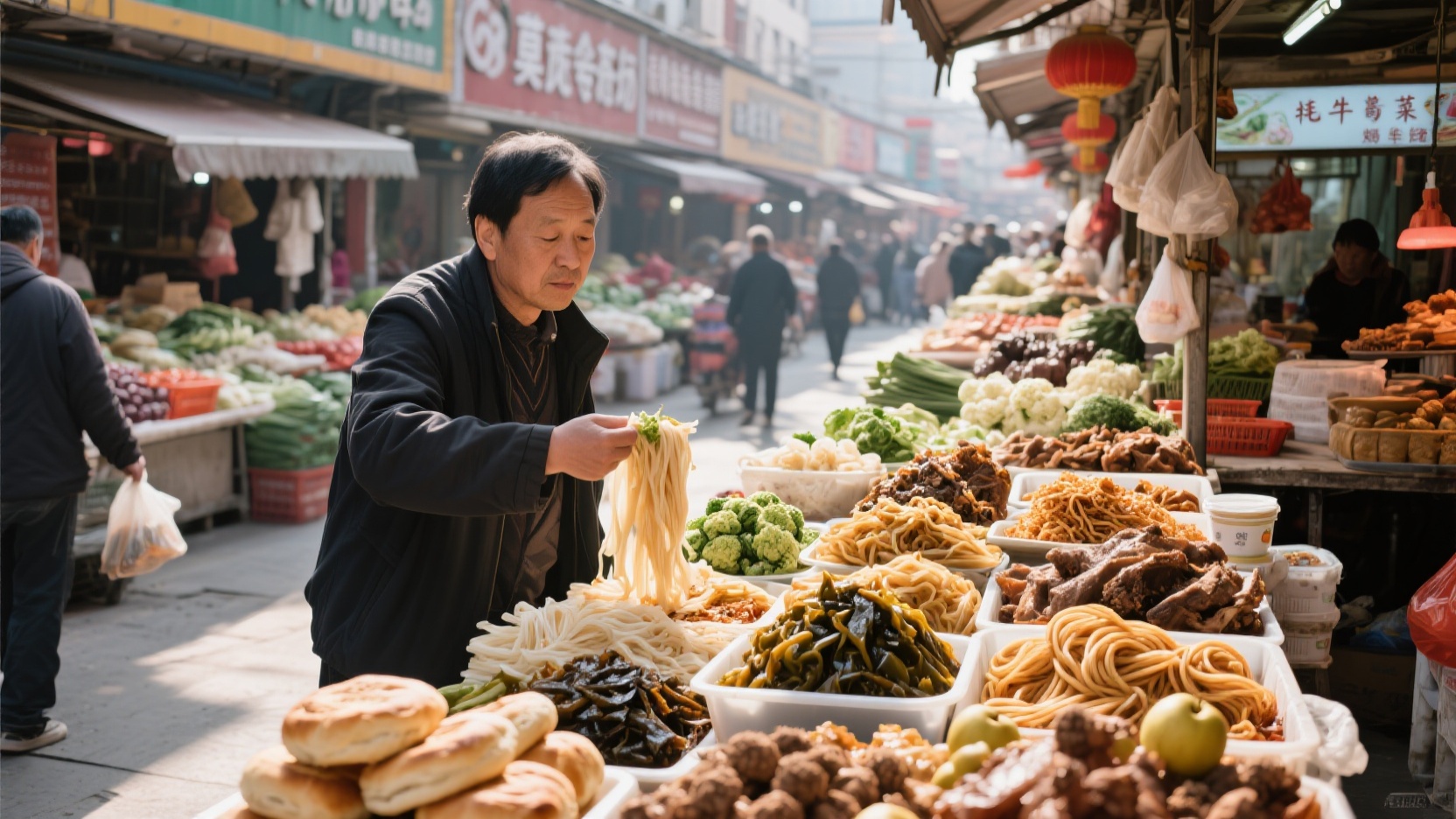
The true essence of Xining's culinary scene lies not in shopping malls or restaurants, but in two old markets: the Mojia Street Comprehensive Farmers Market in the city center, and the Xia Nanguan Street Market in Dongguan. The former features stalls selling cooked food, dairy products, and steamed buns, while the latter retains more of the fried pastries, pickled vegetables, and dried and fresh mountain produce from Hui Muslim families. The following 10 foods are worth setting aside half a day to slowly select and quietly savor.
Mok Ka Street: A food stall serving black liangpi (cold skin noodles), yogurt, and sweet fermented rice.
Black liangpi is made by steaming a mixture of potato starch and flour, resulting in a darker color and a chewier texture. When choosing liangpi, first check if the cut surface is translucent and free of air bubbles, then smell for a sour aroma; it's best to cut and mix it fresh to prevent clumping. For eating, add chili oil, garlic water, mustard, and chives, and only a small amount of vinegar to avoid overpowering the potato flavor.
Yak yogurt is usually served in shallow bowls in the market, with a layer of pale yellow milk skin on top. To determine its freshness, check if the milk skin is firm and if there is a lot of water separating around the edge of the bowl. When eating, first use a spoon to scoop the milk skin from the edge, then sprinkle with white sugar as needed. Do not stir, otherwise the tangy flavor will be diluted.
There are two types of sweet fermented rice: barley and oats, with the barley version having a stronger wheat aroma. When choosing sweet fermented rice, select rice grains that are whole, the liquid that is slightly cloudy but not sticky, and has a faint aroma of alcohol without any sour smell. When the vendor allows you to taste a spoonful, it should taste sweet with a slight bubbly sensation. Eat it chilled at home or diluted with cool boiled water; avoid heating it, otherwise the fermented flavor will turn bitter.
The steamed buns on Mojia Street are mostly baked by the vendors in the early morning. A good steamed bun has a golden-brown, slightly hard outer shell, and when broken open, you can see obvious layers. The inside is not sticky. When buying, ask the vendor to cut it in half to check if the layers are even. The one that springs back quickly is better. It's best to break it into large pieces and eat it with yogurt, or tear it into mutton soup to soak up the broth. It's more flavorful than eating it plain.
Xia Nanguan Street: Fried pastries, cooked lamb offal, and pickled dried goods
Fried dough twists and fried dough sticks are common fried snacks during Hui Muslim festivals on Xia Nan Guan Street. Choose fried dough twists that are light yellow in color, uniform in thickness, and crispy when broken; if the color is too dark, it indicates high oil temperature or unclean oil. For eating, fried dough twists can be broken into pieces and soaked in clear tea or mutton offal soup, while fried dough sticks are more suitable as a tea snack, served with a covered bowl of tea to cut through the richness.
Lamb liver and offal stalls often braise them in the early morning. When choosing lamb liver, select pieces with a fine cut surface, a dark red color (not black), and a slight springiness when pressed, without any unpleasant smell. For lamb head meat, choose pieces with a translucent gelatinous layer between the skin and meat that is not sticky. After buying them, slice them thinly and toss them with minced garlic, cilantro, and a little soy sauce, or stuff them into a steamed bun—a common breakfast or lunch combination for locals.
Qinghai pickled cauliflower uses kohlrabi, carrots, celery, and chili peppers as its main ingredients, and has a sour and crisp flavor. When selecting pickled cauliflower, check if the brine in the jar is clear, if the cauliflower is intact, and if it doesn't become mushy when picked up. It can be chopped and stir-fried with minced meat, or served directly with noodles or glutinous rice balls, offering a more complex vegetable flavor than ordinary pickles.
The dried fern root in the market's dried goods section, also known as ginseng fruit, is a common ingredient for soups in the highlands. Choose plump, reddish-brown berries free of debris and sand; avoid those with an overly bright color, as they may have been treated with sulfur. Before eating, rinse them several times and cook them with rice to make fern root rice, or add a small handful when stewing chicken; the sweetness and powdery texture will gradually release.
It's also worth buying a bag of Xunhua chili powder from the spice stall. Choose one that's naturally dark red, with uniformly coarse grains, and smells nutty rather than pungent. Once home, use hot rapeseed oil to drizzle it over the chili powder in two batches to make chili oil, which is perfect for mixing with black liangpi (cold skin noodles), noodles, or hand-pulled mutton.
In the seasonal fruit section, pay attention to soft pears. They turn black and soft after freezing, but this doesn't mean they're spoiled. When choosing pears, select those with intact skin, flesh that can be easily torn apart after thawing, and juice with a wine-like aroma. To eat them, first thaw them in cool water, tear a small opening to suck out the juice, and then eat the flesh. Never bite into them directly when they're frozen solid.
Visiting the local market is the best way to experience a city.
On Mojia Street and Xia Nanguan Street, vendors don't display "tourist items" separately. Liangpi (cold skin noodles), sweet fermented rice, fried dough twists, pickled vegetables, and cooked lamb liver are all made to local tastes. Whether you buy or not, you can see how a city uses barley, mutton, salt, and fermentation to manage its daily life. This sense of presence is something restaurant menus can't replicate: it tells you what to eat in which season, how a dish is served at a family table, and which pairings have been repeatedly tested. To truly understand Xining, there's no need to rush to tourist attractions. Just stroll through the market, carrying a bag of hot pot and a bowl of yogurt; the clues to the city's flavors are all there.