
Xining's Twelve-Hour Food Menu: From Morning Offal to Late-Night Hot Pot, 8 Local Flavors for Every Day
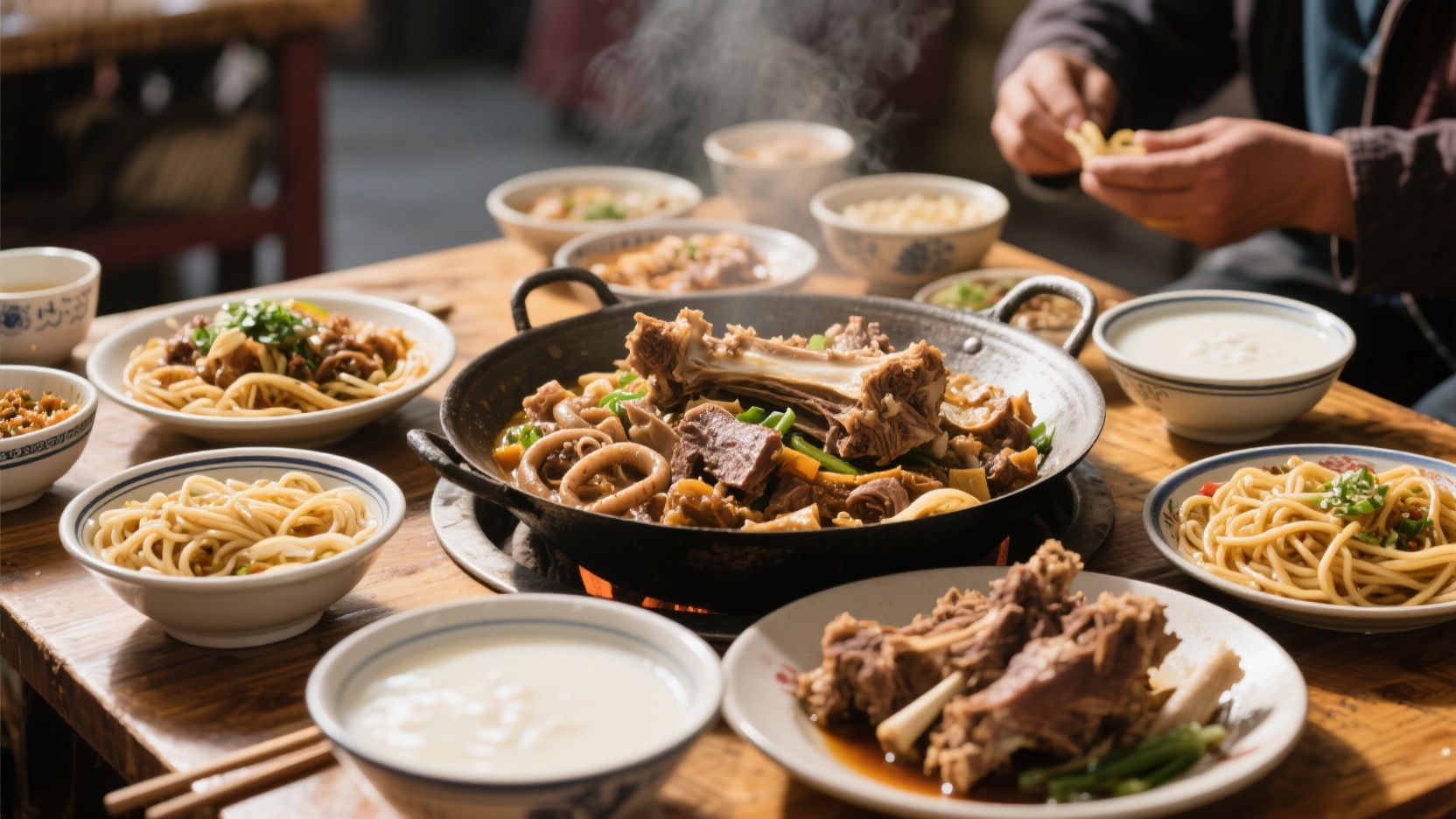
A day in Xining begins with a bowl of beef offal soup in the morning. Due to the large temperature difference between day and night on the plateau, local meals don't aim for elaborate presentation, but rather showcase the local produce and street food with a keen eye. The following eight everyday local dishes are presented chronologically, without mentioning trendy restaurants, simply reflecting the authentic atmosphere of a traditional street table.
Early morning: A double start with beef offal soup and mutton intestine noodles
In the early morning in Xining, the first to light up the streets are often the offal soup shops. Offal soup, made primarily with beef head meat, tripe, heart, and liver, is thoroughly cleaned and simmered in a large pot for a long time, resulting in a clear or slightly whitish broth. The vendors slice the cooked offal into thin slices or strips, pour boiling broth over it, sprinkle with garlic sprouts and cilantro, and serve with a freshly baked white flatbread. The tripe is crisp, the beef head meat is tender, and the broth is rich and flavorful, with the spiciness of white pepper quenching the last hint of chill. For locals, this bowl of offal soup isn't just a snack, but rather the "starting fuel" for a high-altitude morning. At the same time, sheep intestine noodles also occupy a place on the breakfast table. The noodles are cooked in advance, mixed with oil, and cooled. When eating, they are placed in a bowl, repeatedly poured hot broth over them to warm them up, and then topped with sections of sheep intestine—the meat intestines are firm, the noodle intestines are soft, and the blood intestines are tender. They are chewy when eaten dry and warmed by broth. A bowl of this provides the energy for the whole morning.
Lunch: The local division of labor between "ga mian pian" (a type of noodle) and "liangpi" (cold skin noodles).
At midday, Xining locals' noodle preferences shift towards "ga mian pian" (尕面片). The term "ga" means small, referring to the small, fingernail-sized noodles, hand-pulled into thin, even pieces. Common preparations include stir-fried and stewed noodles: stir-fried noodles are made with minced beef or mutton, green and red peppers, tomatoes, and glass noodles, resulting in a rich, savory sauce; stewed noodles come with broth, radishes, potatoes, and greens, offering a tangy and spicy flavor. The noodles are chewy and smooth, absorbing the broth without becoming mushy. For office workers, a bowl of stir-fried ga mian pian with garlic is an efficient lunch solution. As the weather warms up, liangpi (凉皮) replaces hot noodles as a lunch choice. Xining liangpi comes in black and white varieties, made from wheat flour after the gluten has been washed away and steamed. It's then cut into strips and topped with chopped chives, garlic juice, mustard juice, vinegar, and chili oil. The texture is smooth yet slightly chewy, with a tangy and spicy flavor. The gluten soaks up the broth, often leaving even the last bit of sauce in the bowl.
Afternoon tea: The sweetness buffered by old-fashioned yogurt and sweetened fermented rice.
Around three or four in the afternoon, yogurt shops in the streets and alleys of Xining experience a mini-peak. Qinghai-style yogurt is made from yak milk or cow's milk, and traditionally it's served in ceramic bowls. After fermentation, a layer of pale yellow milk skin forms on the surface. The first taste is the rich, oily aroma of the milk skin, followed by a smooth, tangy flavor reminiscent of soft tofu, with a more direct acidity than regular yogurt. Locals often eat it without sugar, or with just a spoonful of white sugar, preserving the milky aroma and the sharpness of fermentation. Accompanying the yogurt is sweet fermented barley, made by steaming barley or oats and then fermenting them with yeast. The grains are distinct, the juice is sweet, and it has a slight alcoholic aroma. On a summer afternoon, a bowl of chilled sweet fermented barley is more refreshing than any other drink. The combination of sweet and sour creates the gentlest respite for the people of Xining during the day.
Dinner: Hand-pulled mutton with a Gaoyuan flavor
For a slightly more formal dinner, hand-pulled mutton is an essential dish. The grass-fed mutton from Xining and the surrounding pastoral areas is firm and has a mild gamey flavor. The preparation is extremely simple: place bone-in ribs or foreleg meat in a pot of cold water with Sichuan peppercorns, ginger slices, and salt. Bring to a boil over high heat, skim off the foam, then reduce to medium-low heat and simmer until cooked. Once cooked, cut the mutton into chunks and plate it in the same broth. Eat it directly with your hands, dipping it in salt and pepper or raw garlic slices. Good hand-pulled mutton is tender, with springy tendons and a thin layer of fat near the bone that releases a milky aroma with each chew. This dish tests the quality of the meat and the control of cooking time; it doesn't require heavy oil or sauces, and best embodies the "subtractive logic" of highland cuisine.
Late at night: Lamb chops cooked in a hot pot and charcoal-grilled food stalls
As night falls, the aroma of food stalls fills the air in Xining, with braised lamb chops becoming the star of late-night dining. Lamb chops, cooked to about 70-80% done, are cut into pieces and placed in a cast-iron braised pot along with potato slices, onions, green peppers, and wide rice noodles. Cumin, chili powder, Sichuan peppercorns, and other seasonings are added, and the pot is slowly braised over charcoal or a stove. The potatoes are crispy on the outside and soft on the inside, the lamb chops are caramelized and juicy, the wide rice noodles absorb the lamb fat and spices, and the onions and green peppers provide a refreshing sweetness. The sizzling sound of the braised pot when it's served is perfect for sharing among small groups. A pot of brewed tea, seasoned with salt, Sichuan peppercorns, and dried tangerine peel, is added to cleanse the palate and warm the stomach. In late-night Xining, elaborate plating isn't the focus; the direct flavors from the iron pot and charcoal fire are the city's way of ending the night.
From the early morning offal soup to the late-night lamb chops cooked in a heated kang (traditional Chinese stove), the people of Xining have incorporated the produce, climate, and work rhythm of the plateau into their daily meals. No travel guide is needed; simply follow the steam and charcoal fires in the streets and alleys, eating your way through the city from morning till night, and you can piece together the city's character through its flavors. From one end of the street to the other, understand this city through its food in a single day.