
These 6 restaurants in Taiyuan | A local hidden gem list I only dared to write after three trips (not the internet sensations)
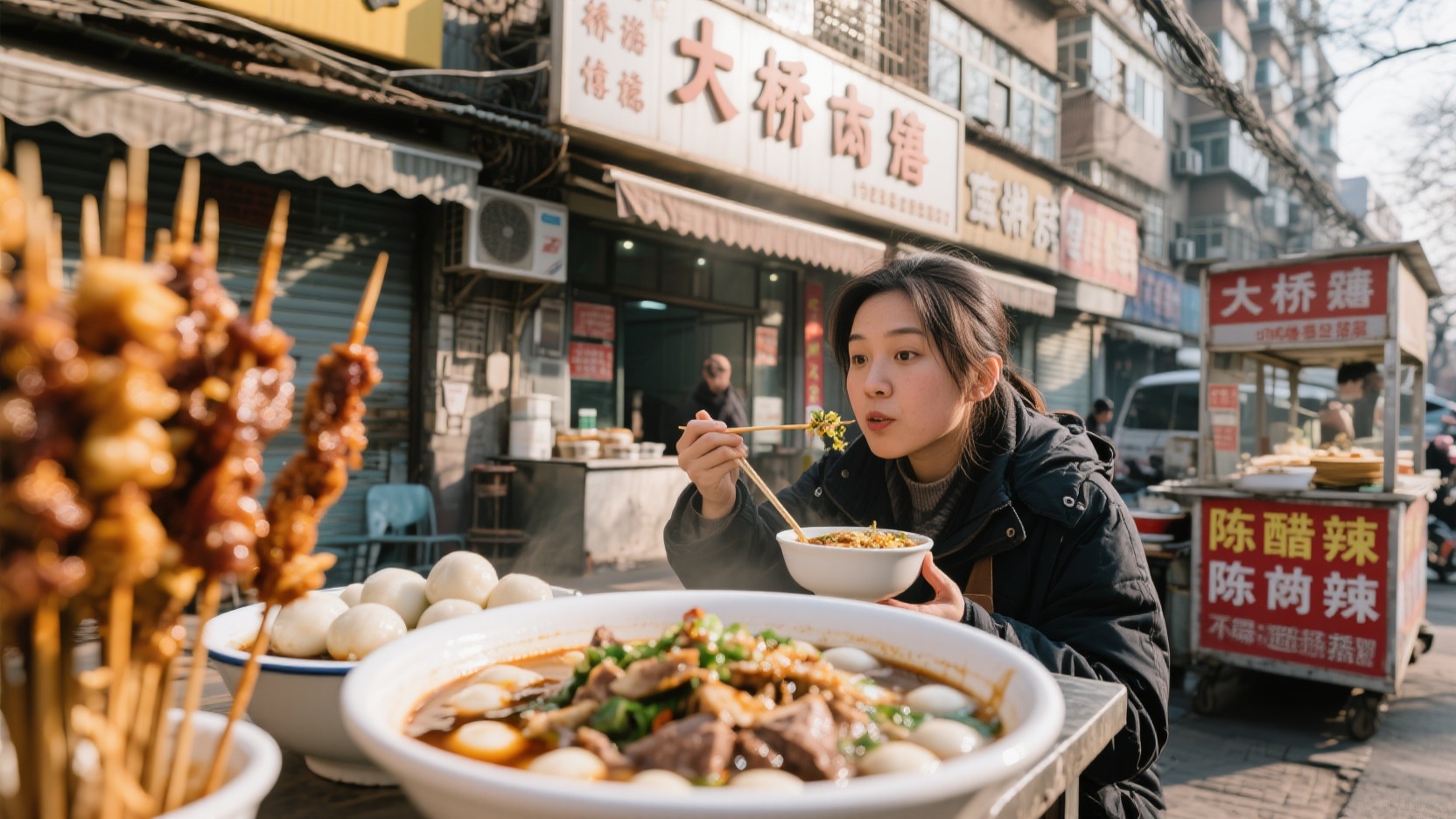
1. The "Nameless Lamb Offal Stew" stall east of Shengli Bridge: Sold out by 8 AM
This shop's name is known only to regulars; it's located behind the tin shed behind the Shengli Bridge East bus stop. The first time I went was at 7:40, and the long benches were already full, with the milky white broth bubbling with oil in the pot. Why is it worth going? Most mutton offal soups in Taiyuan use a red broth, but this one has a clear broth. The sheep tripe and intestines are cleaned extremely well, without a trace of muttony smell, and the peppery aroma in the soup comes from coarsely ground peppercorns by the owner himself.
How to order: Just shout "Big bowl of mixed offal with vermicelli," and the owner will ask, "Do you want more intestines or tripe?" Locals usually mean both. It must be served with freshly baked "triangular flatbreads"—break off a piece and soak it in the soup for a more complex flavor than eating it alone. You can also buy a couple of "hat boxes" (a type of salt and pepper hollow flatbread) on the way home to take home and stuff with braised meat.
II. Tijian Noodles in the East Alley of the Old Military Camp: The toppings steal the show from the noodles.
Laojunying is a popular late-night eatery for Taiyuan locals, but the tijian (a type of noodle) shop I want to talk about is hidden next to a barbershop in Dongxiang Alley, and it closes down at 1:30 pm. The noodle master uses iron chopsticks to flick the noodles along the edge of the plate, sending them flying directly into the boiling water—his movements are so fast they're almost like a performance. Why is it worth going? Its tomato and egg sauce includes dried silver fish, and the umami flavor can't be replicated with MSG.
Ordering method: Small bowl of "tijian" noodles with "double sauce"—tomato and egg with stir-fried pork. The stir-fried pork has plenty of garlic sprouts and black sauce; after mixing, the noodles are coated with the sauce and extremely fragrant. Don't add vinegar; enjoy the original flavor first. On the way, buy a bag of freshly stir-fried "chess pieces" from the alleyway; they're savory, crispy, and perfect as a snack on the way back.
3. The skewers downstairs in Yijing No. 9 Building: Spicy braised in aged vinegar, a taste of childhood.
For children in Taiyuan, "zhan chuan" (a type of spicy skewer) holds a place in their hearts equivalent to "mala tang" (another type of spicy hot pot) for Chengdu locals. The stalls in Yijing only open at night; the one furthest inside the nine buildings doesn't have a lightbox, just a white sign that says "zhan chuan." All the skewers are displayed on stainless steel trays, and customers stand around, dipping each skewer in the sauce before eating. Why is it worth going? Its braising sauce comes in six varieties, among which the "aged vinegar spicy" is unique—sour but not pungent, with a sweet aftertaste.
How to order: Grab a paper cup and choose your own skewers, focusing on the translucent "potato slices" and "lotus root noodles," and dip them in the spicy vinegar for a couple of rounds. While you're at it, buy a bottle of Taigang soda (locals call it "blue bottle"), chill it, and use it to dip the skewers and cool down.
IV. Taoyuan Road Community Sweet Soup Stall: Osmanthus-flavored Yuanxiao (sweet rice balls) will only be sold for four months.
This stall is located at the entrance of an old residential building on Taoyuan Road, and it only appears from the end of October to February of the following year. The owners are an elderly couple who only make osmanthus-flavored glutinous rice balls and fermented rice soup with eggs. Why is it worth a visit? Their glutinous rice flour is freshly ground, and the filling contains not only osmanthus but also a little bit of dried tangerine peel, making it sweet but restrained. The glutinous rice balls float in the soup like little moons after being cooked.
Ordering suggestion: Order a bowl of "dry-eaten glutinous rice balls" with a spoonful of osmanthus honey, and also order a bowl of fermented glutinous rice with egg. The fermented glutinous rice is homemade and has a stronger aroma than the supermarket kind. Buy a few "fried persimmons" on the way, a kind of sweet fried snack that is crispy on the outside and soft on the inside, and it's delicious even when it's cold.
5. Sausage served with bottled yogurt on Heping North Road: an afternoon tea staple of old Taiyuan.
"Guanchang" isn't actually sausage; it's made from buckwheat flour, steamed in a bowl and sliced. The shop in the Qiaoxi community on Heping North Road doesn't have a sign and is only open for two hours at lunchtime. Why is it worth going? Their guanchang is steamed in a traditional copper bowl, giving it a firmer texture than when steamed in a plastic bowl. After slicing, it's topped with a garlic and vinegar sauce, then drizzled with chili oil, resulting in a smooth, tangy, and spicy flavor.
Order the "stuffed sausage with braised pork skin". The pork skin is cut into thin strips and mixed with the sausage. The gelatinous texture combined with the garlic aroma makes it more and more fragrant with each chew. On the way, buy a bottle of local glass-bottled yogurt. It's so thick that it clings to the bottle, which is perfect for cooling down after the spiciness.
6. Tofu pudding with fried cake in Jinyuan Ancient Village: a breakfast you can only eat early in the morning.
The morning market in Jinyuan Ancient Village is hidden on both sides of the main road, with a tofu pudding stall right under the stage. This stall doesn't serve tofu pudding with a gravy, but rather with "fen tang"—a clear porridge made from pea flour, containing kelp strips and fried tofu cubes. Why is it worth going? The tofu is made to order at 3 a.m., so white and tender that it crumbles with the back of a spoon. Scooping it up with the fen tang, you experience a surge of smoothness, saltiness, and umami all at once.
Ordering method: A bowl of tofu pudding with a piece of yellow millet fritters. The fritters are freshly fried, with a bubbly outer layer and filled with red date paste. You can also buy a bundle of "sesame flatbread" from the ancient village on the way. Each flatbread can be torn into four layers, and it's a perfect match for braised beef when you take it home.
After three visits, these restaurants shared a common characteristic: the environment was average, service was mostly self-service, and opening hours were unpredictable, but the taste was the same old recipe that hadn't changed in decades. If it's your first time in Taiyuan, you don't necessarily have to go to those chain stores and top-ranked restaurants with queues starting at an hour. Instead, try eating in an old neighborhood; you'll get a better feel for the city's true character.
Three tips to avoid these pitfalls: First, don't go during peak meal times. Many shops only open for breakfast and lunch, with the busiest time being from 11:30 AM to 12:30 PM. If the owner is too busy, they might simply say "sold out." It's recommended to arrive 20 minutes earlier than opening hours. Second, don't just order the signature dishes. For example, the hidden "double braised" dish at a tijian shop, or the "double mixed intestines and tripe" dish at a lamb offal stew shop, you have to ask to unlock them. Third, remember to bring cash. At least half of the established stalls don't accept QR codes, especially in the morning market and at mobile stalls. Carrying some change in your pocket will prevent you from being left empty-handed.