
Zhuangli's Spiritual Corner: Urban Strolls Through Old Factories, Independent Bookstores, and Community Cafes
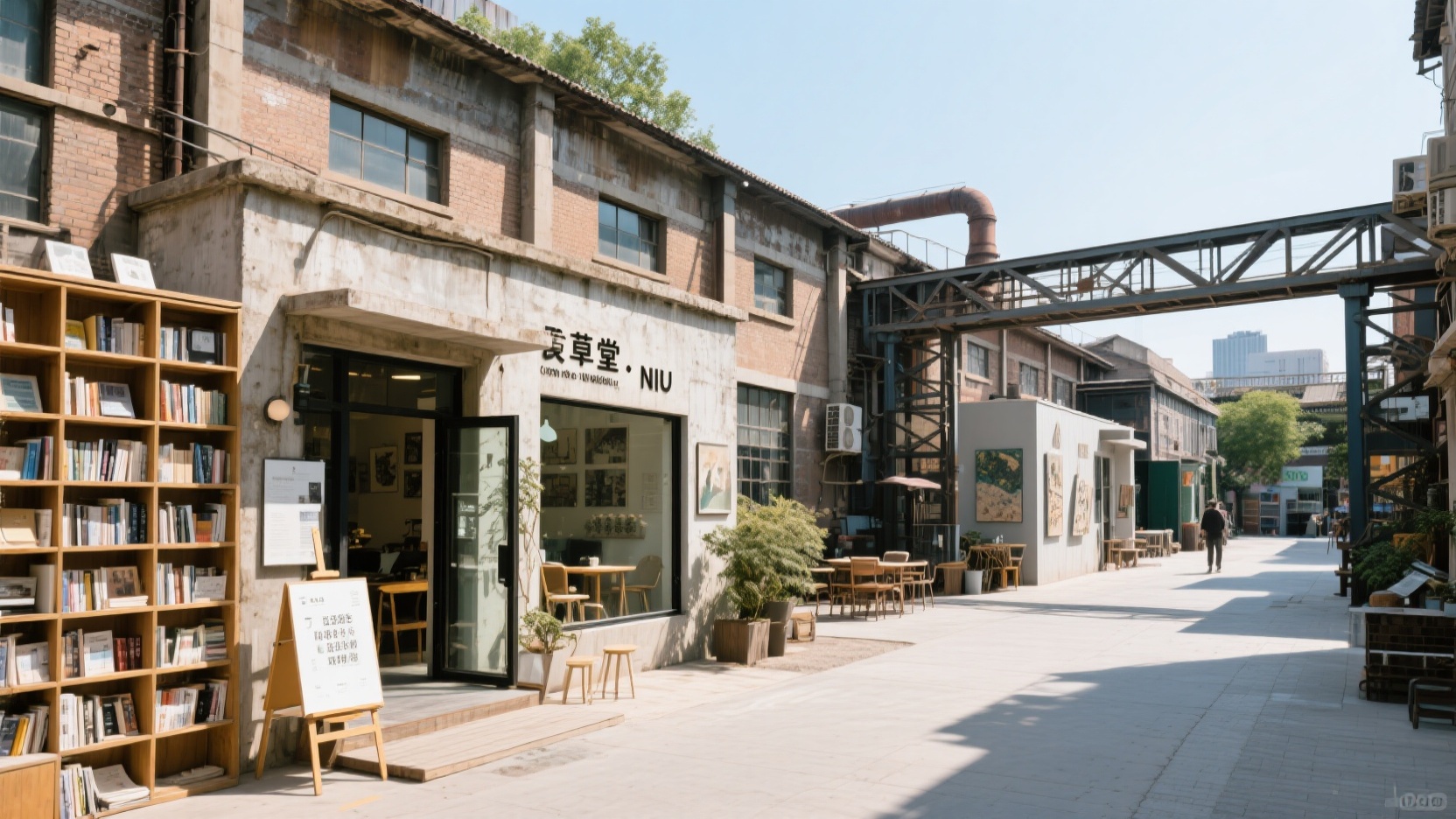
Shijiazhuang's cultural fabric isn't just displayed in the showcases of the Hebei Provincial Museum. A stroll through the old factories and residential areas of Chang'an and Yuhua districts reveals another artistic pathway connecting study rooms, vintage warehouses, private art galleries, and community cafes. It doesn't rely on tourist attractions or social media check-ins; instead, it speaks through the tactile quality of the spaces themselves and the logic behind its selection of items.
Cotton Mill No. 3 Creative Street
The original Soviet-style factory buildings and sawtooth skylights of the Shijiazhuang No. 3 Cotton Textile Factory have been completely preserved. Red brick walls, terrazzo floors, and large ventilation ducts create a natural exhibition space. Scattered throughout the area are independent publishing studios, vinyl record stores, and small design showrooms, with regular craft markets and exhibitions. The highlights are in the architectural details: the stripes of light cast by the skylights, the remnants of old-fashioned dashboards at the stairwell corners, and the uncovered work badge marks on the walls. For photography, it's recommended to stand under the red brick archway in the atrium and shoot upwards, or use the skylight light to outline people's silhouettes; afternoon photos are generally better than morning ones.
1958 Art Zone
Transformed from the old factory area of a coal mining machinery plant, the old railway tracks, gantry cranes, and red brick chimneys remain on site. The massive workshop has been divided into galleries, woodworking workshops, and experimental theaters. Exhibitions here are frequently updated, often showcasing a textual interplay between contemporary installations and old machinery. The focus isn't on any single artwork, but on the scale of the industrial heritage itself. For photography, it's recommended to capture the silhouette of the gantry cranes during the blues of dusk, or use the old railway tracks as a foreground leading line extending to the main factory building; wearing light-colored clothing makes it easier to stand out against the dark steel structures.
Wanying Art Space
Nestled within an office building complex, this privately-owned, non-profit art museum primarily showcases contemporary painting, video, and installation art. The curatorial density is low, with ample white space. It feels more like a quiet, research-oriented space for viewing exhibits; the exhibition labels and curatorial prefaces are detailed and easy to read word for word. When taking photos, don't aim for trendy angles; instead, try framing the shot at the intersection of the gray wall and sidelight at the entrance, minimizing the proportion of people in the image for a cleaner, more focused shot.
Shicaotang·NIU Art Space
This multi-functional space, transformed from a former leather factory, houses a small art gallery, a display of vintage items, and workshops for handcrafted goods. The rusted steel plates on the factory walls, old wooden doors, and scraps of leather have been reused, creating a rugged yet warm ambiance. The highlights are the material contrast between the old industrial furniture and contemporary art, and the live demonstrations of leather cutting in the workshops. For photography, it's recommended to use old window frames as foregrounds; the sidelight after 3 pm will add depth and dimension to the leather and wood grain. You can also ask your companions to take photos looking in from outside the window to enhance the sense of narrative.
Chengming Bookstore
This independent bookstore, open 24 hours a day, is characterized by its high ceilings, bookshelves, and warm yellow lighting. The selection leans towards humanities and social sciences, Hebei local culture, and international literature, and features a reading staircase where you can sit down. The highlight isn't its "most beautiful bookstore" label, but rather the atmosphere where people are still quietly browsing even after midnight. For photography, it's recommended to shoot from the second-floor platform, looking down at the bookshelves to utilize the vertical lines that create a sense of convergence, avoiding the use of flash to disturb readers. If you want to take portraits, you can use the lighting strips next to the reading staircase for fill light.
Old warehouse
This vintage warehouse specializes in collecting old furniture, enamelware, old receipts, industrial parts, and old books from North China, arranged in a style similar to a warehouse archive. The appeal lies in the life stories behind the objects, rather than meticulously staged photos. Bakelite switches, faded certificates, and old-fashioned thermos flasks often hold their appeal more than larger pieces of furniture. For photography, it's recommended to prioritize natural light, capturing the grain of old wood and the reflections from enamelware. If using a phone to provide fill light, be careful to aim it at metal objects and avoid shining it directly onto the walls to prevent disrupting the overall color scheme.
Half a cup of coffee
Located on the ground floor of an old residential building, the storefront is inconspicuous, specializing in hand-drip coffee and light roast beans. The interior retains old-fashioned terrazzo floors and vintage wooden furniture, with the shadows of locust trees often casting on the tabletops outside the windows. It feels more like a community living room, perfect for sitting down and reading a book after viewing an exhibition. For photography, a window seat is recommended; utilize the afternoon natural light to capture the coffee and table textures, incorporating the window frame to create a natural picture frame. For portraits, side-backlighting will produce a softer effect.
MOXI Art Space
This small white-box gallery, run by a young curator, has irregular exhibition dates and primarily features small paintings and works on paper by local young artists. The space is small, but the exhibition setup is restrained, with handwritten labels and printed copies of artist interviews often displayed in the corners. The atmosphere leans towards research, making it suitable for viewers interested in contemporary art. For photography, it's recommended to maintain a distance of at least one meter from the works, taking photos of your back against the blank walls—this will be more visually appealing than a front-facing group photo; you can also take overhead shots of the labels and details of the floor textures.
This route doesn't need to be completed in one day; just spend time in two or three spaces. Together, they constitute Shijiazhuang's quiet yet genuinely thriving cultural scene. Measure the spiritual corners of this city with your footsteps.