
Spiritual Corners of Nanchang | From Independent Bookstores to Creative Cultural Parks in Old Warehouses: Exploring 7 Artistic Scenes on Foot
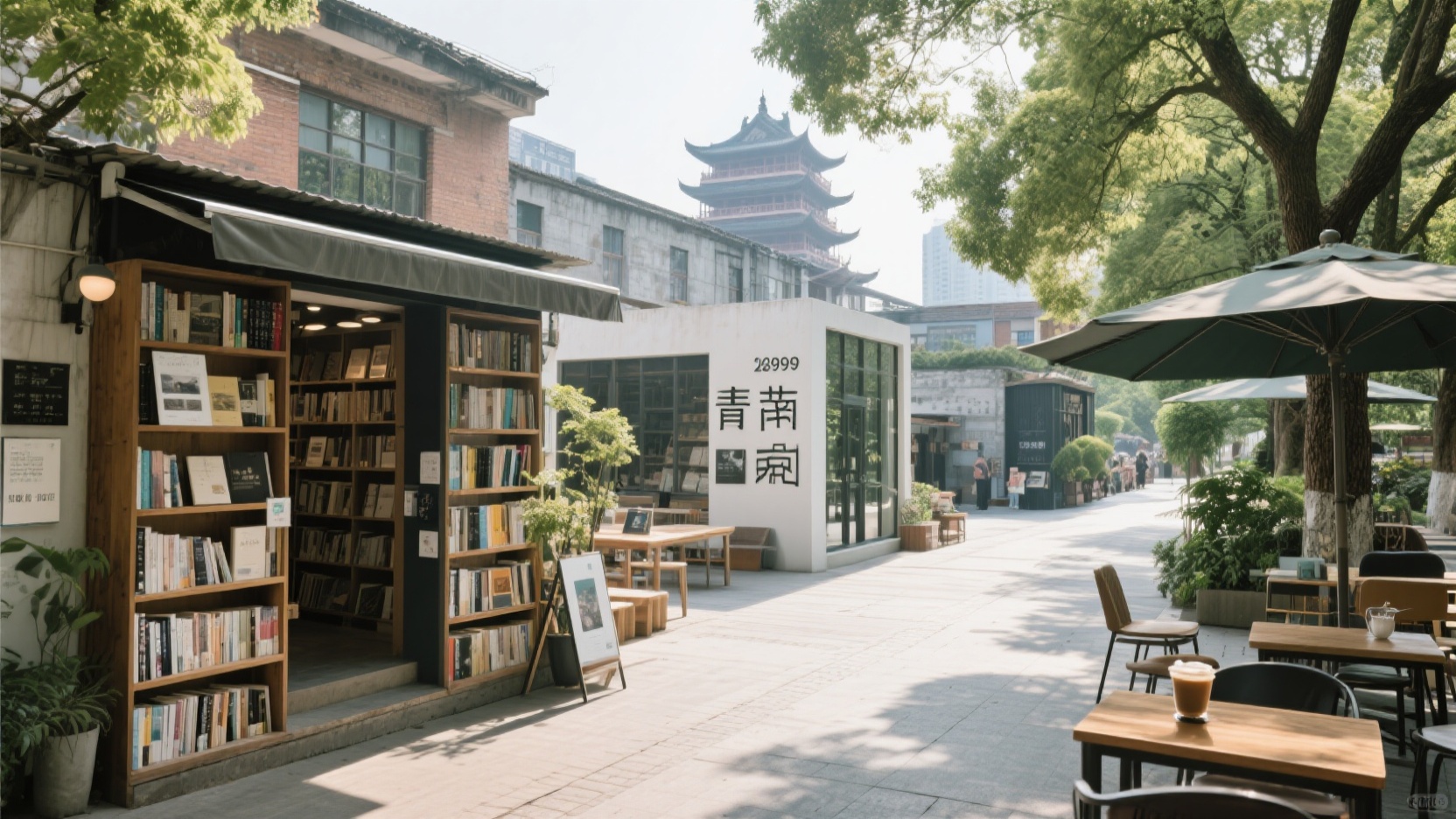
In Nanchang, cultural and artistic travel doesn't have to start at the Tengwang Pavilion. To see another side of the city, you can piece together a "niche cultural map" from industrial parks converted from old factories, bookstores under residential buildings, and small galleries. The following seven locations avoid the usual tour groups and are closer to the daily strolls of Nanchang's local young people.
Qingyuan Bookstore: Urban Slow Reading Between the Pages
Qingyuan Bookstore is one of Nanchang's long-established independent bookstores. The space is quiet and the selection leans towards humanities and social sciences, Jiangxi local history, and literary criticism, rather than being filled with bestseller lists. Highlights include a special shelf dedicated to Jiangxi local history in a corner, themed desks, and the occasional book clubs. For photography, it's recommended to use a warm yellow desk lamp and the depth of the bookshelves, taking photos from a low angle near the entrance to show the layers of the book spines. Avoid using flash to disturb readers.
Land-based bookstores: juxtaposing art books with old objects
Lu Shang Bookstore is more like a multi-functional space themed around urban memories, placing used books, independent magazines, foreign editions of architecture and design books, and small exhibitions on the same floor. Old photos, ticket stubs, and handmade items are displayed in old wooden cabinets, giving it a warehouse-like feel. Highlights include the wall of original architecture books, the monthly rotating small exhibition wall, and the dedicated shelf for independent publications. For photography, it's recommended to use the old wooden cabinets as a foreground and photograph people flipping through the books through the glass; if there are mirrored installations, try creating compositions that suggest overlapping spaces.
Silence Space: Experimental Slices on a White Wall
Xu Space is a small, independent art space, often tucked away in old neighborhoods or converted factories, preserving its concrete floors and white walls. Exhibitions primarily feature installations, videos, and experimental paintings. The curatorial approach offers minimal explanation, requiring viewers to engage with the works on their own. Highlights include contemporary artworks that interact with the spatial structure, and the small galleries with almost no explanatory plaques. For photography, it's recommended to wait for the afternoon sunlight to fall on the white walls, creating a minimalist composition; if there's a video installation, try to include the projection and the viewer's silhouette in the same frame.
699 Cultural and Creative Park: A side alley leading into the old factory buildings
699 Cultural and Creative Park is a renovated complex of red-brick factory buildings formerly belonging to the Jiangxi Hua'an Knitting Factory. While the main road has become commercialized, the real attractions are the old boilers, rusted pipes, old workshop signs, and small handcrafted studios tucked away in the side alleys. Weekends often feature craft markets or independent book exhibitions, where you might encounter local creators. For photography, it's recommended to frame the shot between the red-brick walls and the black iron staircases, wearing dark or earth-toned clothing for a more harmonious effect. In the evening, utilize the backlighting from the high windows of the old factory buildings to create photos with distinct layers and contours.
Donghu Yiku: A quiet waterfront in an old warehouse
Donghu E-Cool, converted from a former foreign trade warehouse, is located next to an old railway branch line and the waterfront, making it quieter than most cultural and creative parks. The highlights include the warehouse trusses, remnants of the old platform, design studio windows, and permanent small-scale architectural or urban renewal exhibitions. It's best to stroll around in the afternoon or at dusk; when there are fewer people, you can clearly hear the echoes of your footsteps and the steel frames. For photography, it's recommended to stand on the old platform and shoot into the depths of the warehouse, or use the reflections in the water and the steel structures to create symmetrical compositions. The blue-toned evening hours are the best for taking photos.
Camphor Tree Forest Cultural and Living Park: Reuse of Industrial Heritage
The Zhangshulin Cultural and Living Park, formerly the Jiangxi Chemical Fiber Factory, retains its towering chimneys, old machine foundations, and some old factory buildings. It's a great place to observe how industrial relics have been transformed into public spaces: open-air seating areas under the old chimneys, installations made from rusted machinery, and small private art galleries alongside handicraft workshops. Highlights include the scale relationship between the chimneys and the old machinery, and the permanent small exhibitions. For photography, it's recommended to use the chimneys as a vertical reference, shooting from a low angle to contrast people with the old machinery; on cloudy days, the texture of the old metal is more unified, suitable for taking cool-toned photos.
A hand-drip coffee shop located downstairs in a residential building: everyday local flavors.
In old residential buildings near old towns or universities, you can often find community cafes with only ten or so seats. They usually write their menus on a small blackboard, and their coffee selection changes seasonally, featuring local Jiangxi roasting brands or the owner's own roasted beans. The highlights are the hand-drip coffee served outside the bar, the local magazines, homemade postcards, and the casual conversations left by residents inside. For photography, it's recommended to sit by the window and use natural light to capture the bar and coffee equipment; the light is most stable around 3 pm.
From book pages, ink, and old steel frames to the aroma of hand-drip incense, Nanchang's urban culture isn't confined to glass display cases, but rather thrives in these still-used spaces. Explore the city's spiritual corners on foot.