
Lhasa's Artistic Hidden Corners: Private Art Museums, Independent Bookstores, and Old Factories – Another Side of the City
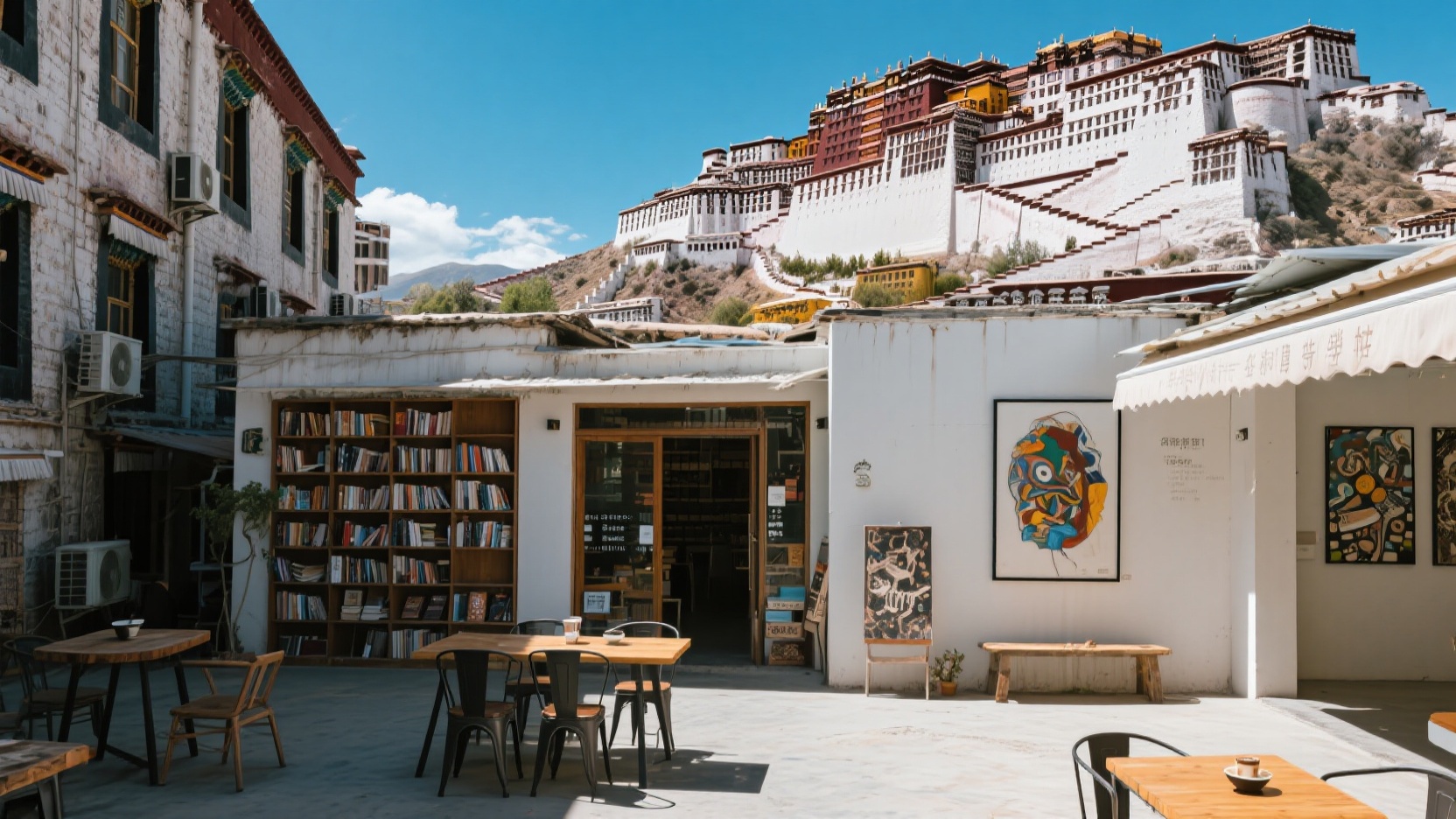
Lhasa's cultural heritage extends beyond its pilgrimage routes and palaces. Heading west along the old city streets, ancient mandalas, old factories, and neighborhood cafes form a walkable "spiritual corner" route. The following eight locations avoid the most crowded areas for tour groups and are best explored slowly over half a day to a full day, ideally using walking or short taxi connections.
Yoshimoto Art Center: Contemporary Exhibitions Inside a Qing Dynasty Mandala
Converted from an ancient mandala building dating back to the Qing Dynasty, this is one of the few public institutions in Lhasa that hosts contemporary art exhibitions within a historical space. Tibetan wooden structures and contemporary installations coexist in one room, creating a serene atmosphere. The highlights include the preservation of the complete mandala layout, fragments of murals, and wall textures. The permanent exhibitions focus on contemporary Tibetan art and architectural heritage. Tripods are not permitted in the ancient building, making handheld photography more flexible. For photography, it's recommended to take pictures before 10 AM when the high windows provide the best sidelight. The central courtyard corridor is suitable for symmetrical compositions, and using window projections as foreground elements can create depth and contrast.
Mesoscopic Art Center: A white geometric shape on the banks of the Lhasa River
The space exudes a modern Tibetan minimalist aesthetic, lighter than traditional art museums. It features permanent exhibits of contemporary Thangka paintings, experimental videos, and installations. The riverside terrace offers panoramic mountain views, while the building's folds and the interplay of light and shadow are its most prominent exhibits. Exhibitions don't change frequently, but each visit has a clear theme. It's recommended to walk around the exterior first before viewing the works in the galleries. For photography, it's suggested to capture the building's silhouette in the blues of the evening. Inside, use axial symmetry to emphasize the high ceilings. For backlit portraits on the terrace, be sure to use supplemental lighting.
Shengcheng Bookstore: An independent bookstore focusing solely on in-depth reading about Tibet.
The selection leans towards Tibetan history, religious philosophy, and travel literature, without the noise of a tourist souvenir area. Rare Tibetan documents and independent publications are the highlights. The window-side reading area offers a quiet space to browse, and the owner occasionally writes handwritten recommendation cards. The bookshelf labels are also handwritten, making the process of finding a book feel like flipping through a personal notebook. It's suitable for travelers who want to systematically learn about Tibetan culture. For photography, it's recommended to use a 35mm focal length to capture the depth of the bookshelves. In the morning, natural light on the spines of the books is softer than overhead lighting, while avoiding glass reflections.
Gu Xiu Na Bookstore: Flipping through old times on a cushion
This traditional Tibetan-style bookstore, with its mix of reading mats, copper kettles, old wooden boxes, and Tibetan paper notebooks, feels like stepping into a private study. Facsimiles of ancient Tibetan books, old photos and postcards, and sweet tea coexist, while a guestbook on the old wooden box records fragments of travelers' lives. The atmosphere is warm and quiet, perfect for sitting down and reading in the afternoon. For photography, it's recommended to shoot the reading area from a low angle; warm lighting produces better results than harsh white light. For still life objects on the table, use overhead shots to highlight the contrast of textures.
Daigo Art Center: Thangka Patterns Enter Everyday Life
This art shop and gallery seamlessly blends tradition and modernity, transforming Thangka patterns into scarves, badges, and everyday objects in an effortless way. The main attractions are contemporary Thangka creations, artist-branded cultural and creative products, and small themed exhibitions. Staff provide thorough explanations of the exhibits' backgrounds. It's a great place to find non-mass-produced travel souvenirs. For photography, it's recommended to shoot from above in the art shop to capture the color composition, and in the gallery, use natural light to photograph the details of the exhibits. Always ask permission before photographing any items.
Snowdrift White Handicraft Art School: Seeing the Process of Craftsmanship
The workshop-style space, filled with the aromas of wood, bronze, and mineral pigments, allows you to witness the entire process of craftsmanship rather than just the final product. You can observe the on-site creation of Thangka paintings, metal sculptures, and woodblock printing blocks, with the craftsmen working at a measured pace and demonstrating clear steps. It's suitable for visitors with patience for traditional handicrafts. Photography is recommended, but only with permission, to take close-up photos of the artisans' hands and tools. Avoid flash photography and distractions; side-backlighting will highlight the texture of the bronze and wood.
A cultural and creative cluster at an old cement factory: "Tibetan 798" in the western suburbs of Lhasa.
Transformed from old factory buildings in the western suburbs, the juxtaposition of rough concrete, graffiti, and glass curtain walls has earned it the nickname "Tibetan 798" among local young people. Small independent galleries, architect studios, weekend markets, and open-air screenings are the main attractions. The galleries are constantly updated with new photographers and print exhibitions. For photography, it's recommended to utilize the geometric lines of the industrial structures in your compositions. The contrast between warm and cool tones becomes more pronounced when the streetlights illuminate at dusk, and wide shots are ideal in front of the graffiti walls.
Ningdu Coffee: Sunlight and Hand-Drip Coffee in an Alley
The place has a strong sense of community; the bar is compact, and green plants and old magazines are casually placed. Most of the customers are nearby residents and freelancers. The local roasted hand-drip coffee and the window seats are the highlights. There's a small photography exhibition on the wall, with the content changing regularly. It's a good place to stop for a break during a half-day walking trip. For photography, it's recommended to shoot the hand-drip coffee process at the bar with backlighting, using pedestrians outside the window as a dynamic foreground. The atmosphere is most natural when the warm light shines at an angle in the evening.
Explore the spiritual corners of this city with your footsteps.