
A Culinary Journey Through Kunming's Markets: 9 Must-Try Local Delicacies in Zhuanxin and Donghua Markets
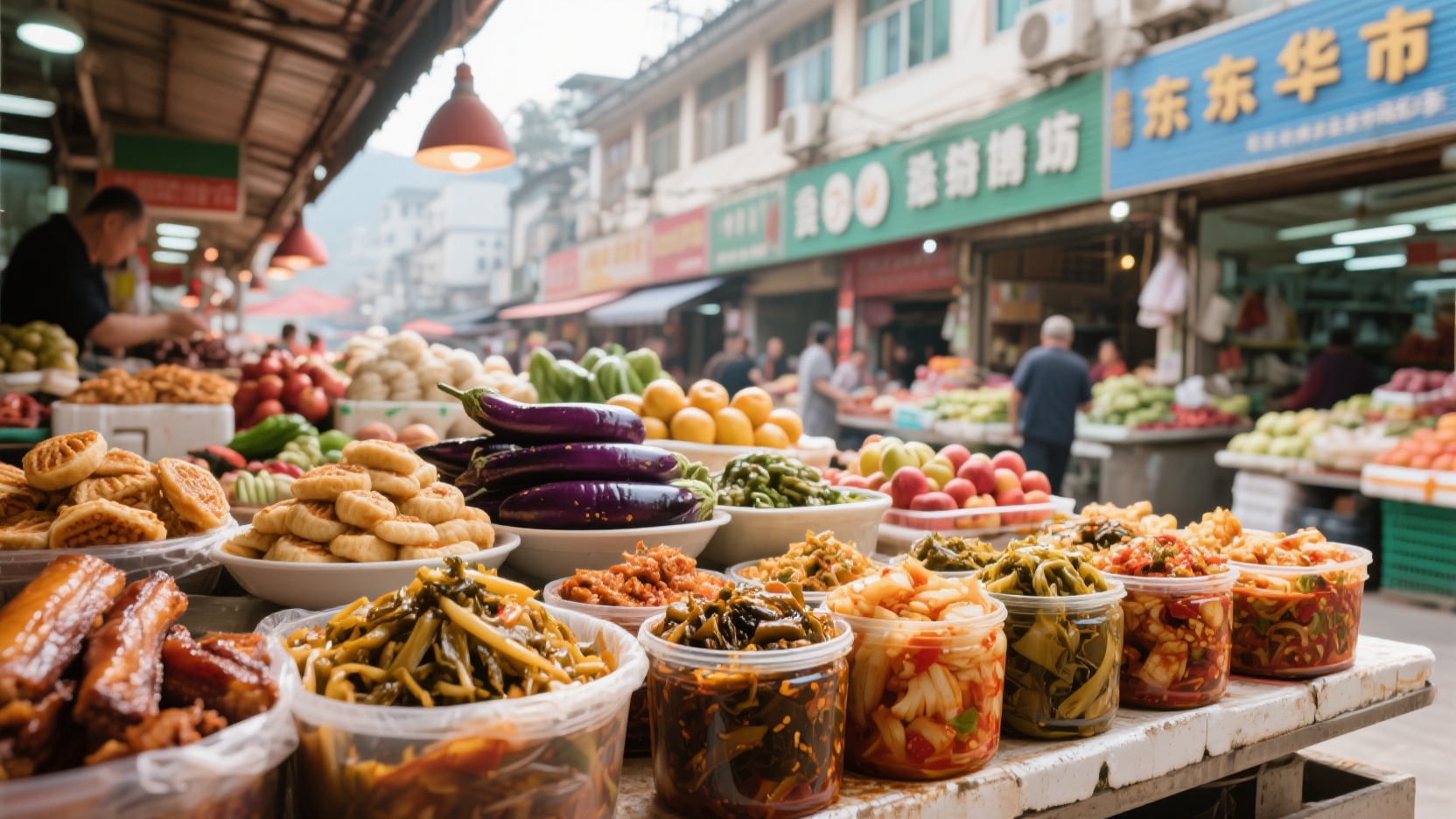
For Kunming residents, half the mornings begin with the shouts and calls of vendors at the Zhuanxin and Donghua Farmers' Markets. The former, known as the "face of Kunming's vegetable markets," boasts a concentrated collection of stalls and a comprehensive range of goods; the latter, nestled within an old community, retains a stronger local flavor. Together, they hold almost half the secrets of Kunming's culinary scene.
Cooked food stall: Freshly made and mixed Kunming flavors
The best place to start at the market is the cooked food stalls. At Zhuanxin Farmers Market, the eggplant is grilled over charcoal until the skin is charred black. The vendor tears it into strips while it's still hot, then mixes it with minced garlic, cilantro, chili paste, and soy sauce. The eggplant retains its moisture, making it soft and tender without being watery. When choosing eggplant, check if it's still steaming hot, if the seasonings are freshly ground, and if it smells of charcoal grilling rather than just chili oil. For eating, the seasoned eggplant can be stuffed into grilled rice cakes, or enjoyed with a bowl of white rice at home.
At the Donghua Farmers Market, people often wait with bowls in hand at the tofu and rice noodle stall. The tofu should be freshly scooped, with a delicate texture but not falling apart into watery bits; thick rice noodles are best, as they can hold the sauce well. After mixing, layers of pickled vegetables, crushed peanuts, sweet soy sauce, and chili oil adhere to the tofu. Don't stir it too much when eating; retaining the tofu's chunky texture enhances the flavor.
Another must-try is steamed pork with rice flour. The best steamed pork from cooked food stalls is thinly sliced pork with fine rice flour, served on a bed of potatoes or pumpkin to absorb excess oil. When choosing, check the surface to see if the lean and fat layers are clearly defined, and if there's a slight seepage of fat from the bottom. Steam it for ten minutes at home, then stuff it into a flaky bun or steamed bread for a more layered flavor than eating it plain.
Handmade Pastries and Desserts: The Art of Fermentation and Baking
At the Zhuanxin Farmers Market, stalls selling handmade sweet rice wine often have fermentation vats ladled out fresh. Good sweet rice wine has intact rice grains, a clear liquor, and a sweet taste rather than sourness. When choosing, smell it; it should have a gentle aroma of alcohol. If the smell is pungent, it means the fermentation has overdone itself. In summer, it can be chilled and mixed with milk; in winter, it can be cooked with small glutinous rice balls or eggs, so the aroma of alcohol doesn't overpower the other flavors.
Milk fan and milk cake are the two items with the most concentrated milky aroma in the market. Choose milk fan that is milky white with a slight yellow tinge and not sticky to the touch. When you get home, fry it in oil over low heat or grill it over charcoal until soft, then sprinkle it with white sugar and roll it up. Milk cake should be elastic when pressed and have a fine surface without large air holes. Slice it and steam it with ham. The salty and milky aroma complement each other.
For Guandu Baba and Posu Bao, look for stalls that sell them freshly made. Guandu Baba has a thin yet chewy outer skin, and the most common fillings are sesame paste and red bean paste. It's best when it's warm to the touch and not sticky. As for Posu Bao, look for the naturally layered crust that has cracked open; it should be soft and flaky but not collapsed at the bottom. Both are perfect with Pu'er tea, and they taste best when eaten hot.
Pickled and preserved vegetables: side dishes that improve with time
The pickled and preserved vegetable section of Kunming's markets best embodies the locals' understanding of "preserving flavor." Eggplant pickle is a prime example; it's made by slicing eggplant into thin strips, drying them, and then fermenting them in jars with rice flour, chili peppers, and spices, resulting in a bright red and oily color. When choosing pickles, first check if the color is natural, then taste a little; the fermented aroma should be mellow, without a musty or overly salty smell. Adding a spoonful when stir-frying minced meat immediately brings out its savory and salty flavor.
Pickled vegetables are another signature dish of Kunming. An old variety of bitter greens, fermented, becomes crisp and refreshing. When choosing pickled vegetables, look for distinct stems and leaves, clear juice, and a clean, sour aroma. They are not only the soul of small-pot rice noodles, but can also be chopped and stir-fried with meat, mixed with cold rice noodles, or even served directly with white porridge.
Seasonal Fruits and Fruit Pickles: Seasonal Signals in the Market
Buying seasonal fruit is another pleasure of strolling through Zhuanxin and Donghua markets. In autumn, Chenggong Baozhu pears come into season; choose those with thin skin, small lenticels, and a substantial weight in your hand—they're known for their fine flesh, juiciness, and small cores. In winter, Tuanjie Township apples have a perfect sweet-sour ratio; select those with natural wax on the skin and a strong aroma. Kunming's markets also offer a unique way to enjoy fruit—fruit pickles. Green mangoes, sour papayas, and olives are sliced and mixed with licorice salt and chili powder, resulting in a flavor that's initially sour, then spicy, and finally sweet. When selecting fruit, check for freshness and crispness, and whether the seasoning is freshly mixed—the flavor of freshly mixed and eaten is far superior to that of sealed containers.
Visiting a local market is the best way to experience a city. It's unpretentious and doesn't cater to tourists; all the culinary clues are laid out on the table: the charcoal glow of the cooked food stalls reflects Kunming's patience with cooking; the fermenting sounds in the pickling jars are a testament to the interplay of time and climate; and the changing seasons of fruits are more honest than any travel guide. In Zhuanxin and Donghua, you don't need a plan. Just follow the locals as they queue, watching how they choose their produce, how they haggle, and how they casually pick up ingredients for dinner—the culinary logic of a city unfolds naturally in this back-and-forth.