
A Day in the Life of a Changsha Resident | 8 Street Foods from Early Morning Noodle Shops to Late-Night Food Stalls
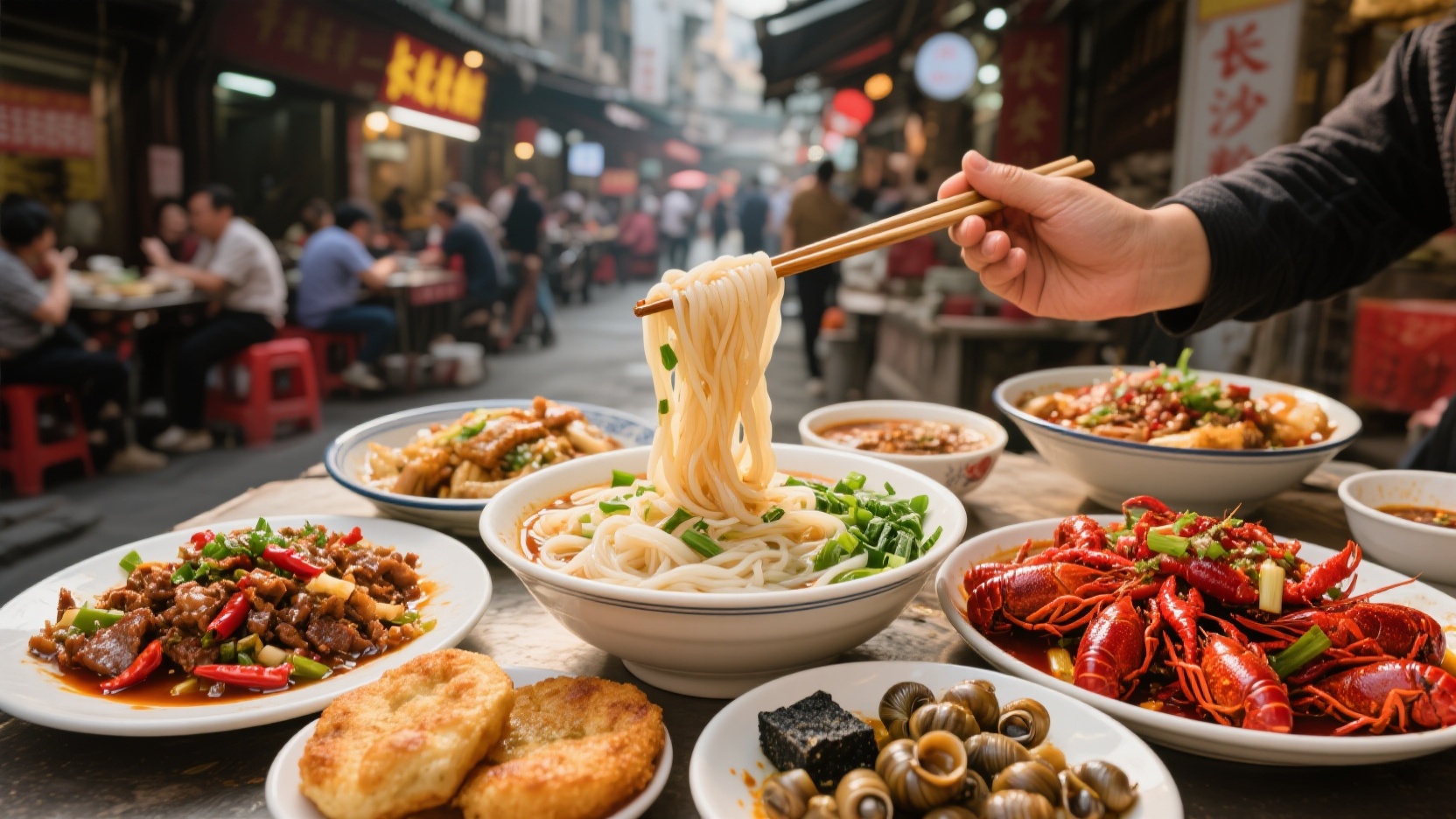
At 6:30 a.m., steam was already rising from the noodle shop at the entrance of the old community alley. The large pot of broth on the stove was boiling, and stacks of wide, flat rice noodles were waiting to be cooked on the cutting board. For most people in Changsha, a day begins with a bowl of noodles.
Early morning: Changsha rice noodles and scallion pancakes
Changsha rice noodles are primarily flat rice noodles, emphasizing "fresh broth, hot toppings, and soft, smooth noodles." The rice noodles are made from early-season rice ground into a paste, spread into thin sheets, and then cut into strips about a finger's width and thinner than typical rice noodles. They are blanched in boiling water for a few seconds and then placed in a bowl. The broth is made by slow-cooking pork bones, chicken carcasses, and a small amount of fermented black beans, resulting in a clear, non-cloudy broth with a hint of fermented black bean aroma. Toppings are divided into stewed and stir-fried: shredded pork, hot and sour toppings, and beef are stewed, simmered over low heat for several hours until tender; stir-fried pork with chili peppers, pork liver, etc., are stir-fried to order, resulting in a stronger wok hei (wok aroma). Diners hold their noodles, first taking a sip of the broth, then picking up a mouthful of noodles with chopped chili peppers, pickled cowpeas, and minced garlic. The texture is delightful: the noodles are soft and smooth, clinging to the broth, with a clear rice aroma; the toppings are savory, slightly spicy, and the more you eat, the warmer you feel. For locals, a bowl of noodles in the early morning is not only a way to fill their stomachs, but also a daily ritual for exchanging greetings and news with neighbors at the alley entrance.
Alongside the rice noodles, there's also scallion pancake. Rice and soybeans are soaked in a specific ratio, ground into a paste, seasoned with chopped scallions and salt, ladled into a round iron ladle, and deep-fried in rapeseed oil until hollow and puffed up. The outer shell is thin and crispy, the inside soft and tender, with the aroma of scallions and soybeans mingling together. Old Changsha locals often enjoy a bite of rice noodles, a bite of pancake, and a bowl of hot soy milk or mung bean soup—simple yet satisfying.
Lunch: Stir-fried pork with chili peppers and steamed vegetables from a local eatery
At lunchtime, the small, unassuming restaurants downstairs in the residential buildings come alive. Stir-fried pork with chili peppers is the most popular home-style dish in Changsha, often called the "ultimate rice-eating dish." The ingredients include local spiral or green chili peppers, pork shoulder or pork belly, Liuyang fermented black beans, and garlic. The cooking method involves first rendering the fat in a wok to extract the lard, then quickly stir-frying the lean pork, followed by the chili peppers, fermented black beans, and garlic slices. It's seasoned with soy sauce and salt, and cooked over high heat to maintain the wok's smoky flavor. The finished dish is glossy, with slightly charred chili peppers and dry, fragrant, and oily pork slices. The texture is delightfully complex: the chili peppers are crisp and spicy, the pork is tender and juicy, and the savory flavor of the fermented black beans blends perfectly with the oil. The most essential element is the spoonful of oily broth at the bottom of the plate, which, when mixed with rice, can easily make you want to eat two bowls. Stir-fried pork with chili peppers is so ubiquitous in Changsha because it's quick, delicious with rice, and uses readily available ingredients—a steadfast and reliable staple in Changsha homes and restaurants.
Accompanying the stir-fried pork with chili peppers is often one or two servings of Liuyang steamed dishes. These steamed dishes are served in small bowls, where ingredients such as assorted preserved meats, roasted fish, steamed dried tofu, and steamed pumpkin are seasoned and placed in bamboo steamers. Heated simultaneously by steam, they contain less oil and retain their original flavors. The preserved meats are salty, fragrant, and firm; the dried tofu is soft and tender with a smoky aroma; and the pumpkin is powdery, sweet, and refreshing. Liuyang steamed dishes emphasize "no dish is complete without steaming," offering quick service and catering to all budgets, making them a practical lunch choice for working professionals. They also embody the restraint and nuanced approach of steaming in Hunan cuisine.
Afternoon tea: Stinky tofu and sugar-coated fried dough sticks
Around 3 or 4 pm, queues form at street food stalls, with Changsha stinky tofu as the star attraction. The black color of the stinky tofu comes from a brine made from fermented black soybeans, shiitake mushrooms, and winter bamboo shoots. The tofu slices are soaked in the brine for several hours before being deep-fried in rapeseed oil until the outer skin is crispy. After being taken out, the vendor pokes a small hole in the center of the tofu and fills it with garlic water, chili sauce, diced radish, and cilantro. The texture is crispy on the outside and tender on the inside; biting into it releases a burst of juice, a pungent aroma, and a powerful, lingering spiciness. Changsha locals don't eat stinky tofu for the sake of its "stinky smell" but rather accept it as an everyday, salty and spicy snack, enjoyed on the go – a casual way to satisfy cravings in the afternoon.
After the savory and spicy dishes, the sweet representative, sugar-coated glutinous rice cakes, make their appearance. Small round cakes made from glutinous rice flour are slowly fried or pan-fried in brown sugar oil, then coated with a layer of bright red syrup. They have a soft, chewy texture, a restrained sweetness, and a harmonious blend of brown sugar and glutinous rice aromas. This alternation between sweet and savory is the unspoken rhythm of afternoon tea for Changsha locals.
Late at night: The bustling world of crayfish and snail stalls
As night falls, food stalls along the Xiangjiang River and at the entrances of old alleys set up their light boxes, with spicy crayfish becoming the star of the late-night snack. The crayfish are trimmed of their heads and deveined, then deep-fried until bright red before being removed. Ginger, garlic, dried chili peppers, Sichuan peppercorns, broad bean paste, and perilla leaves are added to the pot, followed by the crayfish to simmer. Before serving, beer and a touch of sugar are added to enhance the flavor. The crayfish meat is firm and tender, the broth is spicy and fragrant, and the aroma of perilla leaves is key to distinguishing Changsha-style spicy crayfish from those from other regions. The proper way to eat it is to "first suck the broth, then peel the shells, and finally mix with noodles." Adding a bowl of plain noodles to the broth after finishing the crayfish is the highlight of the meal. Spicy crayfish is not just food, but also a medium for socializing on summer nights; groups of friends gather around, and conversations rise and fall with the crayfish shells.
Just as common as spicy crayfish is snail slurping. After the snails have expelled all the mud and sand, their tails are cut off, and they are stir-fried with ginger, garlic, dried chili peppers, star anise, cinnamon, and perilla leaves, then simmered briefly in broth. To eat, use a toothpick to pick out the snail meat, or simply suck it from the opening. The snail meat is crisp and chewy, the broth is salty and spicy, and the perilla flavor is rich. Paired with ice-cold beer or mung bean soup, it's both refreshing and satisfying. Snail slurping at late-night food stalls is a rhythmic experience, one bite after another, accompanied by the sounds of everyday life in the streets and alleys.
From the steamy aroma of rice noodle shops in the early morning to the spicy and bustling atmosphere of food stalls late at night, from the main streets to the back alleys, experience the vibrancy and spiciness of Changsha in a single day.