
Hidden Corners of Changsha | A Spiritual Map of the Old City Connected by Eight Independent Spaces
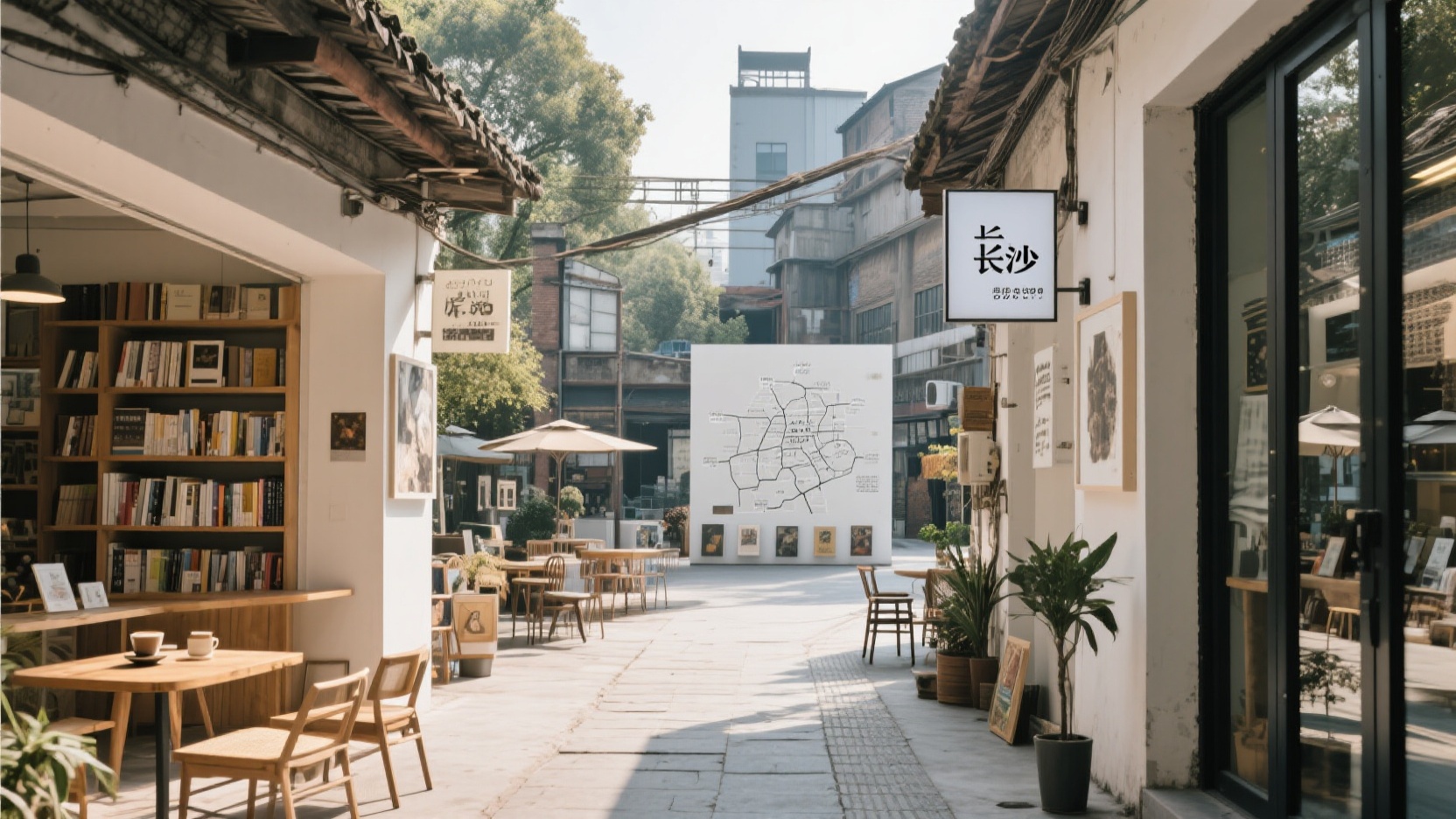
Avoid the crowds at Wuyi Square and Orange Isle; Changsha's cultural density is actually hidden in old streets, factories, and community corners. This route connects eight independent spaces, including bookstores, galleries, vintage cafes, cultural and creative parks in old factories, and community clusters. The locations are easily connected by walking or short bike rides, so it's recommended to set aside a whole day for leisurely exploration.
Zhijian Bookstore: A Reading Living Room in the Heart of the City
Zhijian Bookstore doesn't prioritize photo opportunities; its selection focuses on humanities, art, and local Changsha publications. Old wooden bookshelves and warm lighting create a tranquil atmosphere. Signed copies by local authors and independent publications are displayed in the corners, and small themed exhibitions are frequently updated at the entrance. The highlight is the white space between the bookshelves and the handwritten recommendations, revealing an editorial touch that surpasses that of chain bookstores. For photography, it's recommended to use the window reading area, where natural light filters through the old window frames; take low-angle shots of the bookshelves' depth to avoid disturbing readers; and focus on close-ups of the spines and handwritten labels for added warmth.
Changsha in Twelve Hours: A Multi-functional Cultural Space in an Old House
Located in an old building on Chao Tsung Street, this 24-hour facility accommodates nighttime reading and late-night exhibitions. The space retains its courtyard and old walls, with the circular bookshelf and spiral staircase serving as visual focal points. Besides the book selection, highlights include occasional small-scale curated exhibitions and discussions on local issues, allowing readers to read, view exhibitions, and engage in conversation all within the same space. For photography, it's recommended to use a wide-angle lens to center the subject in front of the circular bookshelf; at night, utilize the courtyard lighting for better contrast than during the day, but be careful to control highlights to avoid overexposure.
Dust of Time Cafe: Old Objects as Exhibits
This place is more like a miniature vintage warehouse. Tabletops made from old door panels, discarded school desks and chairs, old radios, and enamel mugs all contribute to the space. Beyond the coffee, the most valuable element is the provenance notes accompanying each item. The appeal lies in the seamless integration of vintage items with everyday use, rather than an artificially aged look. For photography, it's recommended to sit at the old wooden table by the window and use a warm-toned lamp to create a film-like effect. Close-ups of details on vintage items tell a story more effectively than panoramic views, and backlighting by the window can reveal the textures of dust.
Arched Gallery: White Boxes in Old Streets
This independent gallery, located in the Chao Zong Street area, preserves the arched doorway of an old house, with white walls and a cement floor inside. The exhibitions primarily feature contemporary painting, photography, and small installations, and are frequently updated, making them suitable for multiple visits. The highlight is the contrast between the old building's framework and the contemporary works; some exhibitions utilize the archway as a spatial installation. For photography, it's recommended to stand outside the archway and shoot inwards, using the doorway as a natural frame. Inside the gallery, with the artworks as a backdrop, people should turn to the side to avoid reflections and keep the image clean.
Houhu Art Park: A lakeside settlement in the process of urban renewal
Houhu was transformed from old residential buildings and factories, with artist studios, design shops, and cafes scattered along the lake. Compared to standard cultural and creative parks, it retains the original street scale and traces of residents' lives, with some walls still showing their peeling texture. Highlights include red brick walls, lakeside sculptures, and temporary exhibitions by independent designers, making it suitable for leisurely strolls without a specific destination. For photography, it's recommended to walk along the lakeside path in the afternoon, using the red brick walls and the lake as a double backdrop; on cloudy days, the contrast between the gray walls of the factories and the brightly colored artworks is stronger, so try symmetrical compositions.
Shuguang 798 City Experience Hall: An Industrial Site Converted from a Factory Building
The old factory's high ceilings and steel structure have been completely preserved, with basketball courts, bookstores, photography studios, and cafes scattered throughout different workshops. It's not a sophisticated consumer district, but more like a creative construction site still growing, with some areas retaining pipes and serial numbers from the production era. The highlights are the graffiti, old machine parts, and unpainted concrete floors, creating an authentic industrial feel. For photography, it's recommended to shoot from below under the steel-structured corridors to emphasize the spatial height; wearing solid-colored clothing will prevent you from being swallowed by complex backgrounds; and the old pipes are suitable for environmental portraits.
Fengying Xili Community Coffee: A youthful vibe in the alleyways
There's no uniform storefront here; the café is nestled beneath residential buildings, next to shoe repair stalls and general stores, making it a great place to observe how local life in Changsha coexists with coffee culture. The highlights are the hand-painted signs, semi-open seating, and mobile stalls tucked away in the alleyways—the sense of community outweighs the commercial aspect. For photography, it's recommended to sit near the entrance and shoot outwards into the alleyway, utilizing natural light and passersby to create a sense of everyday life. Mornings are less crowded, making them better for photographing the space itself, while afternoons with backlighting can capture its lively, bustling atmosphere.
Meilun Art Museum: A Professional Exhibition Venue with Publishing DNA
Based at Hunan Fine Arts Publishing House, the exhibition focuses more on art history and thematic studies of prints and photography, with a strong academic tone. The quiet building and low foot traffic allow for careful viewing, and the densely packed label information helps visitors truly understand the context of the works. The highlight is the clear curatorial logic, with permanent themes and publications corroborating each other. For photography, it's recommended to take pictures from the minimalist staircase and the blank spaces in the exhibition hall; when viewing, use side views and avoid using flash to maintain respect for the artworks.
This route doesn't focus on the number of checkpoints, but rather on the relationship between the space and the surrounding streets and alleys. From bookstores to flea markets, from old factories to community cafes, each location is a part of daily life in Changsha. Explore the city's spiritual corners on foot.