
Eating Right with the Seasons in Zhengzhou | 7 Hidden Seasonal Flavors That Only Achieve Their Secret After Running Through All Four Seasons (Local Experts' Secrets)
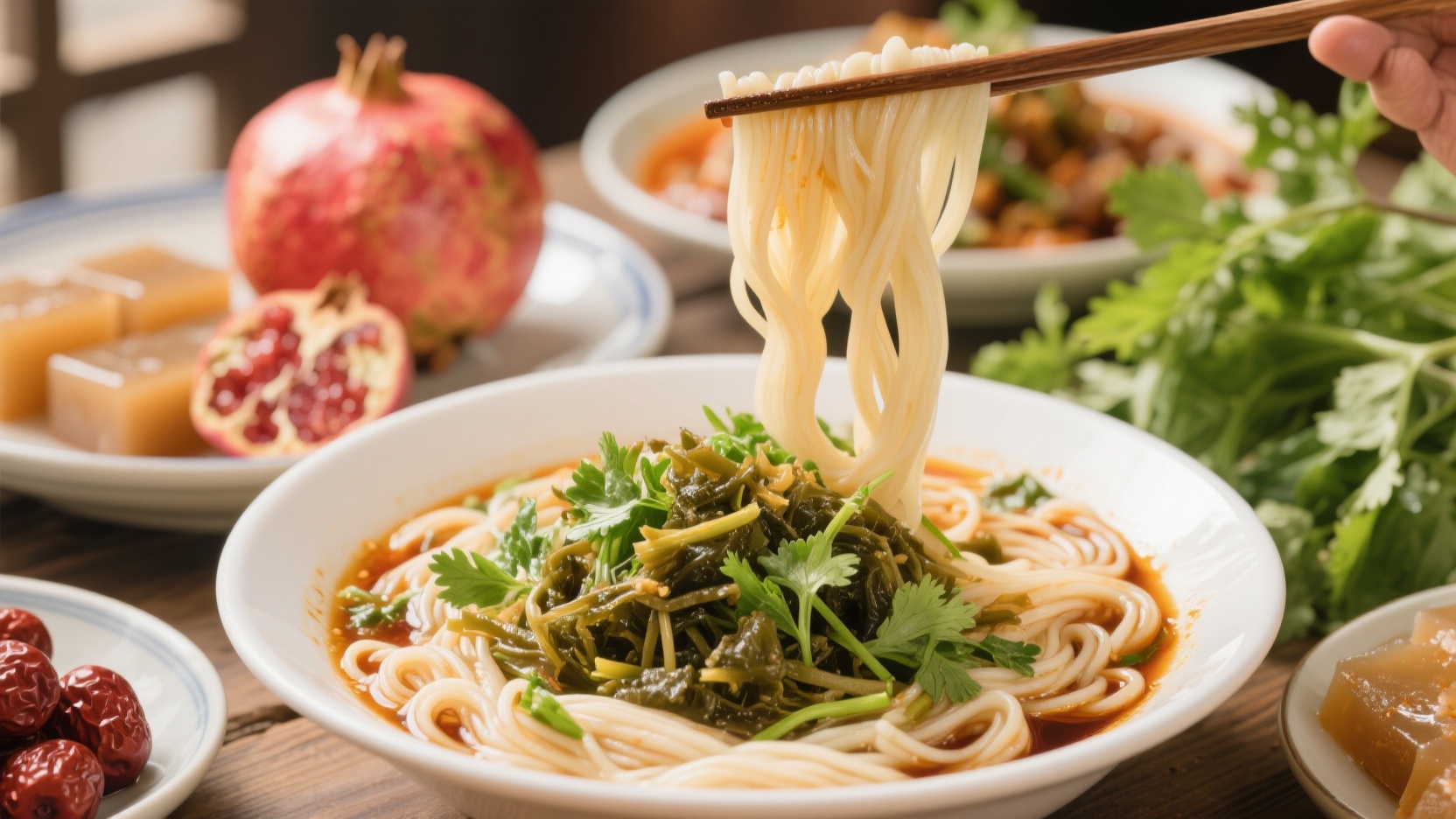
If you only focus on braised noodles and spicy soup when looking for food in Zhengzhou, you'll miss out on a large part of the vibrant seasonal flavors. To figure out how to "eat the right things at the right time," I spent all four seasons in Zhengzhou, following the elderly folks at the local markets to snatch up elm seeds before Qingming Festival, waiting for Xinzheng dates after White Dew, and also waiting for freshly cooked braised meat in the twelfth lunar month.
This menu doesn't follow trendy restaurants; it only follows the seasons. If you arrive a week late, the taste is completely different.
Spring, before Qingming Festival | Tree-top vegetables and ground lichen, if delayed by a week, will turn into weeds.
Spring in Zhengzhou is surprisingly short, but this short spring provides the perfect opportunity for several kinds of wild delicacies. Elm seeds are at their plumpest and tenderest before Qingming Festival; locals call them "elm seeds," and they are picked from the tree, mixed with cornmeal, and steamed. The key is to use only elm seeds from this period; after Qingming, they become tough and taste like dry grass. Steamed elm seeds aren't about seasoning, but about enjoying the natural sweetness and aroma of the elm seeds themselves. After steaming, a spoonful of minced garlic and a few drops of sesame oil are poured over them. Zhengzhou locals call this "steamed dish," but this springtime steamed dish is something you can't find in other seasons.
The spring dinner table wouldn't be complete without a limited-time supply of lichen, also known as "ground lichen," which only sprouts in grassy areas after rain and disappears as soon as the sun dries it. On the slopes around Zhengzhou, you can find coin-sized lichen on rainy mornings. It's stir-fried with eggs and chives, or wrapped in steamed buns. Its texture is like a mixture of wood ear mushrooms and seaweed, carrying the freshness of earth and rainwater. Locals like to eat lichen buns with a bowl of millet porridge, saying that this helps to "soothe down" to the earth.
Summer - From Lesser Heat to the Beginning of Autumn | The Refreshing Power of Nepeta cataria and Coriander
Many first-time visitors to Zhengzhou are deterred by the green leaves atop a bowl of noodles in the summer; those are most likely perilla leaves. Perilla's aroma is a blend of mint and basil, with a hint of herbal fragrance; only the people of Central China consider it the soul of cold dishes. From the Lesser Heat (Xiaoshu) to the Beginning of Autumn (Liqiu), perilla grows at its most vigorous, with thick leaves and a pungent fragrance. In Zhengzhou, perilla noodles are served with the noodles rinsed in cold water, topped with cucumber strips, minced garlic, a handful of raw perilla, and finally drizzled with a sauce made of sesame paste and vinegar. The perilla must not be blanched, as this will dissipate its aroma; it must be mixed in raw.
Paired with catnip is the less common rock parsley, also known locally as "ten-fragrance vegetable." It's milder than mint, with a hint of lemon and star anise aroma. In summer, you pick a handful of rock parsley leaves, mash them with garlic cloves, add soy sauce, vinegar, and sesame oil, and mix with preserved eggs or smashed cucumbers. This dish holds a similar place in Zhengzhou's summer as chilled plum juice in the south—it leaves you feeling cool from your throat to your stomach. However, rock parsley flowers and seeds after the start of autumn, its leaves harden, and its aroma weakens, so locals only consume it voraciously during the hottest days of summer.
I tried buying some coriander in the fall, and the aroma was indeed much weaker. That's when I understood why people in Zhengzhou bring home bundles of it as soon as summer arrives.
Autumn – From White Dew to Frost's Descent: The Peak Sugar Content of Xinzheng Red Dates and Heyin Pomegranates
After the White Dew solar term, the true flavors of autumn in Zhengzhou begin to emerge. Many people know about Xinjiang dates, but few know that Xinzheng, under the jurisdiction of Zhengzhou, is itself the hometown of Chinese dates. Around the time of White Dew, Xinzheng's gray dates and chicken-heart dates begin to accumulate sugar the most, especially when harvested around the Autumn Equinox, when the date skin is taut and shiny, and when bitten, it can be pulled into strands of honey. Locals specifically choose to eat fresh dates picked in the early morning while still covered in dew, saying that the date flesh is the crispest and coolest at this time. After Frost's Descent, the dates gradually dry, and the window for eating them fresh is extremely short.
Along with jujubes, the soft-seeded pomegranates of Xingyang and Heyin are also vying for attention during the Autumn Equinox. The seeds of Heyin pomegranates are so soft you don't even need to spit them out, but this variety is extremely sensitive to ripeness; picking them too early results in sourness, while picking them too late causes them to crack. Between the Autumn Equinox and the first frost, the pomegranate skin turns yellowish with a reddish tinge, and the seeds are deep red like jewels. Grab a handful and pop them in your mouth, and the juice bursts between your teeth. Locals in Zhengzhou have a traditional method for choosing pomegranates: of the same size, the heavier the better, and the rougher the skin, the sweeter.
Both of these autumn fruits can be found in supermarkets, but tree-ripened and cold-stored fruits are completely different. I compared fresh jujubes from Xinzheng and greenhouse jujubes bought on the same day, and the difference in sweetness and crispness was enormous.
Winter Solstice to Little New Year | The Year-End Fragrance of Stewed Rice, Steamed Bowls, and Kitchen God Candy
In Zhengzhou, winter meals follow the festive season. As soon as the twelfth lunar month arrives, the older generation of Zhengzhou residents begin preparing steamed glutinous rice dumplings (焖子). The main ingredients are sweet potato vermicelli, sweet potato starch, and simmered meat broth, mixed with minced ginger and scallions to form a thick paste, which is then steamed thoroughly. Freshly steamed, the dumplings are translucent. Sliced and eaten directly, they are soft and chewy; after cooling, they can be sliced and stir-fried with garlic sprouts or added to stews. This dish is only made before the Lunar New Year, with a large plateful steamed at a time, enough to last from the twelfth lunar month to the first lunar month. But the truly hot, freshly steamed dumplings can only be enjoyed by staying home during the twelfth lunar month.
Also limited are the traditional steamed dishes, including crispy pork, lotus root sandwiches, braised chicken, and pork cubes, all fried in batches just before the Spring Festival. In Zhengzhou, a table full of steamed dishes is essential for the festive atmosphere during the New Year. The appeal of steamed dishes isn't their exquisite presentation, but rather the process of various ingredients becoming tender and flavorful again after being steamed in hot broth. Especially the fried lotus root sandwiches, which absorb the broth and become both soft and crispy.
On the 23rd day of the twelfth lunar month, when people worship the Kitchen God, long strips of candy coated with maltose and covered in sesame seeds appear on the streets of Zhengzhou. These are called "Kitchen God Candy." They are sticky when crisp and leave a sesame aroma when melted. Locals say that these candies are for the Kitchen God so that he will speak well of them in heaven, but in the end, they all end up in the mouths of children. Kitchen God Candy is only sold around the time of the Lunar New Year; after that day, the stalls disappear without a trace.
During the period from the Winter Solstice to the Little New Year, I always make sure to avoid mealtimes when I visit Zhengzhou, because locals suddenly become more obsessed with food during this time, and queuing up at food stalls is the norm.
Blogger's Summary and Practical Tips
This Zhengzhou seasonal food list is essentially a timetable of the four seasons: spring for wild vegetables, summer for perilla, autumn for dates and pomegranates, and winter for stewed meat. Many flavors aren't bad, but rather, you're visiting at the wrong time of year; they're simply not at their best. Eating according to the seasons is the right way to experience a city.
Practical Tips: In spring, try to buy wild vegetables from locals at the morning market or vegetable market entrance; don't pick them yourself. In summer, catnip and rock cilantro are very cheap at the vegetable market, but they are only sold in bundles, so they are suitable for sharing among multiple people. In autumn, it is recommended to buy Xinzheng red dates and Heyin pomegranates directly from the orchards in the production area or near the highway exit, as they are fresher than in the city. In winter, most of the stewed meat and steamed dishes are homemade; if you are staying in a guesthouse or at a friend's house, it would be best to get some freshly cooked ones.