
The Origin of Chinese Civilization | Encountering Civilization in Henan: A Deep and Slow Travel Guide to Zhengzhou's Culture and Art
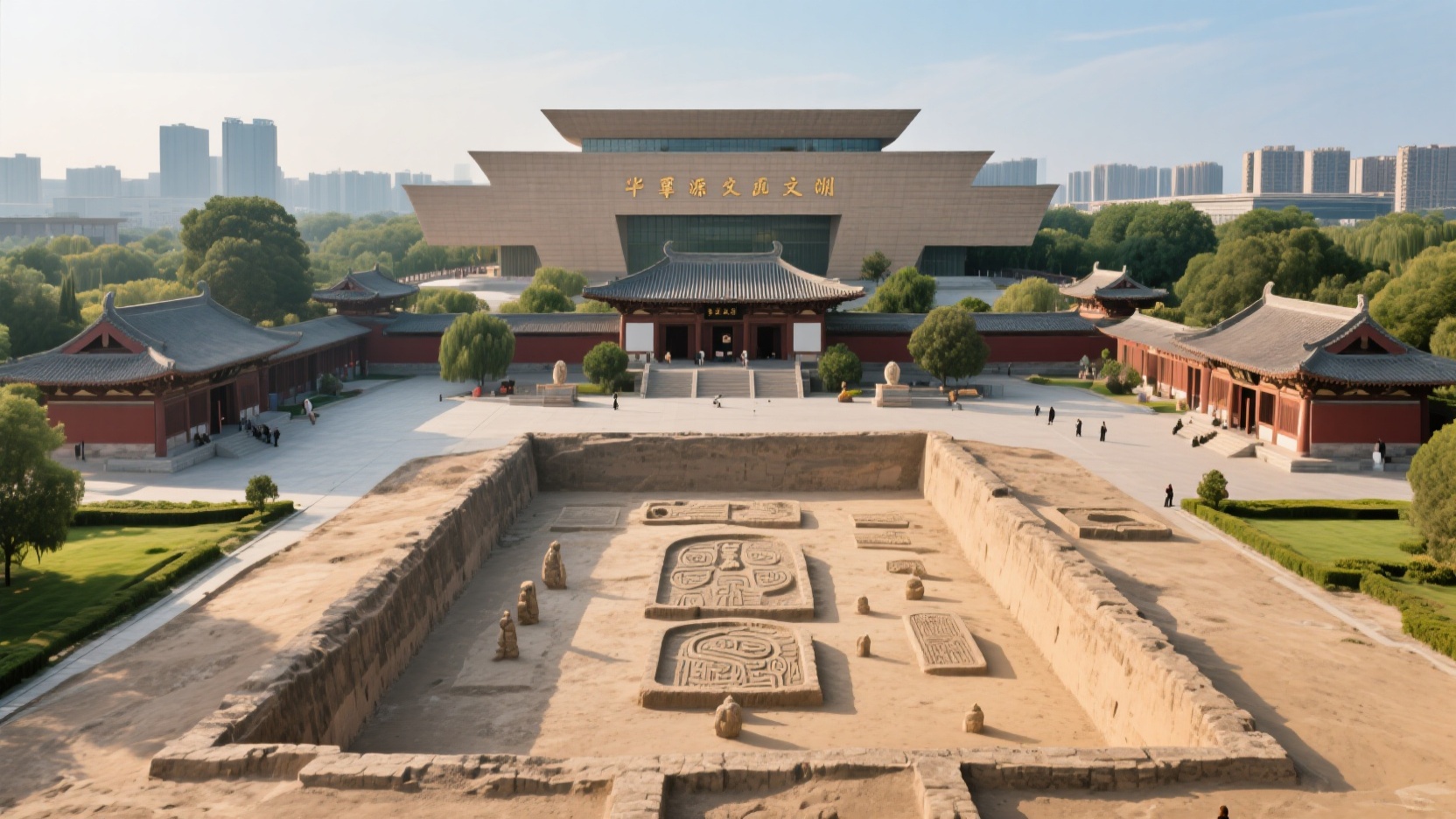
Zhengzhou, as an important cradle of Chinese civilization and one of the eight ancient capitals, boasts a unique cultural treasure trove built upon its profound historical heritage and diverse art forms. This blog post will carefully plan an in-depth, slow-paced travel route centered on "culture and art," aiming to guide travelers beyond the surface and immerse themselves in the city's historical context and artistic essence.
Tracing the Origins of Chinese Civilization: Exploring Early Capitals and the Treasures of the Central Plains
A cultural journey through Zhengzhou should begin with its oldest historical landmark— the Zhengzhou Shang City Ruins . This early Shang Dynasty capital, dating back over 3,600 years, is a crucial testament to the transition of Chinese civilization from the era of state-states to the dynastic era. Its magnificent city walls, clear urban layout, and the numerous precious artifacts unearthed, including bronzes and jades, silently narrate the glory of the Shang Dynasty and the wisdom of its early governance. Strolling through the ruins park, imagining the capital's appearance 3,600 years ago, and feeling the weight of history and the origins of civilization is itself a profound cultural experience.
Following closely behind, the Henan Museum is an indispensable stop for understanding Central Plains civilization. As one of the earliest established museums in China, the Henan Museum systematically showcases the historical and cultural landscape of Henan Province from ancient times to the Ming and Qing dynasties with its rich collection and exquisite displays. Its prized possessions, such as the Jiahu bone flute, the lotus and crane square pot, the Fu Hao owl-shaped zun, the cloud-patterned bronze vessel, and the Four Gods and Clouds painting, each embody the wisdom and aesthetics of the ancients. In particular, its collections of bronzes, jades, ceramics, and stone carvings represent the pinnacle of ancient Chinese civilization. Here, through meticulous observation and professional interpretation of the artifacts, one can gain a deeper understanding of the central position and unique contribution of Central Plains culture in the development of Chinese civilization.
Zen Martial Arts Realm and Urban Pulse: The Intertwining of Shaolin Spirit and Modern Art
Turning our attention to the broader cultural landscape of the Zhengzhou region, Shaolin Temple is undoubtedly a sacred site of Zen Buddhism and martial arts. This ancient temple, located in Dengfeng City, is not only the birthplace of Chinese Zen Buddhism but also the birthplace of Shaolin Kung Fu, hailed as "the foremost temple under heaven." The temple complex is magnificent and solemn, including the main monastery, the Pagoda Forest, and the First Ancestor's Hermitage. The Pagoda Forest is a group of tombs for eminent monks throughout history, its stone carvings exquisite; each pagoda is a frozen piece of history. A visit to Shaolin Temple not only allows one to understand the Zen Buddhist philosophy of "directly pointing to the mind and seeing one's true nature to attain Buddhahood," but also to witness the spectacular performances of Shaolin monks up close, experiencing the unique charm of the unity of Zen and martial arts. This is an art form that combines movement and stillness, cultivating both inner and outer aspects, embodying profound Eastern wisdom.
Returning from the ancient spirit of Zen and martial arts to the city, the Henan Art Center represents the vigorous development of modern culture and art in Zhengzhou. Designed by Canadian architect Carlos Ott, this architectural complex, with its unique "lotus" shape, has become a new cultural landmark in Zhengzhou. It integrates a grand theater, concert hall, art gallery, and museum, regularly staging high-level domestic and international dramas and concerts, and hosting various art exhibitions. Here, one can experience the charm of Henan Opera, a national intangible cultural heritage. Henan Opera, with its high-pitched and passionate singing style and lively performance, is deeply loved by the people of Central China. Watching a Henan Opera performance is an excellent way to experience the essence of Henan local opera art and the living inheritance of Central Plains culture. The Henan Art Center, in stark contrast to the Henan Museum and the Zhengzhou Shang City Ruins, together showcases the artistic development of Zhengzhou from ancient times to the present.
Intangible Cultural Heritage Preservation and Slow Living: Experiencing the Humanistic Warmth of Zhengzhou
A leisurely and in-depth tour of Zhengzhou should also take place amidst its rich intangible cultural heritage. Besides Henan Opera, Zhengzhou and the surrounding areas boast a variety of traditional handicrafts such as paper-cutting, clay sculpture, and woodblock New Year paintings. While there isn't a single large-scale centralized intangible cultural heritage experience park, travelers can seek opportunities to interact with inheritors of intangible cultural heritage by visiting local cultural centers, art districts, or handicraft workshops, and even experience the production process firsthand. For example, some cultural and creative parks or old neighborhoods may hide independent studios specializing in traditional handicrafts, offering small-scale workshops. This hands-on approach allows for a more comprehensive and profound experience of culture and art.
Furthermore, as a comprehensive local museum, the Zhengzhou Museum , in addition to the grand narrative of the Henan Museum, focuses more on the local history and customs of Zhengzhou. Its exhibits cover archaeological discoveries and historical artifacts from the Neolithic Age to modern times, serving as an important window into understanding Zhengzhou's evolution as a regional center city. Combined with modern historical landmarks such as the Erqi Memorial Tower, it connects the city's memories and cultural spirit from ancient times to the present.
In conclusion, a cultural and artistic journey through Zhengzhou is not merely a simple check-off of tourist attractions, but a dialogue across time and space. From the magnificent ruins of the Shang Dynasty capital to the profound philosophy of Zen martial arts; from the dazzling treasures of provincial museums to the vibrant presentation of modern art centers; and to the living transmission of intangible cultural heritage, each stop carries a unique story and value. Travelers are advised to allow ample time, slow down, and immerse themselves in the experience, allowing Zhengzhou's history and art to leave a lasting impression.