
How to Choose Accommodation in Lhasa | A Comparative Review of Homestays and Chain Hotels at the Same Price (Blogger's Personal Tested Checklist to Avoid Pitfalls)
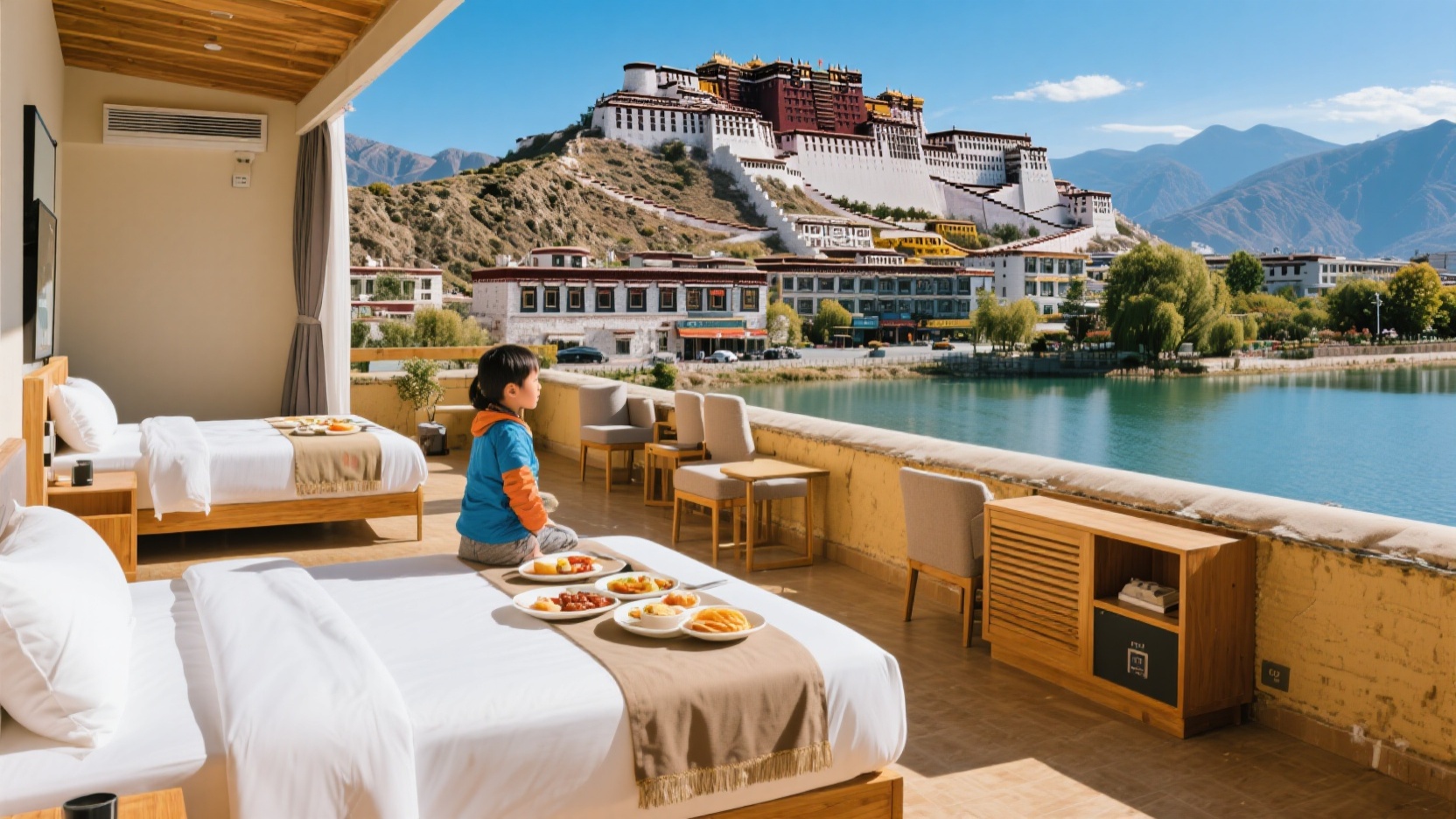
I spent over ten days in Lhasa, and the biggest mistake I made wasn't altitude sickness, but staying in a guesthouse on the street on my first night, where I could still hear prayer wheels and motorcycles in the early hours of the morning. Later, I stayed in guesthouses and chain hotels in three different areas: the old city, Xianzu Island, and the Potala Palace area. I realized that you can't judge a book by its cover just by its photos at the same price point. This article compares boutique guesthouses and chain hotels in the same area across three tiers: budget, comfort, and quality, focusing on six aspects: location, soundproofing, cleanliness, breakfast, parking, and luggage storage.
Budget-friendly options: In the Barkhor Street area of the old city, guesthouses win with their atmosphere, while chain stores win with their sleep quality.
Budget-conscious travelers are most likely to choose guesthouses in Lhasa's old city. The boutique guesthouses tucked away in the alleys around Barkhor Street are almost entirely located around the Jokhang Temple, allowing you to easily blend in with the pilgrims. From the rooftops, you can see prayer flags and a corner of the Potala Palace, creating a truly immersive atmosphere. However, there are also specific issues: many guesthouses are converted from old Tibetan houses, often with wooden structures, resulting in generally poor sound insulation; you can clearly hear people walking upstairs or talking next door. Hygiene varies depending on the host, and the dryness of bedding can differ. Parking is practically nonexistent; if you drive, you have to park on the outskirts of the old city and walk in. Luggage storage usually involves simply leaving your suitcase in a corner at the front desk, with no one specifically assigned to look after it.
Most chain hotels in the area are concentrated around Duoseng Road and Beijing East Road, about a ten-minute walk from Barkhor Street. While not as close to the city center as guesthouses, their advantages lie in standardization: thick walls, better sound insulation than older buildings, consistent bedding disinfection, basic breakfast or breakfast packs, and some locations have small parking lots or partner with nearby parking facilities. Luggage storage has registration tags. The disadvantages are smaller rooms, poor window orientation, and virtually no Tibetan-style views. My conclusion is to prioritize chain hotels for the first night at a budget hotel, and then switch to guesthouses for a different atmosphere once altitude sickness subsides.
Comfortable option: Xianzu Island, Lhasa River area, river view guesthouses are great for taking photos, chain stores are quieter.
For those with a mid-range budget, consider Xianzu Island and Sun Island along the Lhasa River. This area is popular with locals for strolling, and many boutique guesthouses are built in white Tibetan-style buildings with courtyards, terraces, and communal kitchens. The sunset over the Lhasa River in the evening is a great spot for photos, making it ideal for a two- or three-day stay and a leisurely trip where you enjoy brewing your own sweet tea. The location is about a 15-minute taxi ride from the Potala Palace and the old city; it's not in the heart of the city but is quiet. Soundproofing is better than in the old city, but the guesthouse rooms often have small partitions, so it can still be noisy with families with children or late-night drinkers. Cleanliness is above average, depending on the owner's attentiveness; breakfast is mostly simple meals; parking is available in the courtyard (several cars can fit), but advance booking is necessary during peak season; luggage can be stored at the front desk, but post-check-out storage is not very reliable.
Most chain hotels in the area are located near the main road of Sun Island. They are unassuming in appearance, but the soundproofing and mattress comfort in the rooms are consistently excellent, making them especially suitable for those suffering from altitude sickness and needing a good night's sleep. Hygiene inspection procedures are standardized, breakfast is either buffet or set menu, and is more plentiful than guesthouses. They also have dedicated luggage storage rooms and more ample parking. The downside is the lack of Tibetan-style design; the views from the windows may be parking lots or residential buildings. For mid-range options, riverside guesthouses are preferable for taking photos and enjoying the atmosphere; for two consecutive nights of deep sleep, chain hotels are the better choice.
Quality-oriented: High-end Tibetan-style guesthouses and chains around the Potala Palace compete on breakfast and details.
For those with a high budget, the area around the Potala Palace offers the most options. Some upscale Tibetan guesthouses have understated exteriors but create a sense of grandeur with Thangka paintings, bronzeware, and Tibetan carpets inside. Rooms are equipped with oxygen supply and humidifiers, and they are within walking distance of Potala Palace Square and Zongjiao Lukang Park. These guesthouses have undergone professional soundproofing, but are still limited by the old buildings, so there is still traffic noise from the street-facing rooms. The hygiene is close to that of high-star hotels, the bedding is specially disinfected, and the breakfast includes Tibetan tsampa, butter tea, eggs, and porridge, which is quite unique. Parking requires reservations, and there are very few parking spaces in front of the guesthouse. There are private storage rooms for luggage, and the service is considerate.
Most chain hotels in the area are standardized high-end hotels, located closer to main roads, with grand lobbies, excellent soundproofing and light-blocking in rooms, a wide variety of breakfast options, and the most standardized invoice and luggage storage procedures, making them suitable for business and family travel. The downsides are a lack of local cultural feel, homogenized rooms, and potentially higher prices than guesthouses during peak season. For this price range, I don't recommend relying solely on interior design photos; focus on clarifying whether it's street-facing, has oxygen supply, and whether breakfast is freshly prepared. My conclusion is: for a Tibetan-style experience and warm service, choose a high-end guesthouse; for a stable night's sleep and standardized invoices, choose a chain hotel.
Six-Dimensional Comparative Review Quick Reference
Combining the three tiers, we can draw a direct conclusion across six dimensions: Location: Budget guesthouses are best located in the heart of Barkhor Street; comfortable guesthouses offer views along the Lhasa River; and quality guesthouses and chain guesthouses are largely similar around the Potala Palace. Soundproofing: Chain guesthouses are almost universally superior to guesthouses at the same price point, especially wooden Tibetan-style guesthouses in the old city. Hygiene: Budget chains are significantly more consistent; comfortable and quality guesthouses rely on the owner, while chains rely on established processes. Breakfast: Budget chains offer basic meals, while guesthouses mostly offer none or very simple meals; comfortable and quality guesthouses offer more local specialties. Parking: Chain guesthouses are generally more convenient; only mid-to-high-end guesthouses have courtyard parking spaces. Luggage Storage: Chain brands generally have registration and private spaces; guesthouses mostly offer front desk storage, so valuables should be carried with you.
Blogger's Summary and Three Quick Selection Questions
My own routine is to stay in a chain hotel on the first and last nights, and then switch to a guesthouse for the two nights in between. The first night in the chain hotel is to allow my body to acclimatize to the altitude and avoid poor soundproofing or inconsistent hygiene affecting my rest; the guesthouses in between are used for taking photos, relaxing, and chatting with the owners; and the last night I return to the chain hotel for convenience in packing, getting invoices, and going to the airport or train station.
If you're still undecided, ask yourself three questions: First, do you want social interaction? If you want to share meals, carpool, and hear local stories, choose a guesthouse; if you want to shut yourself in and ignore everyone, choose a chain guesthouse. Second, do you need breakfast? If you're rushing to the Potala Palace or Jokhang Temple, chain guesthouses are more punctual and reliable for breakfast; if you're not in a hurry and want to drink butter tea, choose a high-end guesthouse. Third, do you need an invoice? If you need it for reimbursement or are on a business trip and don't care about the atmosphere, choose a chain guesthouse; if you're paying for your own travel and value the experience, choose a guesthouse.
Practical Tips: ① Prices in Lhasa vary greatly between peak season and winter; with the same budget, you can stay in a higher-end hotel during winter. ② Make sure your guesthouse has oxygen supply, a humidifier, and an electric blanket; don't just look at the retouched photos. ③ Chain hotels offer more standardized invoices and luggage storage; it's recommended to stay in a chain hotel for your last night before driving out of Tibet. ④ Parking is difficult around the old city; avoid guesthouses in the heart of Barkhor Street if you're driving. ⑤ Try not to shower on your first night experiencing altitude sickness and choose accommodations with elevators, as carrying luggage up stairs consumes a lot of oxygen.