
These eight must-try foods in Lhasa – don't miss them, or you'll have to wait another year! | A personal review of seasonal delicacies (not the internet sensations)
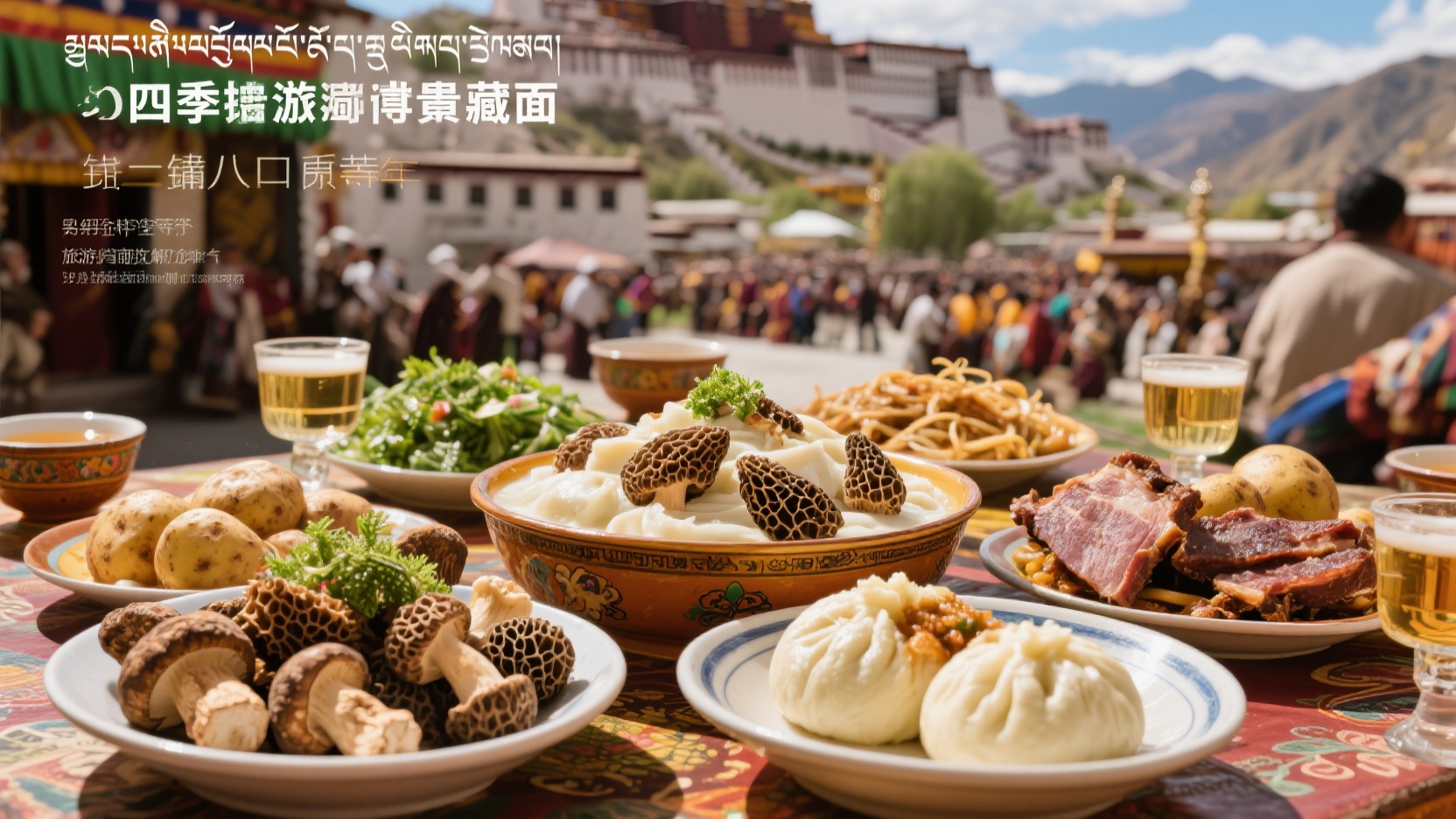
During my stay in Lhasa from spring to winter, the biggest mistake I made was insisting on ordering a plate of dried yak meat in the summer. When it arrived, it looked like I was gnawing on a leather belt, and my local friends laughed so hard they slapped their thighs. Later I realized that restaurants in Lhasa don't offer off-season food; their menus follow the phenology and the Tibetan calendar, more accurately than a calendar.
This post won't be about the ubiquitous sweet tea and Tibetan noodles, but rather a compilation of eight dishes I've personally tried throughout the four seasons—from the first harvest of morel mushrooms before Grain Rain to the Droma Zhesi for the Tibetan New Year, each dish is uniquely positioned to be available only at this time of year.
Springtime around Grain Rain: Morel mushrooms and fresh fern shoots are the first taste of the frozen earth awakening.
Spring arrives late in Lhasa. Around the time of Grain Rain (a solar term), the riverbanks in Linzhou and Mozhugongka areas have just thawed, and morel mushrooms sprout from the humus. Locals say, "The first batch of morel mushrooms is fresher than the fish caught at the start of the river season." At this time, the mushrooms are at their thickest, with a subtle aroma and a slightly nutty aftertaste. After late May, they begin to become hollow and tough.
The most authentic way to eat it is to slow-cook Tibetan chicken in a stone pot in Medog. Tibetan chicken has very little fat, the soup is clear and not cloudy, and a few morel mushrooms are added, along with only salt and a few peppercorns. When drinking the soup, locals will crush tsampa and soak it in, taking a sip of soup and half a sip of soup, which is a custom of hospitality in herders' homes.
Fresh fern shoots, called "Drolma" in Tibetan, are only crisp and tender when they are just dug out of the ground in spring. After being blanched in water and mixed with yak butter yogurt, they are slightly sweet with a hint of earthy freshness. If eaten in late spring, they are only available as dried products, and the taste is completely different.
Summer Shoton Festival Limited Edition: Yogurt and New Barley Wine, a ritual that lasts only a dozen days a year.
The Shoton Festival, which falls on the 30th day of the sixth month in the Tibetan calendar and usually in mid-to-late August in the Gregorian calendar, is literally "Yogurt Festival." Summer is when yaks produce the most milk, and street vendors will display freshly scooped yak yogurt from wooden buckets. The yogurt has a pale yellow skin on top and is quite sour. If it's your first time trying it, don't be reckless; stir it well first and then sip it slowly. It tastes best with white sugar or honey.
Even more precious than yogurt is the barley wine brewed before the Wangguo Festival. Before the barley harvest, farmers brew a batch of "new wine" from the new ears of barley. It has a low alcohol content, weak effervescence, and a tender, sweet aroma of barley sprouts. In the small taverns of Lhasa's old city, the new wine is only sold for about ten days. After the season, it is replaced with aged wine, which loses some of its grain sweetness.
The default combination for locals celebrating the Shoton Festival is a bowl of yogurt and a small pot of new wine, enjoyed slowly under the high-altitude sun. Tourists often focus only on the Buddha exhibition at Drepung Monastery, unaware that the truly delicious food is found in the alleyways after the exhibition ends.
Autumn and the rainy season are coming to an end: Matsutake mushrooms are at their most fragrant for no more than twenty days, and new potatoes should be eaten while they are still soft and tender.
Once the rainy season on the plateau is over, the matsutake mushrooms in the Nyingchi area reach their peak aroma. Many people don't know that matsutake mushrooms aren't necessarily better the earlier they're harvested; they need to wait for the rain to fully develop the mycelium without it rotting. They are usually at their fattest and most plump during the first twenty days of September. At this time, the edges of the matsutake caps are slightly curled inwards, and they break easily when touched.
Locals eat matsutake mushrooms with great restraint. They slice them and pan-fry them in ghee over low heat until the edges curl up, then sprinkle with a little salt. Alternatively, they grill the whole mushroom over charcoal, allowing the juices to seep into the cap, resulting in a flavorful aroma reminiscent of oak. Never use them in a heavily flavored soup; that's a foreign way of eating them, and locals will object.
At the same time, new potatoes are also being harvested around Lhasa. Tibetan potato buns are made by steaming the new potatoes, mashing them into a smooth paste, wrapping them with minced beef and wild onions, and then frying or steaming them. The new potatoes have a high water content and fine starch granules, making the buns soft and chewy without being powdery. They are served with a side of chili sauce with wild Sichuan peppercorns to balance the sweetness of the potatoes.
Winter Tibetan New Year: Dried meat and Droma Zhesi (a type of Tibetan noodle dish) are essential for the festival; without the low temperatures, the festival wouldn't be complete.
The Tibetan New Year usually falls in January or February of the Gregorian calendar. In Lhasa, nighttime temperatures can drop to below -10 degrees Celsius, making it the perfect time for drying yak meat. Fresh yak meat is cut into long strips and hung under the eaves on the shady side of the house to allow the dry, cold winds of the plateau to draw out the moisture. After a month, the meat darkens in color and has a milky and fresh blood flavor when eaten raw. Dried meat prepared in other seasons either spoils or tastes sour.
A must-have dish for the New Year's Eve dinner is Zhuoma Zhesi, made by mixing cooked fern shoots, rice, ghee, and sugar, and garnished with a few bits of cheese curds. The fern shoots are dried and stored in the autumn, and become even more creamy after being cooked in winter. The ghee is poured over them while they are still hot, creating a sweet and savory flavor. Locals say that everyone in the family should take a spoonful of this dish, without sharing bowls, to symbolize family reunion.
If you happen to be there during the Tibetan New Year, many families in the alleys near Jokhang Temple will offer you a bite of their prepared Zhesang (a type of Tibetan pastry), paired with a cup of salty yak butter tea – the most comforting way to experience winter in Lhasa.
In Lhasa, the truly unique delicacies aren't found on trendy menus, but rather in the changing seasons. In spring, enjoy the first harvest from the frozen ground; in summer, wait for the snow to melt; in autumn, savor the twenty days after the rains; and in winter, eagerly anticipate the Tibetan New Year. Miss a season, and the flavors change—this is the most honest timetable the plateau offers its visitors.
Practical Tips: First, when going mushroom picking in the mountains in spring, go with a local guide and do not enter fenced pastures on your own; second, accommodation is scarce around the time of the Shoton Festival, so choose stalls selling yogurt fresh from the barrels in the early morning for the freshest taste; third, during matsutake season, don't be greedy for large matsutake mushrooms, those with caps between five and seven centimeters in diameter have the most concentrated aroma; fourth, if you want to experience the Tibetan New Year, check the Tibetan calendar date in advance, as dried meat and the Dzogchen Festival are most authentic before and after the festival; fifth, all the limited-edition foods mentioned in this article will have significantly reduced taste and availability if they are removed from the corresponding season by even half a month, so don't be fooled by the claim that they are available all year round.