
Nantong Niche Culture Map: 7 Spiritual Corners Connected by Old Factories, Independent Bookstores, and Vintage Warehouses
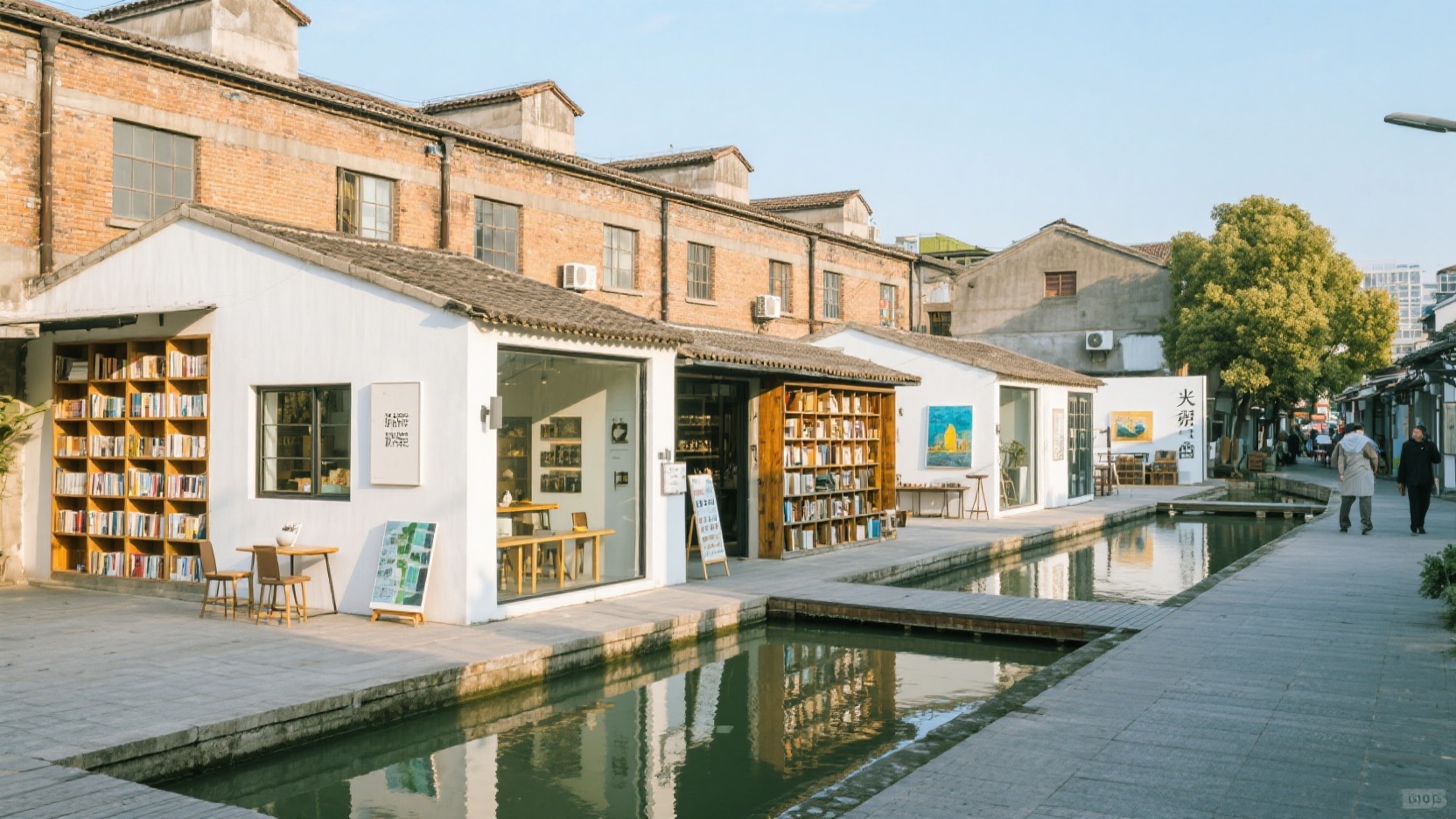
Nantong's niche cultural map doesn't unfold along the Haohe River, nor does it include the main museum. What truly captures the attention of young tourists are the installations in the old factory buildings of Tangzha, the warehouse-style bookstore in the south wing, the piles of old books on the second floor of the old town, and the white house coffee shop at the alley entrance. The following 7 locations are connected along the route of "Tangzha—Development Zone—Chongchuan Old Town," suitable for a day or two half-days to complete, using walking and shuttle buses throughout.
Tangzha 1895 Cultural and Creative Industrial Park
Tangzha 1895 Cultural and Creative Industrial Park was transformed from an old oil and paper mill from the Zhang Jian era. The red brick sawtooth factory buildings, railway tracks, and chimneys have been preserved, but the interiors have been transformed into contemporary art and handicraft workshops. The highlights are concentrated on the east side of the factory area: the permanent installation in the "Black Box" exhibition hall, converted from the old boiler room. The cast iron pipes and wooden trusses have not been overly renovated, creating a direct dialogue between industrial traces and the exhibits. Photography tips: Arrive before 9:00 AM, as the red brick walls are most layered under low-angle lighting; stand under the sawtooth skylight and shoot upwards to capture both the steel structure lines and the natural light in the frame.
Duku Reading Base
Located in the southern part of Nantong, the Duku Reading Base resembles a quiet warehouse building on the outside, while the interior features long, narrow reading areas enclosed by walls of bookshelves. It feels more like an editorial archive than a commercial bookstore, with a focus on humanities, social sciences, and art, and a high proportion of self-published books. The editor's manuscript cabinet and the wall displaying book covers from previous years to the left of the entrance are worth examining closely, showcasing the complete process from layout to binding. Photography tips: Stand in the center of the bookshelf aisle to capture depth, using a wide-angle lens while keeping the camera level; avoid using flash in the reading area, take photos quietly, and don't disturb those reading for extended periods.
May 3rd Art Museum
The 53 Art Museum is a privately-run contemporary art museum. It's not large, but its exhibitions change frequently, focusing on paintings, photography, and small installations by local and young artists from the Yangtze River Delta region. White walls, gray self-leveling floors, and high side windows provide stable natural light. Exhibition labels are usually very detailed, making it suitable for careful viewing rather than just a quick glance. The permanent "Nantong Local Creation" document wall serves as an entry point to understanding local art trends. Photography tips: Take silhouette photos in front of the exhibition walls, utilizing the angled light from the high side windows to create contrast; the gray space at the entrance connecting to the old factory area is a good spot for taking photos of architecture and people together.
Guanglangtang You Wuqu Art Museum
The Guanglangtang You Wuqu Art Museum primarily features the ink paintings, manuscripts, and original painting tools of the artist You Wuqu. The space includes a small courtyard, offering a quiet and private environment with very few queues. The most noteworthy exhibits are his late-period landscape albums and original palettes and brushes, allowing visitors to directly observe the process of "ink and brush blending" from mixing colors to applying them to paper. Photography tips: The courtyard and painting table areas have soft lighting, suitable for low-light close-ups; when photographing the exterior, use the old wall at the alley entrance as a foreground for a more unified look and to avoid direct shots of reflections on the exhibits.
Dasheng Creative Street: Old Goods Warehouse and Independent Gallery
Dasheng Creative Street is a renovated old factory building. The old warehouse on the north side and the adjacent independent gallery can be viewed together. The old warehouse mainly features industrial-style old furniture, old doors, metal cabinets, and enamelware. It is dense but not cluttered, and divided into living scenes such as living room, study, and kitchen. The adjacent gallery is small and mainly exhibits photography and mixed media works. The exhibitions change quickly, and you can see it in ten minutes. Photography tips: Use warm-colored table lamps for fill light in the old warehouse. Taking pictures of details of objects is more effective than taking pictures of wide scenes. The iron staircase and fire door on the gallery facade are preserved in their original colors and are suitable for industrial-style portraits.
White House Cafe in Medical School Alley
The White House Cafe in Yixiao Lane is a typical neighborhood cafe, with white walls, wooden windows, and a few old sycamore trees at the entrance. The coffee beans are supplied by a local roasting studio, and the hand-drip coffee selection is consistent, always stocking one or two local Nantong blends. There are no photo opportunities; what's truly captivating is the relationship between the window seats and the alleyway: the window frame acts like a viewfinder, framing elderly residents, students, and dog walkers in the same shot. Photography tips: Between 3 and 5 pm, there's side-backlighting, perfect for photographing the cups and saucers by the window and the storefront; step back a few paces from the alley entrance to photograph the white house and the tree canopy, avoiding the overtly advertised signs for a more natural look.
South Building Study
Nanlou Bookstore has no eye-catching signboard. Located on the second floor of an old building in Chongchuan Old Town, it mainly sells secondhand books on literature, history, and philosophy, as well as local documents from Nantong. The bookshelves reach the ceiling, and the aisle is only wide enough for one person to squeeze through. The smell of paper is very strong. Highlights include literary magazines from the 1970s and 80s, photocopies of old Nantong gazetteers, and handwritten bibliographical cards. The local documents are rare to find elsewhere. Photography tips: Use top lighting to photograph the spine texture or the old copyright pages when they are open. Close-ups of hands are more interesting than wide shots. There are no seats inside, so it's best to limit your book-hunting time to within 20 minutes to allow space for others.
There's no standard order for this route: Tangzha is best in the morning, the Old City in the afternoon, and the Duku Reading Base can be reserved for two hours. Put the map in your pocket and explore the city's spiritual corners on foot.