
Avoid these bad accommodations in Nanchang | Locals advise against staying in these 3 trendy areas, these 5 are the real places to stay
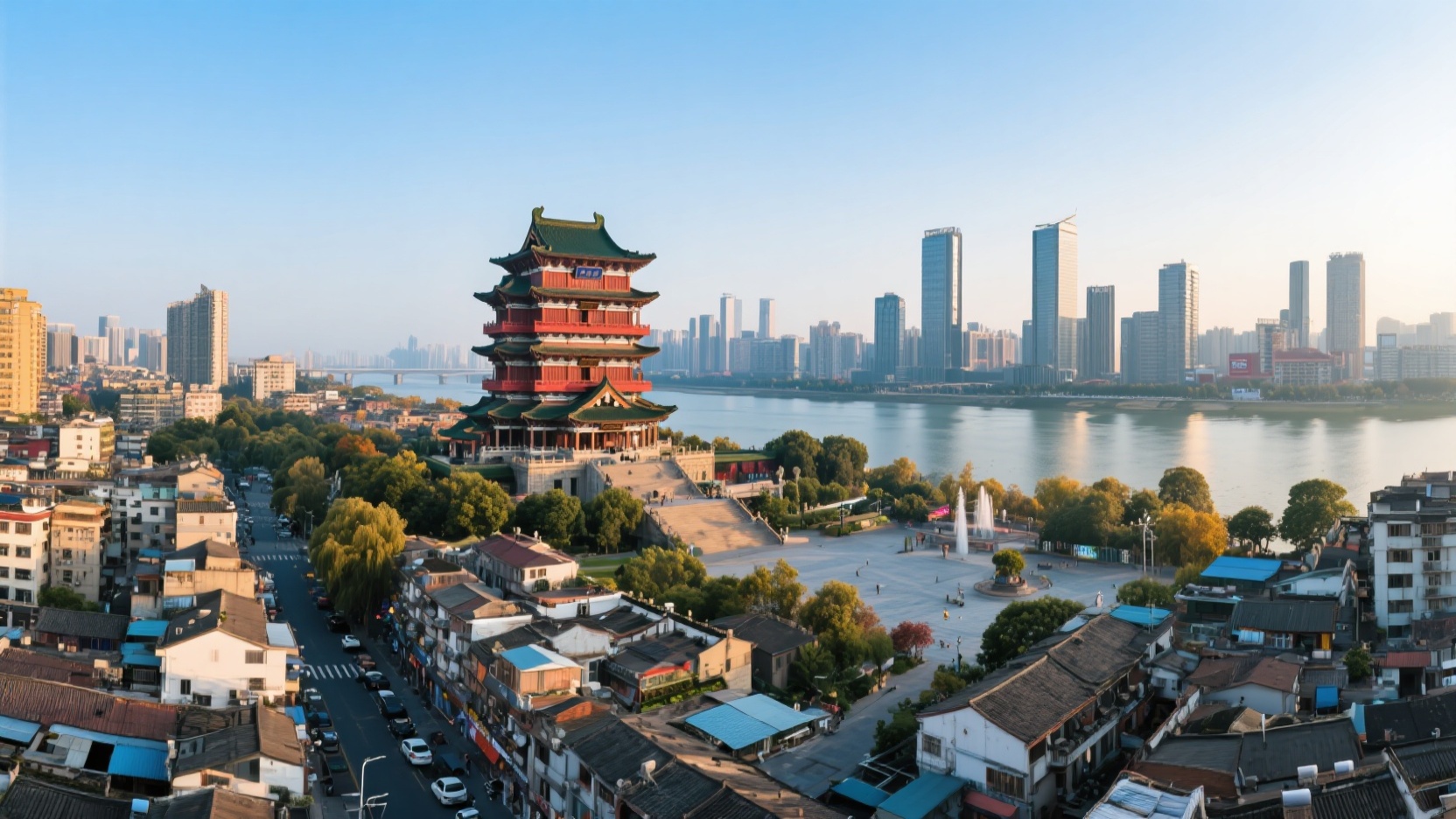
I once booked a night for a friend at a "river view guesthouse" next to Tengwang Pavilion. We returned to the hotel at 10 PM, and the alley was so dark we needed our phone flashlights. The next morning at 6 AM, we were woken up by the sound of cargo being unloaded downstairs. After that experience, I never believed the nonsense that "close to tourist attractions means good accommodation." This article won't pile on lists; it will simply clarify the most common pitfalls to avoid when staying in Nanchang and the areas that locals actually prefer.
Many travel guides recommend "prime locations," but these are actually illusions created by tourist routes. The attractions in Nanchang's old city are scattered, and the reality is that subway transfers and traffic jams while crossing the river are the real daily occurrences. Locals choose accommodations based more on safety at night, whether there's a noodle shop downstairs, and whether they can get a taxi without waiting half an hour in the cold wind. Below, we'll expose three of the most typical tourist traps.
1. Three areas recommended daily by locals that they never live in.
The first area consists of the so-called riverside guesthouses along the Tengwang Pavilion and the Fuhe River. Travel guides often claim "views of the Tengwang Pavilion from the window, a five-minute walk to the scenic area," but in reality, many are converted short-term rentals from old riverside neighborhoods. The stairwells are narrow, the soundproofing is poor, and there are freight lanes and night market stalls right downstairs. While it may seem close during the day, at night, exiting from the side gate of the scenic area requires navigating a long, unlit backstreet, which can be unsettling for women walking alone.
Parking in this area is practically hopeless. In the old town, parking is a free-for-all, and weekends and holidays are so congested you question your existence. Aside from tourists, the surrounding residential areas become quiet very early in the evening. Convenience stores are scarce, and even buying a bottle of water late at night is difficult. Locals mostly come for walks along the river; they don't live here.
The second area consists of business hotels along Qiushui Square in Honggutan and the Ganjiang Middle Avenue. Many people are attracted by the "river view + Ferris wheel + fountain" and think that staying in the new district is high-end. However, if you mainly visit Wanshou Palace, Bayi Museum, and Tengwang Pavilion, crossing the river will be a daily necessity. During the evening rush hour, the Honggu Tunnel and Bayi Bridge can be so congested that you might miss the last fountain show.
This area is bustling with office buildings during the day, but actually quite deserted at night. It's windy, and the ground floors are mostly chain convenience stores and restaurants in shopping malls, lacking a local vibrancy. Parking is expensive, there are few surface parking spaces, and the entrance to the underground parking garage is hard to find. It's more suited for business travelers than tourists.
The third area is Nanchang West Railway Station and Jiulonghu New Town. Travel guides always say "convenient for catching the high-speed train, and the rooms are new and cheap," but getting from Nanchang West Railway Station to the core attractions of the old city by taxi takes more than half an hour, and you need to transfer from Metro Line 2 to Line 1 to get to Bayi Square. While it looks close on the map, the actual commute is very time-consuming. Jiulonghu is sparsely populated at night, many new residential buildings have low occupancy rates, and the streetlights are bright but there's no life.
There are very few dining options nearby, so you'll mostly rely on takeout. The route back to the hotel from the subway station late at night is rather deserted, and I felt uneasy walking alone. Parking seems easy, but many areas don't have designated parking spaces, so renting a car and driving yourself might actually make you more likely to get a ticket. Unless you're catching a train or bus early the next morning, there's no need to stay here.
2. Bayi Square/Yangzi Lane: The top choice for experiencing the vibrant local atmosphere of Nanchang on your first visit.
Perfect for first-time visitors to Nanchang who want to experience the old city on foot. It's close to Bayi Square, Wanshou Palace, and Tengwang Pavilion, and is served by Metro Lines 1 and 2. Major attractions are generally within 15 minutes' walk, and taxi fares are minimal. Nearby areas like Yangzi Lane, Ximazhuang, and Jewelry Street are full of local favorites like mixed rice noodles, clay pot soup, and boiled dishes, where you can eat your fill for just a few dozen yuan per person.
Returning to the hotel late at night is safe; the main roads are well-lit, and there are many residential areas nearby. Even after 10 PM, there are still street vendors and convenience stores. Parking is a common problem in the old town; parking spaces in the alleys are scarce. It is recommended to take the subway or a taxi. If you are driving, it is best to choose a hotel with parking.
3. Dinggong Road/Hengmao Dream Mall: A cost-effective option for students and late-night snack enthusiasts.
This area is suitable for students on a budget who want to grab a late-night snack. It's close to Metro Line 1, about 15 to 20 minutes from Bayi Square and Wanshou Palace, and not far by taxi to Tengwang Pavilion. The Hengmao Dream Mall and Shanghai Road area is very lively at night, with barbecue, fried food, and milk tea shops open until the early hours of the morning, where you can eat very well for just a few dozen yuan per person.
Returning to the hotel late at night is safe, as the surrounding commercial area has sufficient lighting and foot traffic. However, if staying in a guesthouse in an older residential building, be mindful of the hallway lighting. Parking is slightly better than at Bayi Square, as the mall has an underground parking garage, but parking is still limited on weekend nights, so public transportation is recommended.
IV. Honggutan Wanda/Weidong: A safe choice for families and self-driving tourists
Suitable for families with elderly members and children, those driving, or those who prefer a quieter new district. It's close to Qiushui Square and Nanchang Star, and about a 20-30 minute ride on Metro Line 1 to the old town attractions. A taxi across the bridge is quick during off-peak hours. The Honggutan Wanda Plaza and Cuiyuan Road area has many restaurants frequented by locals, ranging from casual snacks costing a few dozen yuan per person to mid-range Jiangxi cuisine.
The area is safe at night due to its dense streetlights, frequent patrols, and wide roads. Parking is relatively easy for Nanchang, with ample spaces in shopping malls and residential areas, but be aware of the designated parking hours. If you're traveling with children and don't want to squeeze into the old city, this area is a safe bet.
5. Qingshan Lake/Nanjing East Road: A lakeside option for those who want to experience the local slow-paced lifestyle.
Suitable for leisurely travelers who enjoy walking and running and don't want to stay in crowded tourist areas. Qingshan Lake is about a 20-25 minute taxi ride from Bayi Square and Tengwang Pavilion, and can also be reached by taking Metro Line 3 and transferring to Line 1. It's not fast, but it's quiet. There are plenty of restaurants along Hubin East Road and Shanghai North Road, offering local cuisine, noodles, and late-night snacks, with prices ranging from tens to hundreds of yuan per person.
It's safe to return to the hotel late at night. The lakeside walkway is street-lit, and the surrounding residential area is well-established, although some side streets are quieter. If you're walking alone, be sure to choose the main roads. Parking is more convenient than in the old town, with marked parking spaces along the lake, although spaces can become scarce after dinner.
6. Aixi Lake/High-tech Zone: Suitable for those traveling along the eastern route and those rushing to Nanchang East Railway Station.
Suitable for those planning to visit Aixi Lake, Yaohu Lake, Nanchang East Railway Station, or those planning a long-term stay. Metro Line 1 provides direct access to Bayi Square and Wanshou Palace, with a commute of about 30 minutes. A taxi ride to the old town is a bit further, but the road conditions are good. The area around Aixi Lane and Ziyang Avenue offers a wide variety of dining options, from affordable student fast food to local Jiangxi cuisine, with prices ranging from tens to hundreds of yuan per person.
It's safe at night; Gaoxin Road is wide and well-lit, and the security and parking are among the best in Nanchang, with ample parking spaces along the roadside and in commercial areas. If you're not looking to stay next to a tourist attraction, this area offers better value and comfort than many popular tourist spots.
In conclusion
First, don't ask what the locals didn't tell you: many old buildings around Tengwang Pavilion don't have elevators, and you'll be exhausted if you're dragging a large suitcase.
Second, accommodation in Nanchang does not have absolute peak and off-peak seasons, but it is hot and humid in summer and cold and damp in winter. When choosing a room, first look at whether it has air conditioning and hot water, and don't just look at whether it is close to the attractions.
Third, families with children should prioritize Wanda Plaza in Honggutan or Aixihu, as it is inconvenient to push strollers in the old town alleys.
Fourth, for students living on Dinggong Road or Shanghai Road, the late-night snacks and subway access are much better than those around tourist attractions.
5. Avoid choosing the area around Bayi Square and Tengwang Pavilion for self-driving tours, as parking is time-consuming and expensive; going to the new district is much more worry-free.