
Hongdu Art & Charm: Exploring the Profound Cultural Texture and Artistic Heritage of Nanchang
Nanchang, a historic city bisected by the Gan River, is often known for its revolutionary history as a "heroic city." However, stopping there would mean missing out on its profound cultural heritage as an ancient city with a rich history and a gathering place for scholars and literati. XOOTOUR's experienced destination column has carefully curated a journey for you, avoiding a superficial sightseeing experience and delving into the cultural and artistic fabric of Nanchang, embarking on an immersive and leisurely cultural tour.
A cultural and artistic journey through Nanchang is a dialogue spanning millennia, from the poetry and songs of the Tang Dynasty to the artistic conception of the late Ming and early Qing Dynasties, and then to the revolutionary tides of modern times. Each historical site carries a unique story and spirit. We suggest you allocate at least two days to explore on foot and experience it with your heart.
Ancient charm of Tengge, a cultural heritage spanning a thousand years
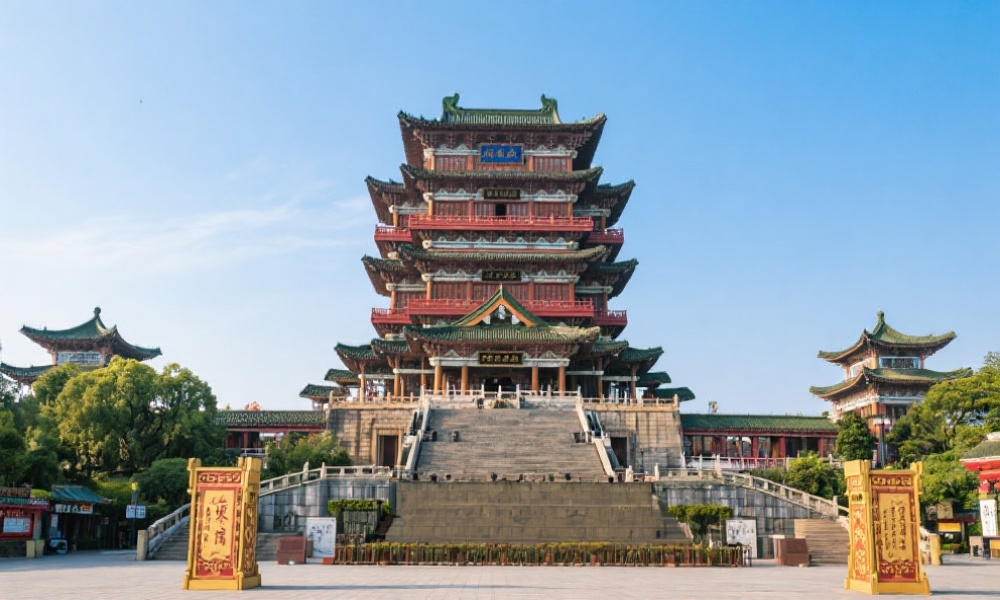
The journey should begin at Tengwang Pavilion , a cultural landmark of Nanchang. As the foremost of the "Three Great Towers of Jiangnan," Tengwang Pavilion is not only an architectural masterpiece but also a temple of classical Chinese literature. Wang Bo's "Preface to Tengwang Pavilion" endowed it with immortal life, transcending physical space to become a symbol of the scholar's integrity and the grandeur of the Tang Dynasty. Climbing the pavilion and gazing into the distance, the vast Gan River stretches to the horizon, evoking a sense of historical reflection. Here, you should not merely admire the architecture but also savor the couplets and inscriptions within the pavilion, experiencing the poetic imagery of "the setting sun and the lone wild goose flying together; the autumn water and the vast sky merging into one color," and understanding its unique position in the history of Chinese culture.
Afterwards, we moved on to the Shengjin Pagoda . This ancient pagoda, originally built in the Tang Dynasty, is one of the oldest buildings in Nanchang, carrying rich Buddhist culture and folk beliefs. Legend has it that during the pagoda's construction, four coils of golden rope and three ancient swords were unearthed, hence the name "Shengjin" (meaning "golden rope"). The pagoda's simple and ancient appearance contrasts with the grandeur of the Tengwang Pavilion, highlighting its understated elegance and sense of history. The area surrounding the Shengjin Pagoda still retains the atmosphere of old Nanchang, making it a great place to experience local customs and sample authentic snacks. Here, you can feel how ancient beliefs have permeated ordinary alleyways, becoming part of the city's memory.
Painting and calligraphy, picking up art from the sea
The artistic soul of Nanchang is inextricably linked to a legendary figure— Bada Shanren (Zhu Da), a master painter of the late Ming and early Qing dynasties. Visit the Bada Shanren Memorial Hall in Qingyunpu, once his place of seclusion. The memorial hall houses a vast collection of Bada Shanren's authentic paintings and calligraphy, along with biographical information. Bada Shanren's paintings, characterized by their unique "white-eyed" depictions of fish and birds, are profound in meaning and characterized by their free and unrestrained brushwork, pioneering a new realm in Chinese freehand painting. His art is not only an inheritance and development of traditional brushwork but also a true reflection of his inner pride and resentment as a Ming dynasty loyalist amidst the backdrop of national ruin and family loss. Here, you will have the opportunity to experience firsthand the inner world and extraordinary skills of this artistic master.
Next, we recommend visiting the Jiangxi Provincial Museum . As a comprehensive museum in Jiangxi Province, it systematically showcases the historical and cultural development of Jiangxi from prehistoric civilization to modern times. Its rich collection is particularly noteworthy for its local artifacts, including bronzes, ceramics, and bamboo and lacquerware. Through a visit, you will gain a more comprehensive understanding of the cultural genes of this red land of Jiangxi, especially the ceramics unearthed from the Wazijiao kiln site, which demonstrate the long history of porcelain making in the Nanchang area, echoing Jingdezhen and jointly constructing a glorious chapter in Jiangxi's ceramic culture. The museum is not only a display of artifacts but also a storyteller of cultural tales, helping you understand the place of Nanchang and even Jiangxi in Chinese history and culture.
Red genes, echoes of the times.
A cultural and artistic journey through Nanchang cannot be complete without understanding its profound revolutionary history. The August 1st Uprising Memorial Hall is an indispensable stop for understanding Nanchang and even modern Chinese history. With detailed historical materials, precious artifacts, and vivid scenes, the memorial hall recreates the magnificent events of the Nanchang Uprising on August 1, 1927. It is not merely a commemoration of military history, but also a symbol of the Chinese people's spirit in seeking national independence and liberation. Through a visit, you will gain a deeper understanding of the origin of the city's title as a "Heroic City," feel how that passionate era shaped modern China, and the role that revolutionary art played in a specific historical period.
During your trip, take note of the Yuzhang embroidery found throughout the streets and alleys of Nanchang. As a provincial-level intangible cultural heritage of Jiangxi, Yuzhang embroidery showcases the charm of Nanchang's traditional handicrafts with its unique needlework, exquisite patterns, and rich colors. While dedicated experience points may not be as concentrated as for other intangible cultural heritage projects, you can still find it in some cultural and creative shops or time-honored brands, or even have the opportunity to witness the skillful hands of embroiderers. This is a living art form that connects the past and the present, allowing ancient techniques to shine with new brilliance in modern life.
A cultural and artistic journey through Nanchang is a profound experience interwoven with history, art, faith, and revolutionary spirit. It requires travelers to slow down, listen attentively to the whispers of every brick and tile, feel the soul of every painting, and understand the weight of every historical period. XOOTOUR hopes that in Nanchang you will not only see, but also deeply experience and understand, taking away a profound cultural memory.