
Jinan Travel Map for Parents | A Slow Travel List for Seniors That I Tested for Five Days Before Posting (A Beware-Averse Version)
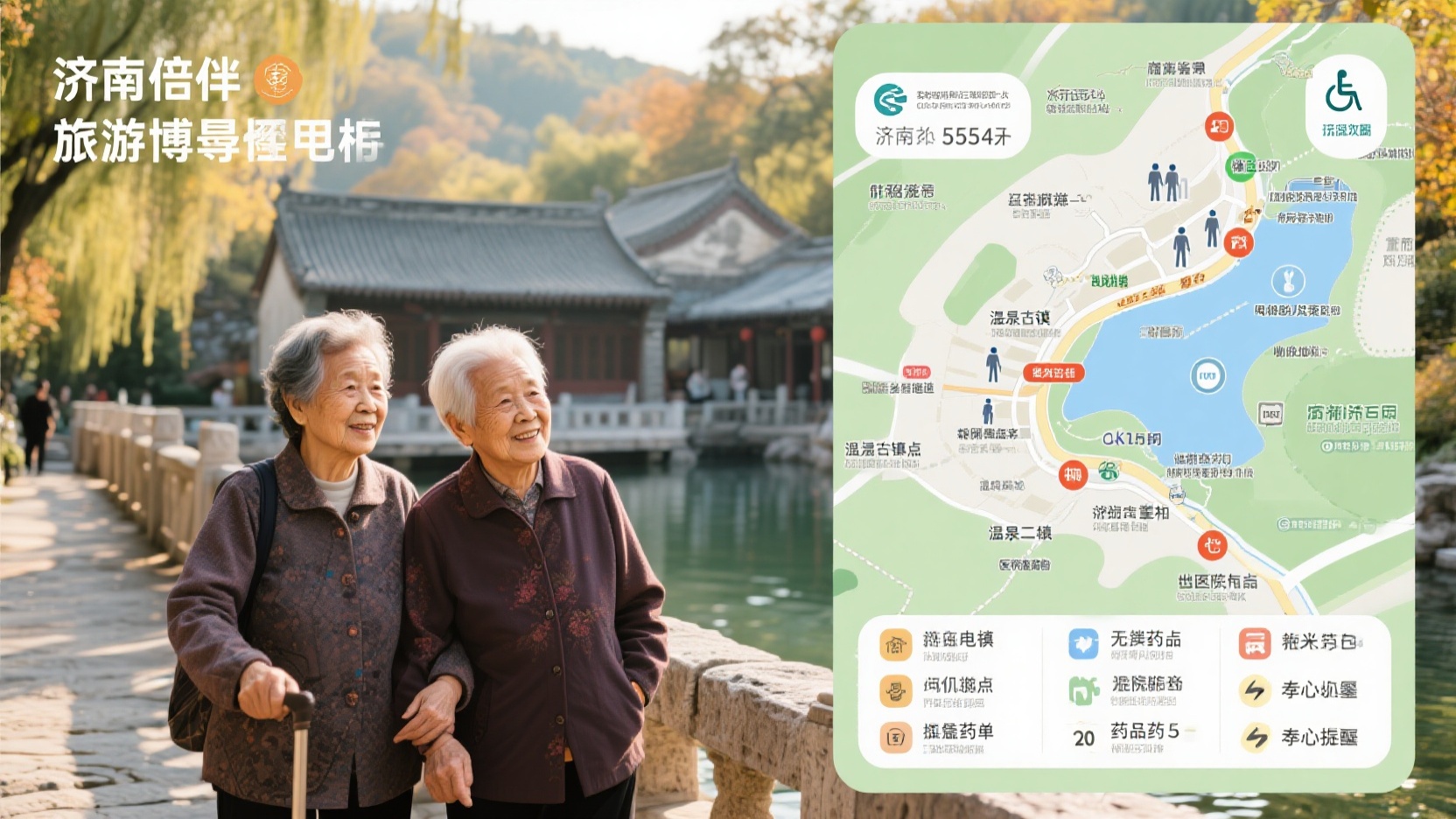
This is the third time I've brought my parents to Jinan. The first two times, I made the same mistake: I planned an itinerary like a "young special forces" trip, and my father's knee started hurting the next morning. This time, I changed it to five days and four nights, only including one or two key destinations each day, and making sure they get a full two hours of sleep at the hotel at noon. All the recommendations below have been thoroughly reviewed based on five criteria: elevator accessibility, accessibility, toilet density, walking distance, and distance to nearby level-two or higher hospitals.
Day 1: Enter Baotu Spring from the North Gate, and only follow the gentle central axis.
The Baotu Spring scenic area isn't large, but the biggest fear for the elderly is getting lost. Entering from the North Gate, the terrain is flat, with almost no continuous steps leading to the main spring pool; exiting from the South Gate, however, involves an uphill climb. I personally measured the walk from the North Gate to the Baotu Spring pool, which took about ten minutes one way. There are many stone benches along the way, and the restrooms are close together, making it convenient for seniors with slower legs. We returned to the hotel at 12:30 PM that day, slept for two hours, and then went out for lunch, avoiding queues in the afternoon.
Important Notes: The eastern rockery area has many steps and slippery surfaces; it's best to skip this area. The electric sightseeing vehicles within the park do not operate every day; please ask staff before entering if they are running that day. A level-two or higher hospital is about a 15-minute drive away, but there are no medical facilities within the park. If elderly guests have heart or blood sugar issues, it is recommended that they bring their medication with them and not leave it at the hotel.
Day 2: Only walk half of the south bank of Daming Lake, then take the electric cart for the remaining half.
Since Daming Lake became free to enter, many travel guides recommend walking around the lake, but that's about four kilometers, which is clearly too much for seniors. This time, I took my parents in from the southwest gate, walked along the south bank to the pier on the island in the middle of the lake, and then took an electric cart to complete the journey along the east and north banks. This way, we saw the core lake views, kept the walking distance under two kilometers, and the entire path was paved with smooth stone slabs, making it easy for wheelchairs and people with canes to walk.
Public restrooms are densely distributed along the south bank, almost one every 500 meters, which is crucial for the elderly. It's worth noting that the lakeside promenade lacks full-length railings, so families with wheelchairs should stay slightly further from the shore. We'll return to the hotel before 1 PM for a midday rest. No sightseeing is planned for the afternoon; we'll only have a walk on the flat ground near the hotel. The south bank is about a ten-minute drive from the nearest level-two or higher hospital, ensuring we won't be too vulnerable in an emergency.
Day 3: Choose between hot springs or an old town; I've already checked both options beforehand.
If your parents enjoy hot springs, choose the hot spring area towards Shanghe. The advantages are the abundance of indoor and outdoor pools, changing areas with benches and non-slip mats, and some pools with accessible handrails. The disadvantages are the long one-way drive; it's recommended to hire a car or drive yourself. They must rest for two hours at the hot spring rest area at noon and avoid soaking continuously. Nearby hospitals (level II or above) are about a 20-minute drive away.
If parents prefer exploring ancient towns, choose the Mingshui Ancient Town in Zhangqiu. The main street of the ancient town is mostly paved with accessible stone slabs, and while there are many bridges, there are gentle ramps. Walking through the core area takes about an hour and a half. There are enough restrooms inside, and the stalls have handrails, which is better than other newly built ancient towns. A point to avoid is that while the nighttime lighting is beautiful, the glare can make it difficult to see the steps; elderly people should try to finish their visit during the day and return before 3 PM.
My conclusion is: choose hot springs if you have knee or leg discomfort, and choose ancient towns if you enjoy taking photos and exploring old streets. Avoid both on rainy days, as the stone slabs will be very slippery when wet. Regardless of which route you choose that day, do not schedule a walk after dinner; go directly back to the hotel to rest.
Day 4: From Black Tiger Spring to Liberation Pavilion, the section with the highest density of toilets.
The Black Tiger Spring area is one of the most senior-friendly waterfront walkways in Jinan's old city. We entered from the west entrance of Black Tiger Spring and walked along the moat to Liberation Pavilion, a journey of about one kilometer with almost no steps. The waterfront platforms have railings, and there are public restrooms every short distance. There's no concept of a closed park here; if you get tired, you can easily walk back to the roadside and hail a taxi back to the hotel.
The steps to Liberation Pavilion are quite steep, so it's not recommended for elderly people to climb the stairs; taking photos in the plaza below is sufficient. This section of the route has several community hospitals and a general hospital of level two or above, making it one of the most reassuring routes in the city in terms of emergency preparedness. That day, we strictly adhered to a two-hour lunch break, and after 4 PM, we only arranged one relaxing foot massage near the hotel, without rushing to any tourist attractions.
Day 5 summary with the blogger: Before heading home, focus on simplification; please double-check your packing list in advance.
Don't plan any new attractions on the last day. Parents usually wake up early, but packing, checking out, and having meals have already exhausted most of their energy. We only stay within a ten-minute walk of the hotel, checking out of the local market or park, then go back to our room for a nap around 10 pm, and leisurely head to the station in the afternoon. The core logic of these five days is: minimizing foot traffic is more important than seeing more attractions.
Here is a 20-item packing list for seniors after this personal experience: 1. Foldable lightweight walking stick; 2. Two pairs of non-slip soft-soled shoes; 3. Knee pads or elastic socks; 4. Warm light jacket; 5. Two disposable raincoats; 6. Portable foldable cushion; 7. Large thermos; 8. Medicine dispenser; 9. Blood pressure monitor; 10. Blood glucose meter; 11. Original packaging of commonly used medications; 12. Photocopies of medical insurance card and ID card; 13. Foldable shopping bag; 14. Three packs each of tissues and wet wipes; 15. Hand sanitizer; 16. Reading glasses and spare glasses; 17. Spare batteries for hearing aids; 18. Mobile phone lanyard; 19. Power bank; 20. Emergency contact card.
Five categories of commonly used medications to remind you: Category 1: Cardiovascular medications, such as antihypertensive, lipid-lowering, and anticoagulant drugs, must be taken at the usual time and should not be disrupted by travel schedules; Category 2: Digestive medications, such as stomach medicine and antidiarrheal drugs, are more common in the elderly due to changes in water and soil; Category 3: Joint and external medications, such as plasters, diclofenac sodium, and adhesive bandages; Category 4: Respiratory medications, such as asthma inhalers and anti-allergy medications; Category 5: Emergency medications, such as nitroglycerin or quick-acting heart pills, should be carried with you and your accompanying family members should be informed of their location.
When traveling with parents, the more blank space you leave on the itinerary, the more relaxed they will be. Jinan itself has a flat terrain, so as long as you make sure you have access to elevators, accessible facilities, restrooms, hospitals, and a place to rest during lunch breaks, five days and four nights is more than enough.