
Hidden in Jinan's Old Factories: 8 Spiritual Corners Amidst Old Factories, Independent Bookstores, and Vintage Warehouses
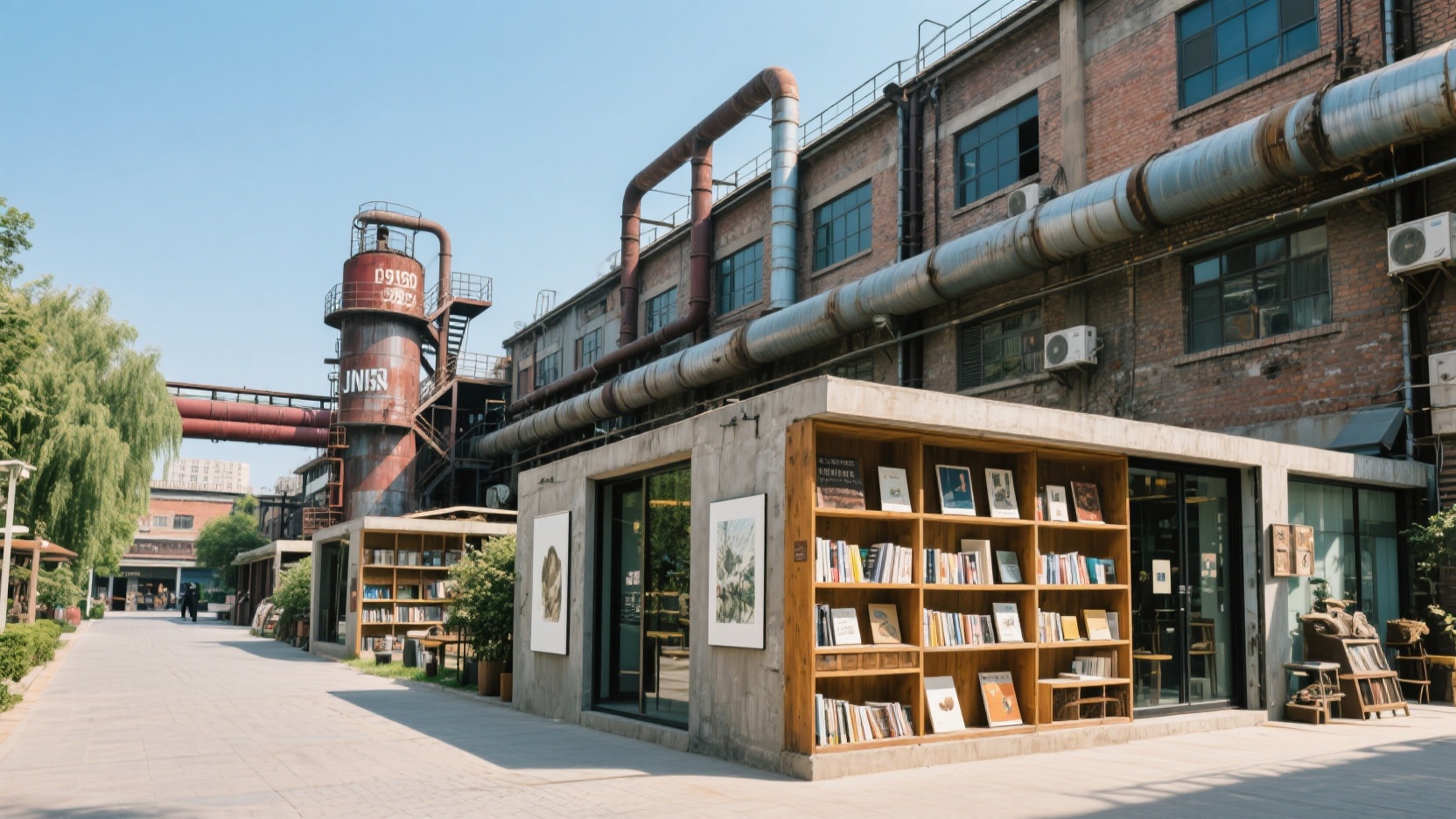
Shifting the focus of your Jinan trip away from Baotu Spring and Daming Lake, another map comprises old factories, independent bookstores, vintage warehouses, and neighborhood cafes. This route doesn't prioritize sightseeing; instead, it's a concentrated exploration of the city's spiritual corners, perfect for a full day, divided into two leisurely segments.
Qianmo Bookstore: A Republican-era study in an old building
Located in a century-old building in the old commercial district, Qianmo Bookstore has the ambiance of a Republican-era study: dark wooden bookshelves, patterned tile floors, and old-fashioned lamps, with no clear boundary between books and furnishings. The focus is on a selection of books on literature, history, and local Jinan culture, interspersed with old photographs and maps. Occasionally, there are evening readings. For photography, it's recommended to use the natural light near the window for portraits; the patterned tiles and bookshelves create a sense of depth, making for ambiance-friendly shots. The bookstore is also more visually appealing in the warm evening light, but it's best to avoid disturbing readers.
Lenghu Bookstore: A Calm Reading Space for Science Themes
Lenghu Bookstore is an anomaly among independent bookstores. Its minimalist cool color scheme, metallic lines, and suspended planet installations transform the space into a mini science laboratory. The selection leans towards astronomy, science fiction, and popular science, with long tables by the window perfect for extended reading sessions. Highlights also include regularly changing science-themed exhibitions. For photography, it's recommended to use symmetrical compositions to include the installations and bookshelves in the frame, with people simply looking down at the long tables while reading; avoid using flash.
JN150 Creative Design Culture Workshop: The Industrial Expression of the Old Sinotruk Factory
Converted from the former Sinotruk factory, the site retains its red brick walls, steel frame, and high skylights, making its rugged industrial feel its most distinctive feature. The park houses design studios, small exhibitions, hands-on workshops, and cafes/restaurants, with occasional markets in the atrium. The highlight is the juxtaposition of the old factory structure and new business formats. For photography, it's recommended to use the red brick walls and rusty steel stairs as a backdrop; the afternoon sunlight streaming through the skylights is perfect for capturing light and shadow; and shooting from below at the atrium's roof structure will create a sense of spatial depth.
Red Square 1952: Quieter Red Brick Chimneys and Alleyways
Red Square 1952 is quieter than similar parks, with its well-preserved red-brick chimneys and old factory facades. With limited space, it's more suitable for strolling. There are occasional independent exhibitions and vintage displays, and the opening hours of design shops are unpredictable; leisurely browsing is better than rushing. For photography, it's recommended to use the chimneys as a vertical background and take wide-angle shots of the factory facades and alleyways. On cloudy days, the red bricks have higher saturation, and for portraits, framing the shot at the factory entrance is ideal.
West Street Workshop: A cluster of workshops in an old factory building
West Street Workshop is a converted old factory building, a small and compact space that mixes galleries, ceramics studios, independent publishing houses, and handmade workshops. The highlight is the chance encounters with open studios, where many artists reside, offering opportunities to chat directly with the creators. For photography, it's recommended to use the contrast between the old factory doorway and the white walls inside to create a modern effect; silhouettes in front of artworks are a safe composition. However, permission must be obtained before photographing the details of handmade tools and materials.
Old Goods Warehouse: A Private Warehouse of Urban Memories
Located in the old commercial district, this secondhand warehouse collects old Jinan doorplates, old receipts, enamel mugs, and film cameras, resembling a private memory repository. Each item comes with a handwritten card, and old magazines and textbooks can be browsed. The highlight is the traces of urban life behind the objects. For photography, it's recommended to use warm yellow lighting for close-ups of the items, and avoid glare from the glass cabinets at an angle; for portraits, pose sideways in front of the old bookshelves, and avoid wearing brightly colored clothing.
Community Café: A living room on the ground floor of an old residential building
Hidden on the ground floor of an old residential building, this community café has no eye-catching sign. Green plants and a handwritten menu adorn the windowsill. With limited seating, it feels like a neighbor's living room. The café focuses on its own roasted beans and seasonal hand-drip coffee, making it a good place to observe everyday life in Jinan's neighborhoods. For photography, it's recommended to shoot against the light from the window to capture the coffee and plants, and from a low angle to the entrance to photograph the sign and street scene. The softest light is best around 3 or 4 pm, ideal for portraits and tabletop details.
Independent Galleries: Slices of Young Artists on White Walls
Located near the cultural market, this independent gallery features white walls and wooden floors. The space is small, focusing on prints, photography, and mixed media by young artists. Exhibitions are updated frequently, and smaller works can be viewed up close. Occasionally, there are guided tours by the artists. The appeal lies in its lack of the formality often found in large art museums. For photography, it's recommended to use the white walls as a clean background to capture silhouettes in front of the paintings, and to use natural light by the window to capture details. Avoid touching the exhibits and do not use flash.
This route isn't meant to be completed in one go; it's better to pick two or three places to linger at. Scattered among Jinan's streets and old factories, they have no fixed order, yet together they preserve vibrant slices of the city's youth culture. Explore the city's spiritual corners on foot.