
What time is best to visit Jiaxing's cultural landmarks? I've arranged them for you according to the lighting conditions.
When embarking on a cultural and artistic journey in Jiaxing, the most easily overlooked aspect isn't which places to visit, but rather the time of day. The same memorial hall, old street, or historical site will evoke completely different feelings and details depending on whether you enter at 10 AM or 4 PM. This article answers only one question: If you had a whole day dedicated to Jiaxing's cultural spaces, how should you arrange your time from morning to night, and why? All locations are arranged according to their actual opening hours and lighting conditions, so you can follow this guide directly.
6:30 South Lake Island - Misty Rain Pavilion
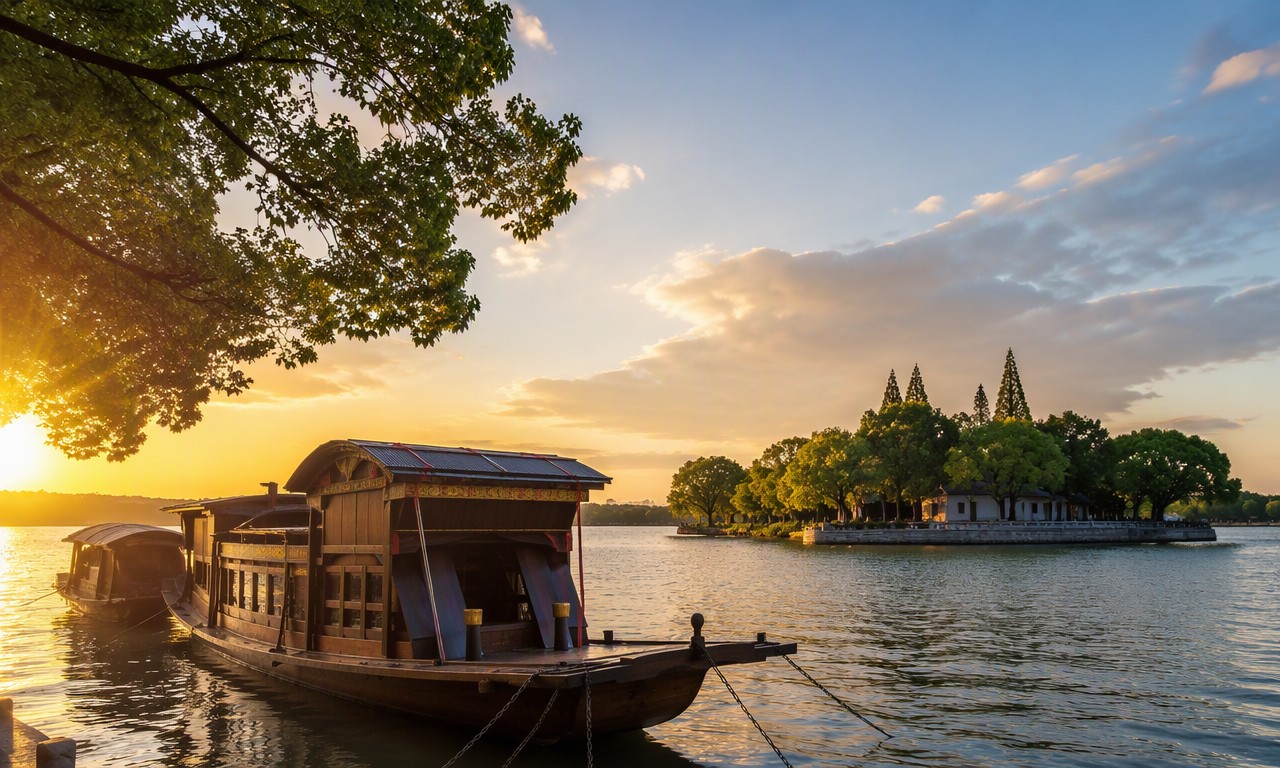
Yanyu Tower is Jiaxing's most significant cultural landmark, but during the day, it's crowded with tour groups, and the narrow stone paths on the island in the middle of the lake make it difficult to enjoy the leisurely view from the tower. The first boat to the island departs earliest, so it's recommended to go then. In the early morning, a thin mist often covers the surface of South Lake, perfectly capturing the essence of "misty rain" when viewed from Yanyu Tower. The light is also soft, avoiding the overexposure and harsh shadows often seen at midday when photographing the tower and the lake. The island isn't large; a walk around it, including climbing the tower, takes about 30 to 40 minutes. After disembarking, walk a little north along the shore of South Lake for a good vantage point to look back at Yanyu Tower.
8:30 Jiaxing Museum
The museum opens at 9:00 AM. It's best to have breakfast near the entrance around 8:30 AM and enter promptly at 9:00 AM. The Jiaxing Museum's exhibits are mainly based on the Majiabang, Songze, and Liangzhu cultures, clearly explaining the history of prehistoric rice cultivation and jade artifacts in Jiangnan. The mornings are the quietest, with fewer people in the glass display cases, less glare, and less crowding. You can spend a long time closely examining the intricate jade pendants and pottery carvings. The "Heyuan" exhibition hall is a must-see; it systematically explains the changes in Jiaxing from prehistoric times to the Ming and Qing dynasties, offering a more rewarding experience than simply visiting archaeological sites. Allocating one and a half to two hours for the entire museum is reasonable.
11:00 Yuehe Historic District: Intangible Cultural Heritage Museum and Old Houses
Many people treat Yuehe Street as a commercial area, but its greatest value lies in several unassuming cultural spaces. Near the west side of the street is the Jiaxing Intangible Cultural Heritage Exhibition Hall, which is usually not crowded. It showcases Jiaxing's blue-dyed cloth, Pinghu pickled eggs, Haining shadow puppetry, and other intangible cultural heritage items. Next to it are several restored old houses, whose courtyards and wooden beams retain the traditional style of local dwellings. Arriving around 11 am, the street gradually becomes more lively, but the Intangible Cultural Heritage Exhibition Hall remains quiet, allowing for a leisurely visit. Afterwards, you can grab some local snacks in the area; there's no need to wait in long lines—just find a small shop with enough seating.
13:00 Zicheng Ruins Park
Don't rush off after noon; the Zicheng Ruins Park isn't far from the Yuehe River. This is the heart of Jiaxing's old city, established during the Three Kingdoms period and the seat of Jiaxing Prefecture during the Southern Song Dynasty. Between 1 and 2 pm, the park is nearly empty, making the city wall ruins and archaeological exhibits feel spacious and authentic. The most impressive part is the exposed Song Dynasty city wall foundation and brick paving; you have to crouch down and look closely to truly grasp the scale of the ancient city. There are a few shaded areas in the park, so be sure to apply sunscreen in the summer. Allow about forty minutes.
14:30 Zhu Shenghao's Former Residence
Zhu Shenghao's former residence is tucked away in an alley in the old city. It's a small, two-story old-style house. Arriving after 2:30 PM, when the sun begins to set, the narrow alley is shady, making it pleasantly cool inside. The most worthwhile things to see in the residence aren't the artifacts themselves, but rather the complete copies of his translations and original letters on display. Zhu Shenghao's dedication and poverty in translating Shakespeare are fully embodied in these works. There are almost no tour groups here; it's so quiet you can hear the creaking of the wooden stairs. You'll truly feel how a Jiaxing native buried himself in words during turbulent times. Half an hour is enough to carefully explore both floors.
16:00 Shen Zengzhi's Former Residence
Shen Zengzhi is the kind of figure who is "extremely influential in academic circles but largely unknown to tourists." His former residence is in Yaojiadai, not far from Zhu Shenghao's former residence. Arriving at 4 PM, the setting sun casts its rays into the two courtyards, making the blue brick walls and wooden window frames look their best. The residence has minimal decoration; the main focus is on the exhibits of his calligraphy and academic achievements. Don't rush through; pay close attention to his calligraphy—the Shen style, a fusion of stele and calligraphy, may seem rough, but it's captivating. The museum closes relatively early; arriving at 4 PM avoids afternoon drowsiness and allows you to leisurely finish your visit before closing time.
18:00 Meiwang Street - Dinner and Evening Breeze
Dinner can be enjoyed in the Meiwang Street area, where there are many dining options, ranging from affordable eateries to more upscale local restaurants. Meiwang Street itself also has several old buildings from the Republican era worth seeing. A stroll along the river in the evening, as the light dims, has a more charming atmosphere than during the day. This street is a place frequented by locals, unlike some "historical districts" that are only frequented by tourists. Find a riverside spot, enjoy some local Jiaxing dishes, and watch the sunlight gradually fade from the river – it's the most relaxing part of the day. A 20-minute walk in the area before and after dinner is perfectly acceptable.
19:30 Jiaxing Grand Theatre or Nanhu Tiandi Evening Show
If there's a performance that evening, the Jiaxing Grand Theatre is a great way to end the day. Its shows mainly consist of local operas, plays, and concerts; many locals, let alone tourists, have never been there. Buy a ticket to see a Yue opera or a play with local themes, and you'll truly connect with Jiaxing's "contemporary culture" for the day. If there's no performance, head to Nanhu Tiandi to see the night view. The lakeside lighting there is very restrained, avoiding making the lake surface appear multicolored. Standing by the lake and taking another look at Nanhu at night is a completely different experience from the morning mist. Don't plan too long for the evening show; it should be over within an hour and a half.
The core logic of this day trip can be summarized in one sentence: reserve the best lighting time for outdoor ruins and lake views, visit museums when the light is strongest, save early-closing former residences for the late afternoon, and reserve evening visits for performances or the lakeside. Not every place needs to be visited at the "best time," but in Jiaxing, prioritizing lighting and opening/closing times is definitely more comfortable than blindly following a map.