
5-Day Slow Travel in Hong Kong | A Tested Itinerary for Parents (A Checklist to Avoid Common Pitfalls for Seniors)
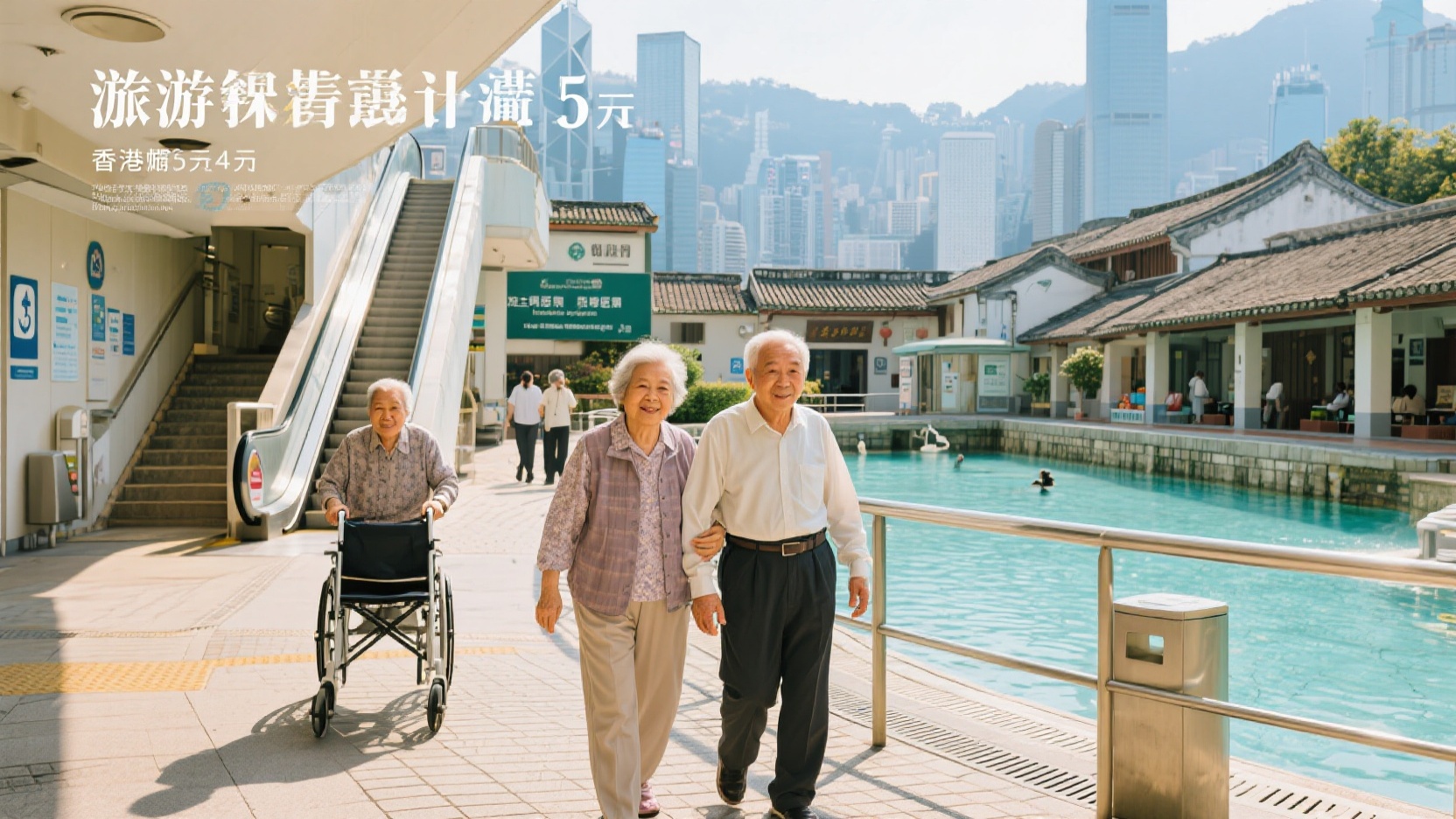
Having taken my parents to Hong Kong for three consecutive years, the most profound lesson I learned wasn't which teahouses were bad, but rather that the seemingly short slope in the Mid-Levels area of Central caused my mother to sit down three times. Later, we completely changed our strategy: choosing only routes with elevators and taking a two-hour nap at the hotel each day. Surprisingly, we explored the area more thoroughly than young people who were hiking extensively. This post is for those planning a leisurely trip to Hong Kong with their parents or elderly relatives. The focus isn't on sightseeing, but on factoring in mobility, restroom needs, and unexpected medical visits.
When choosing accommodation, check three things first: elevator, toilet, and hospital accessibility.
When traveling with elderly relatives in Hong Kong, I almost never choose guesthouses with walk-up access in older districts. I prioritize hotels above MTR stations in Tsim Sha Tsui or Kowloon Station area, where the room floor is directly connected to the mall elevator, there's a restroom right downstairs, and it's less than a five-minute walk to Victoria Harbour. Elderly people need to use the restroom frequently, and the density of restrooms in malls is much more reliable than those on the street.
Secondly, consider the distance to the hospital. From Tsim Sha Tsui to Queen Elizabeth Hospital, it's about a ten-minute drive, and from Kowloon Station to Kwong Wah Hospital is also within a reasonable range. Thirdly, consider whether the room offers shade for a midday nap, and ideally, a non-slip mat for the bathtub or a shower chair. A mid-range price is sufficient; in Hong Kong, location is key. Don't try to save money by staying in older buildings in North Point or Sham Shui Po that require multiple elevator transfers.
After checking in, I will first walk the route from the room to the nearest public toilet and emergency exit to make sure that a wheelchair or walker can pass through. This is more important than the sea view.
Five-day, four-night ultra-slow version: visiting only one or two key points each day.
The first day will not include sightseeing. After arriving in Hong Kong at noon, we will go directly to the hotel to rest. In the evening, we will take a walk from the hotel to the Tsim Sha Tsui waterfront promenade. This promenade is entirely flat, with plenty of benches along the railings. Public restrooms are available near the Cultural Centre and the Star House. After enjoying the Victoria Harbour night view, we will return to the hotel, avoiding the Star Ferry to prevent long queues.
The next day we visited Wong Tai Sin Temple and Nan Lian Garden. There are shuttle buses or taxis between the two places, so the elderly don't have to walk in the sun. Nan Lian Garden has good accessibility features, the restrooms are clearly located, and there's plenty of shade. We returned to the hotel before 2 PM for a two-hour nap, and then had dinner at a nearby shopping mall.
On the fourth day, we visited the Hong Kong Palace Museum in the West Kowloon Cultural District. The museum is well-air-conditioned, with elevators and seating on each floor, and a high density of restrooms. It's also a good place to avoid rain and sun. The drive back to the hotel from the museum is short, and Kwong Wah Hospital is about a ten-minute drive away, so we can rest assured if we feel dizzy or have chest tightness. After lunch, we returned to the hotel to rest.
On the fifth day, after checking out, head directly to Citygate Outlets or the airport. No major attractions are planned, allowing ample time for luggage handling and restroom breaks. The total daily walking distance for the five days is kept under 8,000 steps, ensuring the elderly won't get too tired or upset.
Day 3: Choose one of two options: Yuen Long Old Town or the hotel's heated pool.
Hong Kong lacks natural hot springs, but two alternatives suitable for senior citizens are available. Route A is the Ping Shan Heritage Trail in Yuen Long, starting from Ju Sing House, passing the Tang Clan Ancestral Hall and the Kin Ting Study. The village roads are relatively flat, but some alleys are narrow; it's recommended to take a taxi directly to the entrance rather than taking the MTR and walking. Public restrooms are limited nearby, so it's advisable to use the MTR before entering the village. Pok Oi Hospital is about a 15-minute drive away.
Route B is a "warm water relaxation" alternative to hot springs. Many star-rated hotels above subway stations have heated swimming pools or warm water massage pools; a 15-minute soak can relieve joint stiffness in the elderly. I will check beforehand whether the changing room has handrails and whether the water temperature exceeds 40 degrees Celsius, and I will stay by the pool with them. After soaking, we can take a nap in the room, and then go for a walk on the flat ground of the nearby seaside park in the evening. You only need to choose one of the two routes; don't go to the ancient town in the morning and the hot spring in the afternoon, as disrupting the rhythm will easily tire the elderly.
Four Hong Kong details that senior citizens often overlook
First, there's the temperature difference between indoors and outdoors. Air conditioning in shopping malls and the MTR is often set to around 20 degrees Celsius, while it's 30 degrees Celsius outdoors. Elderly people's blood vessels constrict quickly, so a light jacket and scarf are essential. Second, while there are many escalators, they are often circuitous. Central and Admiralty have a well-developed network of footbridges, but some exits only have escalators going up and no escalators going down. When using navigation, prioritize "accessible exit" signs; taking an extra 200 meters is better than going down the stairs directly.
Third, there's a significant difference in toilet density. Toilets are plentiful along the Tsim Sha Tsui waterfront and in large shopping malls, but almost nonexistent in the back alleys of older districts; I mark toilet locations on a map before heading out. Fourth, there are senior citizen transportation discounts. Eligible seniors can use their Senior Octopus cards to ride the MTR and buses, but this doesn't apply to some green minibuses; asking the driver before boarding is more reliable than consulting a travel guide.
Blogger's summary: Packing list and common medication reminders for seniors traveling.
When taking parents on a five-day trip to Hong Kong, the most crucial step is to cut the itinerary in half. A two-hour lunch break isn't laziness; it's a buffer to maintain stable blood pressure. It's better to visit only one museum each day than to make elders repeatedly struggle between elevators and ramps just to see everything on a list. I check the following list item by item before each trip, and in practice, it reduces unexpected situations by 70%.
Packing list of 20 items: 1. Folding walking stick; 2. Non-slip soft-soled shoes; 3. Light jacket; 4. Scarf; 5. Portable folding stool; 6. Large-capacity water bottle; 7. Individually wrapped tissues and wet toilet paper; 8. Urine bag or adult diapers for backup; 9. Repackaged commonly used medications; 10. Blood pressure monitor; 11. Blood glucose meter and test strips (if needed); 12. Eye drops commonly used by the elderly; 13. Thermos cup; 14. Screenshot of accessibility map; 15. Hotel business card and Octopus card holder; 16. Disposable raincoat; 17. Knee pads; 18. Mosquito repellent patches; 19. Power bank and charging cable; 20. Small amount of Hong Kong dollars in cash.
Five common medications to remember: 1. Blood pressure medication: bring an extra two days' supply, divided into a handbag and a carry-on bag; 2. Heart emergency medications, such as nitroglycerin, must be kept in their original bottles; 3. Blood sugar medications and candy to prevent hypoglycemia; 4. Gastrointestinal medications and antidiarrheal medications, as Hong Kong's diet tends to be sweet and oily, which can easily cause bloating in the elderly; 5. Cold and fever medications and a thermometer, as medical appointments in Hong Kong require reservations, and mild symptoms should be treated at home first. Keep all medications in their original packaging and with English instructions for easier border crossing.
In summary: Hong Kong is suitable for a leisurely trip with parents, provided that "elevators, benches, toilets, and lunch breaks" are placed on the first page of the travel guide, rather than on the list of must-see attractions.