
How to properly enjoy Hong Kong cuisine? It depends on who you're with this time.
If you only have one meal opportunity, or a full day or three days to spare, your Hong Kong food list will be completely different. But most guides only tell you "what's good," not "what to eat in what situations." This is the core question this article aims to answer: not what Hong Kong has, but how you choose. Because eating alone, with parents, or with children—your budget and time differ—require completely different approaches. Read on, and you just need to find the one that suits you best.
With only one meal available, which flavor should we focus on?
If you're only having one meal, the worst thing is trying to eat everything at once. Hong Kong has a high density of street food, but you only have one stomach. If you're traveling alone, I recommend choosing "roast meat rice." The reason is simple: it's the type of food that allows you to quickly assess the quality of Hong Kong cuisine, and you don't have to cater to anyone. Choose a roast meat stall in a cooked food center upstairs in a market, order a plate of char siu and soy sauce chicken combo, and check if the honey glaze is well-coated and if the chicken skin is smooth enough. It costs a few tens of dollars per person, and you can eat with confidence.
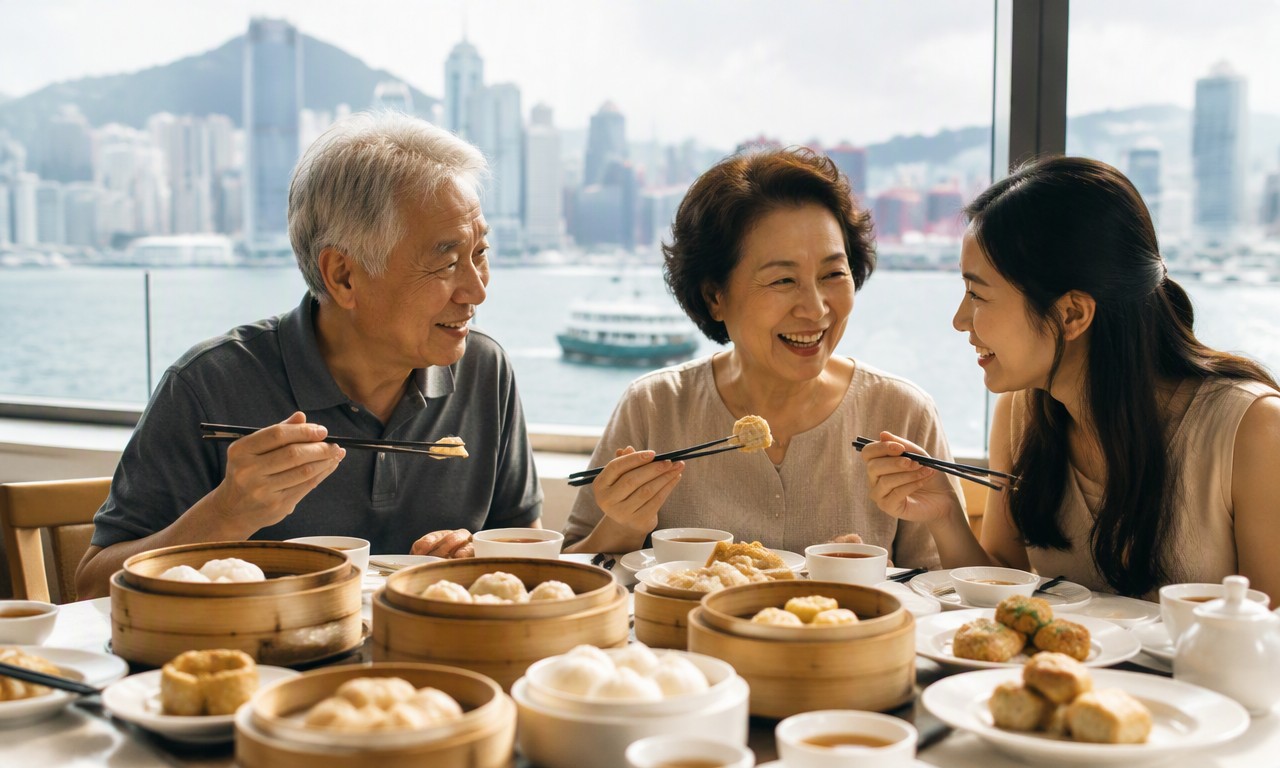
If you're having dinner with your parents, the roast meat rice is still a good option, but change the setting to an air-conditioned tea restaurant where you can sit and relax. Parents are less tolerant of changes in environment than younger people; while market stalls are authentic, the queues and noise can ruin the experience. Ordering soup of the day, hot milk tea, and a serving of roast meat, and chatting for a bit, is more important than rushing. For couples, this meal should be at a noodle stall, especially beef brisket noodles or wonton noodles. These types of food have a very low tolerance for error at Hong Kong noodle stalls, and you can eat quickly without interfering with your walk.
How can I schedule my time so that I'm not too tired but still get the most out of the day?
The whole day is the "golden time" for experiencing Hong Kong's food scene. If you're traveling alone, I suggest breaking your day into three segments: "morning tea, midday snacks, and evening dessert." For morning tea, choose a restaurant; it's not awkward to enjoy tea and dim sum alone. Order a basket each of shrimp dumplings, rice noodle rolls, and steamed sponge cake. Go early, ideally before 9 am, to get freshly made. For lunch, skip the main meal and head to Sham Shui Po or Mong Kok for a "street food adventure." Try egg waffles, fried stuffed three treasures, and fish balls—all for a few dollars per person, eat as you stroll. Finish around 9 pm with a dessert shop in the old district, enjoying sesame paste or tofu skin and ginkgo nuts for a complete and sweet ending to the day.
If you're traveling with kids, the day should be planned in reverse: For dim sum, choose a chain restaurant in a shopping mall – spacious and with high chairs for children. Allow at least half an hour for lunch (excluding mealtimes) so the kids can play in the nearby open space. For afternoon tea, have egg tarts and iced lemon tea; kids will love this sweet and straightforward combination. In the evening, avoid Sham Shui Po; just head back to the hotel area for a bowl of wonton noodles to finish the day quickly.
The key to a full day with parents is having a place to sit. Have tea in the morning, a roast meat rice lunch, and in the afternoon find an old-fashioned cafe with a second-floor seating area for a pineapple bun and hot coffee. Let them rest well before moving on. Avoid hot pot in the evening; long queues and low seating positions can strain their backs. A clear broth beef brisket is a better option—it's quicker and allows you to get back to your accommodation earlier.
How can I allocate my three-day itinerary to experience a "layered" variety of flavors?
Three days is the perfect amount of time to truly experience the "highs and lows" of Hong Kong's culinary scene. If you're traveling alone, I recommend three distinct days: Day 1: indulge in "local street food"—roast meat rice, cart noodles, and street-side rice noodle rolls; Day 2: savor "nostalgic Cantonese cuisine"—find a long-established Cantonese restaurant and order dishes that test your culinary skills, like sweet and sour pork and shrimp toast; Day 3: indulge in a "high-end experience"—perhaps dim sum at a hotel restaurant or a reputable roast goose specialty shop. After three days, you'll clearly understand which aspect of Hong Kong you prefer.
If you're a couple, consider splitting your three-day itinerary between "sweet" and "savory" dishes. Day one: desserts like egg tarts, steamed milk pudding, and glutinous rice balls; day two: seafood dishes like shrimp roe noodles, fish maw soup, and crab congee; day three: a "night market" experience with claypot rice from Temple Street and salt and pepper flounder. The varied flavors create a complete culinary narrative. Avoid eating the same things every day, or you'll get tired of it.
If you're taking your parents, make sure to have at least one proper Cantonese dinner every three days. It doesn't have to be fancy, but it should include white rice, soup, and steamed fish. The steamed fish is very important; it gives your parents a sense of reassurance that the trip was worthwhile. For the other two days, plan for a tea restaurant or noodle/porridge place, keeping the pace slow and avoiding places that require prolonged standing. When taking elderly people out to eat, the ambiance is more important than anything fancy.
How to eat decently without settling for less when on a limited budget?
You can eat quite well in Hong Kong on a budget. The key is in "choosing the type of food" rather than "choosing the cheapest place." Noodles are the best choice: wonton noodles, beef brisket noodles, and fish ball noodles. They cost around ten dollars per person and are very filling. Next, try a roast meat and rice combo; you can have unlimited rice, which is great value. For desserts, choose street-side sweet soup shops or old-fashioned ice rooms; you can get a bowl of high-quality food for ten or twenty dollars. Avoid "cheap but mediocre" Western fast food; it's unnecessary. Affordable Hong Kong flavors are never found in chain restaurants.
With a mid-range budget, you can combine one main meal with two snacks. Have one meal at a reputable Cantonese restaurant, costing around HK$100 per person, and enjoy two signature dishes and a delicious soup. The other two meals can be at a local tea restaurant or noodle stall. The advantage of this combination is that you get to experience the authentic Hong Kong "wok hei" (wok aroma) without wasting too much money on the ambiance. Mid-range meals in Hong Kong usually offer very high-quality ingredients.
If the budget allows, what kind of experiences should the money be spent on?
For high-budget guests, the most common problem is "not getting their money's worth." When dining upscale in Hong Kong, don't prioritize Western or Japanese cuisine, as these are not irreplaceable in Hong Kong. What's truly worth investing in are "nostalgic handcrafted dishes in Cantonese restaurants" and "Chinese dim sum in star-rated hotels." The skill and ingredients used in these dishes are difficult to replicate outside of Hong Kong. Roast goose, braised fish maw in abalone sauce, and traditionally steamed fish are dishes worth including in a proper meal during your trip.
For high-end desserts, it's recommended to choose "established dessert shops with a long history" rather than trendy online stores. A bowl of freshly ground almond tea or ginger milk pudding may be in an inconspicuous location, but the smoothness and delicate texture are something that mass-produced desserts cannot replicate. If your budget allows, you're looking for the "concentration of craftsmanship," not the number of times you visit Instagrammable spots.
Is it "a spontaneous trip for one person" or "a leisurely meal with the whole family"?
The biggest advantage of traveling to Hong Kong alone is that you "don't have to wait for anyone." Therefore, your strategy should be "eating in parallel"—patrolling through two or three restaurants on the same street, rather than ordering a bunch of things from one place. For example, on one street in Sham Shui Po, you can eat rice noodle rolls, sweet soups, and egg waffles from three different stalls without repeating any. When traveling alone, you need to translate your travel efficiency into "flavor breadth."
When traveling with parents or children, the strategy is completely reversed. Keep the "restaurant search time" under ten minutes and prioritize getting them "sitting down." A large family can easily get tired and their mood can sour from queuing. Therefore, it's better to eat at a consistently high-quality chain restaurant than to make elderly people and children stand for half an hour just to check out a famous restaurant. The sheer variety of Hong Kong's culinary offerings can compensate for many less-than-stunning choices.