
Where should you start eating your way through Hong Kong's culinary scene? I've answered all the questions readers were too afraid to ask.
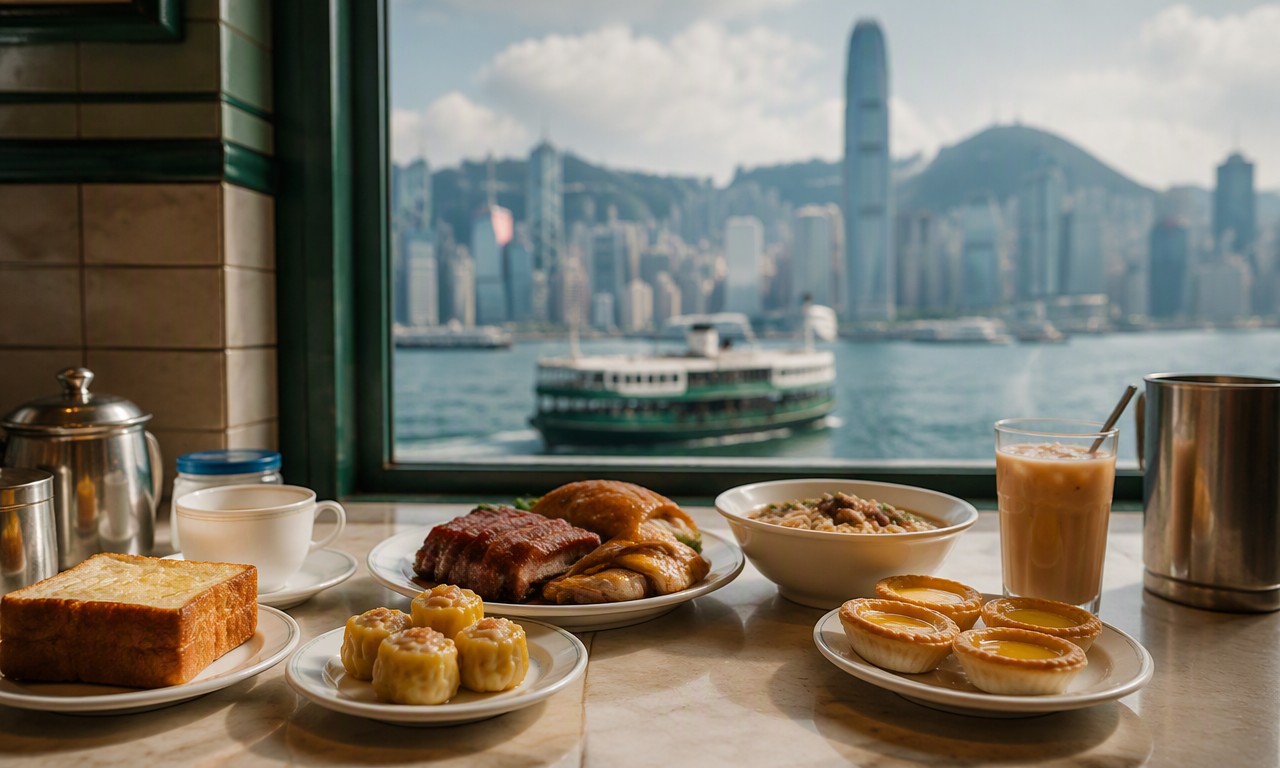
This article aims to answer only one core question: With so many delicious foods in Hong Kong, what's the best approach to ensure you don't waste a single meal? This question deserves a serious answer because most people only have two or three days in Hong Kong, and eating the wrong meal means missing out on a chance to experience the true culinary essence of this city. The following questions are ones that readers have repeatedly asked me over the past six months. Some sound basic, and some are even a little embarrassing to ask, but they are precisely what most significantly impact the experience.
This is my first time in Hong Kong, and I only have time for one meal. What should I eat?
If I could only afford one meal, I'd recommend going to a local roast meat shop and ordering either "roast goose thigh rice" or "char siu and fried egg rice." The reason is simple: roast meats offer a unique everyday flavor in Hong Kong that's impossible to replicate elsewhere, and the entire process, from ordering to finishing, takes no more than half an hour—extremely efficient. For roast goose, you should eat the layer with crispy skin, tender meat, and the subcutaneous fat just melted away. The plum sauce isn't just for cutting through the richness; it enhances the aroma of the goose fat. As for char siu, choose "half lean, half fat"—too lean is generally considered substandard by locals.
The correct way to eat it is to first eat a piece of meat on its own, to feel the warmth and charred aroma, then mix the meat juices into the rice, and finally drink a sip of the complimentary slow-cooked soup. Don't rush to add soy sauce; good roast meat restaurants already drizzle a small amount of roast meat sauce over the rice, and adding more will disrupt the salty-sweet balance.
What do locals in Hong Kong eat for breakfast? Is it worth it for tourists to get up early?
It's worth it, but there's no need to go to those chain tea restaurants with long queues. Locals' most common weekday breakfast options are either "macadamia with scrambled eggs and toast" or "congee with rice noodle rolls." The former is a classic Hong Kong-style tea restaurant combination; the macaroni soup base is usually chicken broth, the scrambled eggs are tender with a slightly runny center, and the toast is always thick-cut white bread spread with butter. The latter leans more towards the pace of life in the old town: a bowl of congee with various toppings or boat congee, paired with a plate of freshly pulled shrimp rice noodle rolls—a very satisfying meal.
My advice is to find a local tea restaurant or congee shop nearby, filled with locals, and go between 7:30 and 9:00 AM. Don't be obsessed with any particular famous restaurant; the quality of breakfast in Hong Kong is quite high, and queuing will only wear down your patience for the city's mornings. When ordering, just say "breakfast set meal"—this is the safest way to order.
How spicy is Hong Kong-style spicy food? And are the sweet things too sweet?
Hong Kong cuisine is more restrained in its spiciness and sweetness than many people imagine. Take "curry fish balls" as an example; its spiciness mostly comes from chili oil and a small amount of curry powder, making it a fragrant spiciness rather than a numbing spiciness. The initial taste is the aroma of curry, with the spiciness slowly emerging from the back of the tongue. Those who can truly handle spice can even request "extra spice," and the restaurant will drizzle an extra spoonful of chili oil. As for the spiciness of "cart noodles," it's more of a salty and savory flavor with a slight spiciness, unlike the Sichuan and Chongqing style that makes you sweat.
In terms of sweetness, both "Hong Kong-style milk tea" and "red bean ice" are indeed on the sweeter side, but the sweetness is justified. The tea base of the milk tea is strong and astringent enough, requiring sufficient evaporated milk and sugar to support its structure. For first-timers, it is recommended to try "less sweet" first to get a feel for the ratio of tea flavor to milk flavor before deciding whether to switch back to the normal sweetness level. As for the "egg tarts," both the cookie crust and the shortcrust pastry are only slightly sweet; the real aroma comes from the butter and egg mixture itself, so there is absolutely no need to worry about them being too cloying.
What exactly is the difference between trendy online stores and old shops tucked away in alleyways?
The difference lies in "stability" and "service pace." Trendy restaurants often excel at a single dish, but the quality of other items may vary. Moreover, to cope with long queues, the service speed is compressed, resulting in many things that should be prepared slowly becoming rough. Established shops in alleys may not be amazing in everything, but they usually focus on a few things they are good at, and have been doing them for decades, resulting in much more consistent cooking techniques and seasonings.
For example, take a bowl of wonton noodles. A trendy restaurant might have large, photogenic wontons, but the noodles might be soggy and the broth too salty. A traditional restaurant, on the other hand, will have moderately sized wontons with a balanced ratio of shrimp and pork, springy bamboo-pressed noodles, and a clear broth with a hint of dried flounder. My suggestion is: save the trendy restaurants for non-meal times during your trip, as snack stops while walking; save your main meals for the established restaurants with handwritten menus and no English signs.
Where in Hong Kong can you get a proper meal after 10 p.m.?
Yes, and there are more choices than you might expect. Hong Kong has a well-developed late-night food culture, and those still open after 10 pm generally fall into three categories: charcoal hot pot restaurants, congee and noodle shops, and dessert shops. Charcoal hot pot is suitable for two or three people or more, where you can enjoy beef and seafood around a charcoal-fired clay pot, savoring the atmosphere and the natural flavors of the ingredients. Congee and noodle shops are perfect for one or two people; a bowl of "raw-cooked fish congee" or "soy sauce fried noodles" is even more delicious than eating during the day.
A dessert shop is the safest choice; you can't go wrong with "sesame paste," "walnut sago," or "mango pomelo sago." To determine if a dessert shop is worth visiting, look for signs of freshly ground ingredients, such as whether the sesame paste has a natural grayish tint rather than a pure, shiny black. Enjoying desserts after 10 pm, without rushing, is the gentlest way to experience a Hong Kong night.
Are street food vendors really safe to eat?
This is the question I get asked the most, and my answer is: choose the right stall and you'll have peace of mind. Hong Kong has very strict regulations on street food, and licensed stalls have regular inspections of their ingredient sources and preparation processes. There are three very useful ways to judge whether a stall is reliable: see if the queue is mostly locals or just tourists; see if the stall owner keeps the work surface clean during peak hours; and see if the ingredients are continuously cooked at high temperatures rather than prepared in large quantities in advance and cooled.
For egg waffles, choose those made to order. They should be crispy on the outside and soft on the inside, with a semi-hollow center. They will harden quickly after cooling, so avoid buying pre-made ones. For stuffed trio, check the color of the oil; clear oil indicates better flavor, while dark oil means it has been used for too long. Hygiene standards in Hong Kong are generally high; the key is to avoid stalls that cater only to tourists and don't have queues.
When ordering food at a Hong Kong-style cafe, is there a foolproof formula?
Yes, and it's very simple: for your main course, choose either "Baked Pork Chop Rice" or "Satay Beef Instant Noodles," for your drink, choose either "Hot Milk Tea" or "Iced Lemon Tea," and add a "Butter Pork" or "Pineapple Bun" as a dessert. This combination covers the core flavors of a Hong Kong-style cafe: the sweet and sour tomato sauce of the baked rice, the savory aroma of the satay, the rich and smooth milk tea, and the crispy and fragrant pineapple bun.
When ordering, pay attention to this detail: Hong Kong-style cafes move very quickly, and the staff won't have time to wait for you to slowly study the menu. After sitting down, think about what you want to order first, and then simply say, "One baked pork chop rice, one hot milk tea, and one pineapple bun, please." If you say "please" naturally, the whole dining experience will be much smoother. You don't need to understand the entire menu at a cafe; it's about efficiency and cooperation, not a sense of ritual.
If I want to bring some Hong Kong flavor home, what's the most practical thing to buy?
My advice is to avoid those beautifully packaged but mediocre "souvenir gift boxes" and instead buy three things from the market or a long-established bakery: shrimp roe noodles, chu hou sauce, and dried plum. Shrimp roe noodles are the essence of Hong Kong's noodle culture; just cook them at home, add some lard and soy sauce, and you have a very authentic bowl of Hong Kong-style lo mein. Chu hou sauce is the soul of many Hong Kong-style braised dishes; it's perfect for braising beef brisket or spare ribs. Dried plum is a nostalgic snack from old Hong Kong, with its sour, salty, and sweet flavor, perfect for enjoying slowly while traveling or after returning home.
When buying shrimp noodles, choose noodles with a natural yellowish color and a faint shrimp aroma; avoid those with overly bright colors. For chu hou sauce, check the ingredient list; those with bean paste listed first and fewer additives are closer to the traditional flavor. These things aren't expensive, but what you bring home isn't just "Hong Kong style," but a daily routine that can be easily replicated.