
How can I plan a trip to Hong Kong for an exhibition with my parents and kids without feeling rushed?
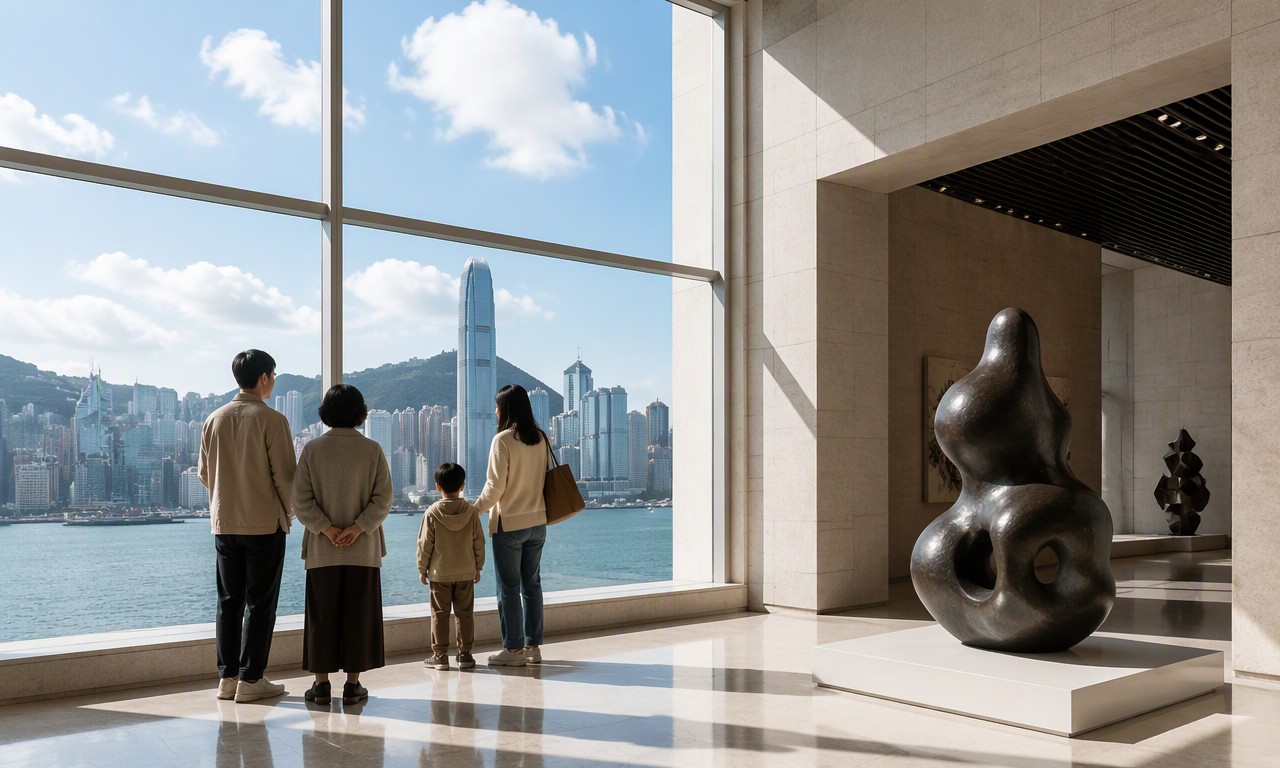
Behind this question lies another issue: Hong Kong's cultural and artistic resources are too scattered and too abundant; you can't possibly see them all in one trip, nor do you need to. What you really need to do is choose a route that avoids detours, pressure, and rushing, based on your group and available time. Below are half-day, one-day, and two-day itineraries for four different groups. Each route can be followed directly without needing to piece together a different itinerary.
Artsy youth: Two days are not enough, but two days can be used to explore deeply.
If you're traveling independently and interested in both contemporary art and urban history, two days is a reasonable minimum. The first day focuses on the West Kowloon Cultural District, while the second day explores the old streets and galleries of Central and Sheung Wan – a perfect balance of activity and tranquility. Both M+ and the Hong Kong Palace Museum in West Kowloon deserve at least three hours each, with time to relax on benches in the art park or by the sea in between. There's no need to rush elsewhere. The advantage here is the concentrated venues and clear layout, making it ideal for a leisurely solo trip.
On the second day, I recommend starting at Tai Kwun in Central. The morning is less crowded, making it ideal for viewing architecture and exhibitions. Then, walk west along Hollywood Road, passing PMQ and several local galleries. Don't approach this with a "checklist" mentality. Some exhibitions are free but of high quality; go in if you see something interesting, and skip those that don't. The real value of this route lies in allowing you to experience the layers of Hong Kong's art scene: from large institutions to independent spaces, from historic buildings to urban redevelopment. After two days, you'll have a real sense of "I not only saw exhibitions, but I also understood this city."
Elder: Half a day should have its own rhythm, and a day should be broken into two parts.
When traveling with parents or elders, the biggest fears are walking too much, waiting too long, and not having a place to sit. If you only have half a day and choose just one place, the Hong Kong Museum of Art is the best choice. It's located by the Tsim Sha Tsui waterfront, with spacious indoor areas, plenty of seating, and clear explanations of the exhibits. Plus, Harbour City is nearby where you can eat or escape the heat. After visiting the museum, take a short walk along the waterfront to the Avenue of Stars, sit down, and enjoy the breeze—it's more comfortable than visiting another museum. The key to this half-day trip is to "see one place, but understand it thoroughly."
If you have a day, split it into two parts, morning and afternoon, with a full hour in between at the hotel or a restaurant. In the morning, visit the Hong Kong Palace Museum; the exhibits are exquisite, the air conditioning is good, and the route is straightforward. In the afternoon, go to Tai Kwun, focusing on the architecture and plaza; you don't need to enter all the exhibition halls. Elders care about "having been there, seeing things, and not being tired," so try to use taxis or the MTR between each point, minimizing stairs and allowing for buffer time. This arrangement will make them feel comfortable, and you won't feel anxious about rushing.
Parent-child bonding: Half a day for novelty, one day for energy expenditure, two days for balance.
When bringing children to Hong Kong to experience culture, the key isn't the quantity of exhibits, but whether they find them "interesting." For a half-day visit, M+ is a top choice; it offers many interactive installations and visually striking works, ensuring children won't get bored. Afterward, take a run in the art park, where there are large lawns and sea views—a rare space in the city to recharge. Don't try to lecture children on art history; let them choose two favorite pieces, take pictures, and chat about them briefly on the way.
One day could involve visiting the Hong Kong Science Museum or Hong Kong Space Museum in the morning, followed by the outdoor space in West Kowloon in the afternoon. Both are located in Tsim Sha Tsui, within walking distance of each other, and offer highly interactive experiences that children will actively participate in. For two days, the second day could be spent at Tai Kwun and Hong Kong Park in Central. Tai Kwun has a large plaza, and Hong Kong Park has a children's playground and a conservatory; the contrast between active and quiet activities will keep children engaged. Avoid scheduling more than two main attractions, otherwise both adults and children will become exhausted and lose patience.
Photography: Half a day chasing the light, one day exploring the old district, and two days waiting for the weather to change.
The schedules of photographers and other tourists are completely different. If you only have half a day, visit only one place. I recommend the old district of Sai Wan or the Yau Ma Tei Fruit Market area. The light is best in the early morning or late afternoon; avoid taking photos outdoors around noon. Sai Wan has the sea, slopes, and old shops, offering many layers in the shots; Yau Ma Tei Fruit Market has a market atmosphere in the early morning and warm streetlights in the evening. Don't try to take too many photos; once you've taken one set at one location, stop.
A day trip could begin with taking the Star Ferry from Central to photograph the architecture across Victoria Harbour, then crossing to Tsim Sha Tsui to capture the exterior lines of the Hong Kong Museum of Art and the human interaction along the waterfront promenade. In the afternoon, when the light is at an angle, return to Central and Sheung Wan to photograph the cobblestone streets, the red brick walls of Tai Kwun, and the old buildings along the Mid-Levels Escalator. These places are close together, easily connected by walking and ferry. For a two-day trip, the second day could be dedicated to the architectural exteriors and sunsets of the West Kowloon Cultural District. The facade of M+, the golden facade of the Hong Kong Palace Museum, the lawns of the Art Park, and the sea are all excellent subjects. The core of this photography route is "waiting for the light," not "rushing," so what you need isn't more places, but the right time of day.
Half a day, one day, two days—think clearly about one thing before making a choice.
Many people ask, "How many days is enough for Hong Kong's cultural and artistic activities?" There's no single answer to this question, as it depends on who you're with. One person can walk from morning till night without feeling tired, half a day is enough for an elderly person, and even two days might not be enough for a child. The real key isn't to cram your time in, but to choose the right itinerary and align yourself with the right group of people and the right pace. The more accepting you are of not being able to see everything, the higher the quality of your cultural journey will be.