
Eat right according to the seasons in Wuxi | A compilation of seasonal dishes tested and tested, so you don't miss out on a season and have to wait another year (not the trendy ones)
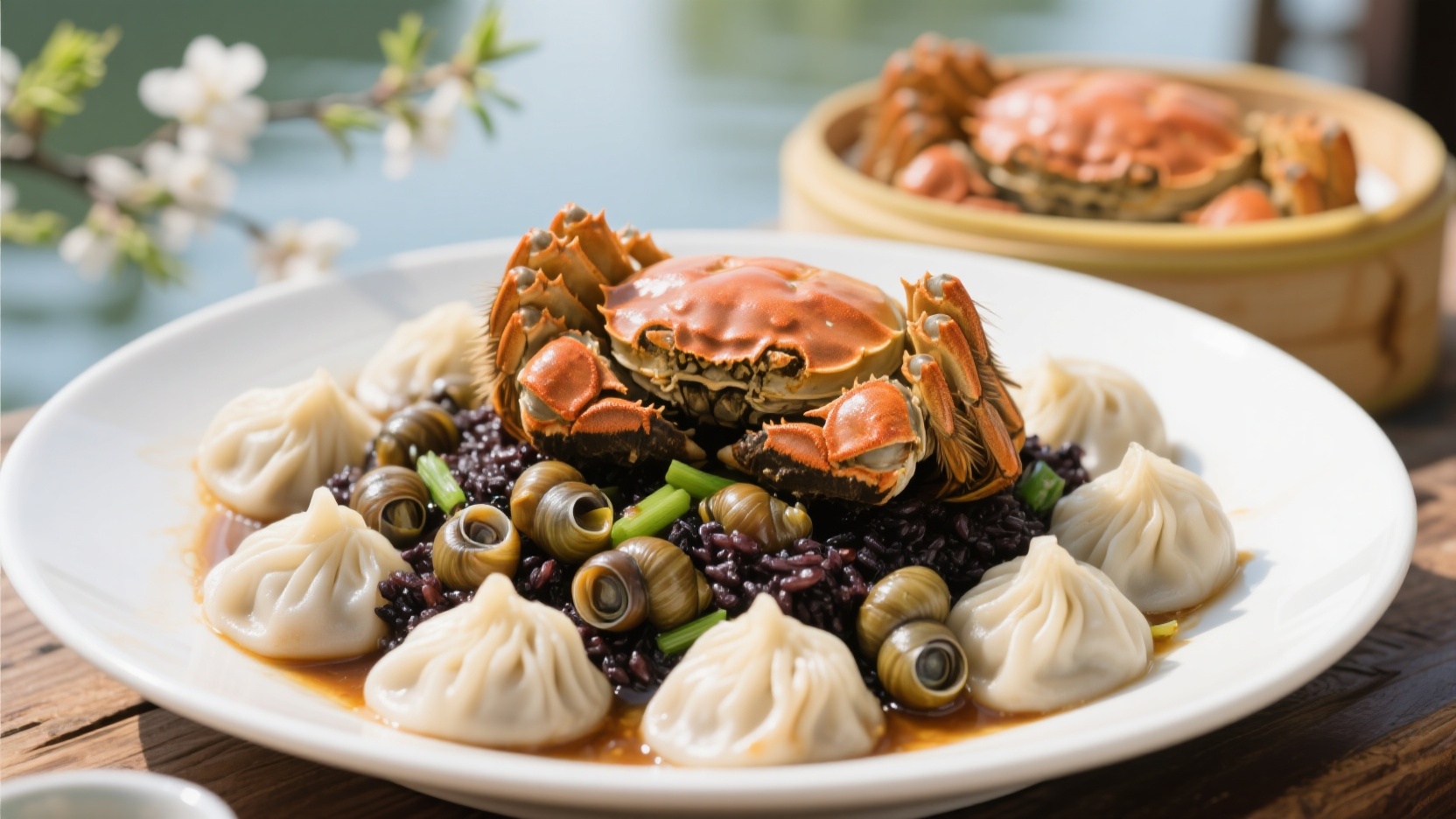
Having spent four full solar term years in Wuxi, the biggest mistake I made was blindly following the "must-eat list" and sticking to a fixed menu. It's not that braised pork ribs and xiaolongbao (soup dumplings) are bad, but they're available year-round and don't really represent the city's ultimate understanding of "freshness." Later, I learned from the locals—going to the market, following fishing boats, and checking menus according to the lunar calendar—and finally figured out Wuxi's hidden rules: truly good food only appears for a window of opportunity—about ten days or so—and if you miss it, it's next year.
This list doesn't recommend any "year-round available" signs; it only includes 8 limited-time delicacies that I've personally tried and that you must eat during the season. It's suitable for serious foodies who plan to explore seasonally, especially families with parents or children, allowing them to avoid crowds and trendy restaurants and enjoy a seasonal meal that "only locals would approve of."
I. From the Spring Equinox to Qingming Festival: Taihu Lake's "Three Whites" and Qingming Snails – the freshness of the water only lasts for this short period.
The "Three Whites of Taihu Lake" refers to whitefish, white shrimp, and silverfish. Many people believe that summer is the best time to eat them, but that's a misconception. After the Spring Equinox, the lake water warms up, and the silverfish begin their migration in groups, reaching their plumpest and most translucent before the Qingming Festival. White shrimp have soft shells and sweet flesh before they carry their roe, and whitefish complete their winter storage during this season, resulting in flesh as delicate as tofu. Experienced restaurants along Lihu Lake will go to collect the fish in the early morning and sell them all before noon.
The locals have a particular way of thinking: "Silverfish should not be fried, white shrimp should not be stir-fried, and whitefish should not be scaled." Silverfish is best suited for making soup or stir-frying with scrambled eggs, and the best part is its translucent tenderness; white shrimp are blanched in salt water, and their shells are crisp and their flesh is sweet. Peel one, dip it in ginger and vinegar, and the freshness will hit you right in the head; whitefish must be steamed, as the gelatinous substance under the scales is so delicious that the broth is perfect for mixing with rice.
On the same table, there's also the indispensable Qingming snail. There's an old saying, "Qingming snails are better than geese," because snails haven't laid eggs before Qingming, so their meat is firm and free of small snails. Wuxi people like to stir-fry them with soy sauce, adding a little sugar to the rich, dark soy sauce. When it's served, you first suck on the snail's mouth, then pick out the snail meat, and finally mix the broth with white rice—it's the wildest taste of spring.
II. From the Beginning of Summer to Grain Full: Black glutinous rice and local broad beans are the "protective clothing against the sweltering summer" for people in Jiangnan.
Around the time of the Beginning of Summer, a unique herbal aroma wafts from the stoves of homes in the mountains of Yixing. This is black glutinous rice, made by soaking glutinous rice in the juice of the leaves of the *Lonicera japonica* (a type of glutinous rice plant) and then steaming it. It is neither sweet nor oily, and has a glossy black color, yet carries a cool, slightly bitter herbal flavor. In Wuxi, the most traditional way to eat black glutinous rice is to sprinkle a spoonful of granulated sugar on it, or to wrap it around fried dough sticks or pork floss and shape it into balls to give to school children for breakfast.
Why is it only at this time of year that it tastes right? Because the tender leaves of the Nan Zhu leaf are most juicy in late spring and early summer. After the Xiaoman solar term, they become old, and their color and aroma diminish. Moreover, black glutinous rice tastes best when cooled, which is perfect for dealing with the sweltering heat of Jiangnan's summer. The first year I went, I was three days late, and the market only had refrigerated semi-finished products left. They were hard after steaming and tasted completely different from freshly made ones.
Another hidden treat for the Start of Summer is local broad beans. Don't underestimate them; true Wuxi locals only eat tender broad beans that are "crispy to the touch," stir-fried with scallion oil until the skin is paper-thin and the bean flesh is soft and powdery. After Grain Buds, the bean skins thicken and the flesh becomes stiff, so locals stop serving them.
III. From the Autumnal Equinox to the Cold Dew: Taihu Lake Crab and Osmanthus-Scented Taro, the Golden Ratio of Sweetness and Freshness
People in Wuxi don't start eating crabs later than those in Suzhou. As soon as the autumn winds blow, Taihu crabs begin to "stock up for winter," but the window of opportunity for them to be truly plump and full of roe is between the Autumn Equinox and the Cold Dew. During this period, the roe of female crabs has already hardened into solid blocks, and male crabs have also begun to accumulate roe. The crab meat carries the slight sweetness of the clear water of Taihu Lake, which is different from the rich and fresh flavor of Yangcheng Lake, and is more refreshing.
Locals eat it in a very simple way: steamed and served only with shredded ginger and Zhenjiang vinegar. First, lift the navel, then peel off the shell, scoop out the crab roe and crab fat, mix with a little vinegar, and eat it while it's hot; break the crab body in half and carefully pick out the crab meat along the texture. Those who are slow will often be laughed at by their tablemates, but no one will rush you, because this is the dish in autumn that you should spend the most time on.
Even in autumn, sweet cravings should be satisfied. Around the Mid-Autumn Festival, the aroma of osmanthus-flavored taro fills the streets of Wuxi. The local "red-stemmed taro" is soft and powdery, and is slowly simmered with brown sugar and dried osmanthus flowers until the broth thickens, coating the taro with a glistening sugar coating. It must be eaten while it's hot, as it hardens when it cools down; but it shouldn't be too hot either, so you have to sip it slowly, letting the fragrance of osmanthus fill your nose.
If you time it right, you can also buy hand-peeled water caltrop seeds at the market. They are much more expensive than frozen ones, but if you boil a pot of water, sprinkle in a few rock sugar crystals, and add a small handful, the texture is tender yet chewy, making it another "fresh aquatic" gift from Taihu Lake in autumn.
IV. From Winter Solstice to Minor Cold: Sweet Dew Carp and Radish Dumplings – Start your New Year's feast with this!
In Ganlu Town, Xishan District, Wuxi, fish are harvested around the winter solstice every year. Ganlu grass carp is a staple on the local New Year's table. It is large and has thick flesh, but it is never dry. The best time to enjoy it is from the winter solstice to the minor cold, because the cold weather and low water temperature make the fish flesh firm and can be sliced into beautiful "glass slices".
Locals have specific ways of preparing grass carp: the head is used for soup, the tail for "fish tail" (a type of fish dish), the middle section is cut into chunks and smoked, and the intestines and swim bladder are used for stew. If you go to a farmhouse restaurant near Ganlu Town, the owner will provide you with a set menu based on the day's catch, and you can enjoy a fresh grass carp feast for just a few dozen yuan per person.
Along with bluefish, radish dumplings are a staple on the winter table, eaten early on the Winter Solstice. In Wuxi, people don't eat dumplings on the Winter Solstice; they eat dumplings instead. Shredded white radish is stir-fried until fragrant, mixed with a little minced meat and lard, wrapped in glutinous rice flour, and steamed until soft, chewy, and stringy. Biting into one releases a warm, sweet juice. This is the warmest bite on the Winter Solstice night, signifying that from this day onward, the festive atmosphere of the New Year begins to slowly build.
Blogger's Summary and Practical Tips
Having navigated the seasonal food pitfalls for so many years, my biggest takeaway is that Wuxi's menu isn't found on tourist attraction signs, but rather in the markets, fishing boats, and even the solar terms. To eat right, first calculate the date, then choose a restaurant; the order is crucial.
Practical Tip 1: The best time to eat Taihu Lake's "Three Whites" (whitebait, white shrimp, and white clams) and snails is from one week before Qingming Festival to three days after Qingming Festival. Try to choose small shops by the lake and don't blindly trust chain stores in scenic areas.
Practical Tip 2: For Lixia black glutinous rice, go to the mountains of Yixing or the local old vegetable market to find freshly steamed rice; the darker and shinier the color, the fresher it is. When buying broad beans, look for those with "green navels and slightly soft to the touch" to ensure they are tender.
Practical Tip 3: When eating Taihu crabs in autumn, don't necessarily look for those from Yangcheng Lake. Local Wuxi crabs offer good value for money and are at their fattest during the consecutive sunny days after the Autumn Equinox. For osmanthus-flavored taro, it's best to buy it in the afternoon; crabs cooked in the morning will be most flavorful by the afternoon.
Practical Tip 4: In winter, the sweet dew grass carp and radish dumplings are a good place to bring your parents. The grass carp can be vacuum packed on the spot, and the dumplings are best eaten fresh, as they are not as good when frozen and then steamed.
Eating according to the seasons is the right way to experience a city.