
Seven Hidden Gems in Urumqi | A Local Non-Trendy List Tested by a Blogger After Three Trips (with 3 Tips to Avoid)
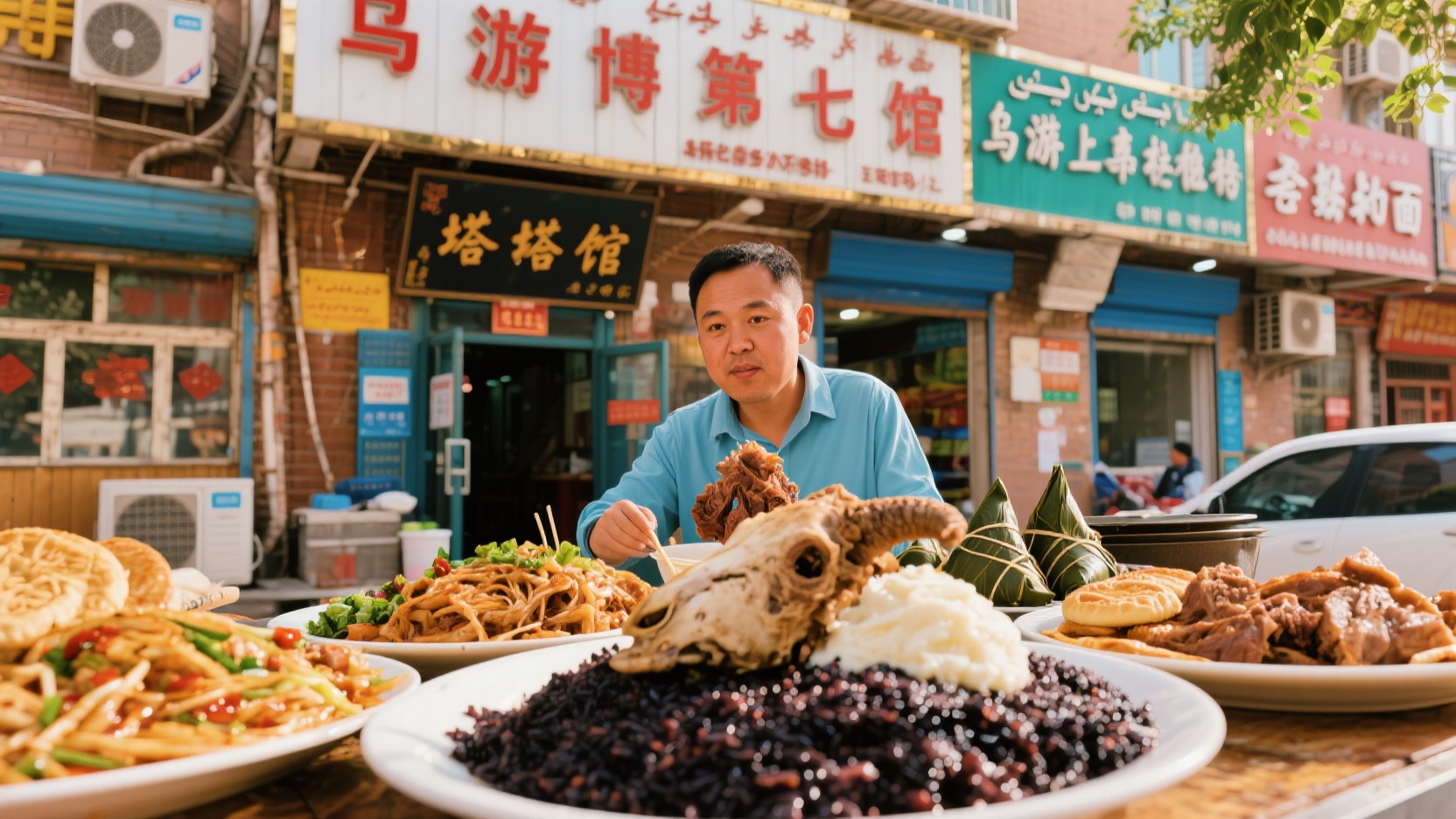
Before my third trip back from Urumqi, I sat on a community bench on Jianquan Street and went through the small restaurants that kept popping up in my phone's notes. During my first two trips, I'd tried a few places based on popular lists, only to find that the restaurants with long queues in tourist areas weren't frequented by locals. What truly made me return three times were those small shops that didn't do any marketing, had no queues for photos, and menus with only a few lines. The following seven restaurants, repeatedly mentioned by taxi drivers, vegetable stall vendors, and community residents, were none of which appeared on any must-eat lists.
1. Blue Window Noodle Shop on Dawan North Road: You have to ask for free refills of noodles.
My first visit to this shop was because a taxi driver casually mentioned, "I often go to Blue Window at lunchtime." The storefront is half-hidden by an old elm tree, the windows are painted dark blue, there are no light boxes, and navigation apps can't locate it. There are only four square tables inside, so you have to share during lunchtime, but most of the customers are local residents. The owners are a Hui couple from Yili; their noodle-making technique is very steady, the dough rests well enough, and the noodles have a slight chewiness after cooking.
How to order: Simply say "stir-fried pork noodles, thicker noodles," or "homestyle stir-fried noodles with a fried egg." The stir-fried pork slices are thick, and there's plenty of tomato and bell pepper. The broth coats the noodles but isn't too salty. The best part is that extra noodles are free; the owner will ask, but you should ask yourself, as they might miss some when they're busy. What else can you buy nearby: Turn left after exiting the alley, and there's a small cart selling homemade yogurt. It's usually sold out by 5 PM. The yogurt is sprinkled with white sugar, and the sweet and sour flavor is just right.
2. The mutton cart at the morning market behind Erdaoqiao: only sells for two and a half hours.
If it weren't for an elderly resident leading the way, it would be easy to miss this cart. It's located at the east end of an alleyway in the morning market behind Erdaoqiao, setting up around 8 a.m. and usually closing up by 10:30 a.m. The owner only cooks a fixed amount each day, with mutton head and trotters served separately in two large aluminum basins, and the cutting board is polished to a shine.
Why it's worth going: The lamb head meat here is exceptionally clean, with no gamey smell. When cutting it, they'll ask if you want it fatty or lean. The signature way to eat it is to order a portion of lamb head meat, ask the owner to sprinkle extra onions, cumin, and chili powder, and then pair it with a freshly baked hot naan bread from the tandoor oven next door, simply stuffing the meat inside. What else can you buy nearby: At the entrance to the morning market, there's an old man selling fresh figs. In the summer, you can buy these soft, ripe figs, sold individually.
III. Tatar pastry window near Nanmen Gymnasium Road: Sweet memories sold by the piece
This shop's window is located in a semi-basement on the first floor of a residential building, with a glass display case showing seven or eight kinds of pastries. The owner is a Tatar auntie who doesn't speak much Mandarin; you just point to whichever one you want. The first time I went, it was 3 PM, and only a few pieces of Bahari were left. The second time, I specifically went in the morning to buy everything.
What to order from their signature dishes: Bahari is highly recommended; it's dark brown, dense, and has walnuts and raisins embedded in the cake, without being overly sweet. If you prefer something a bit crumbly, you can choose the nut biscuits or Pahari. They're sold by weight, and a small box can be had for just a few dozen yuan per person. What else can you buy nearby: A few dozen steps back, there's a milk station selling fresh milk and milk skin sold in bulk that day, perfect for taking back to your accommodation to make milk tea.
IV. The yogurt and rice dumpling stall in Qifang Market: No signboard but a long queue every day.
Qifang Market is primarily a local market, with few tourists. A yogurt-stuffed rice dumpling stall is located in the middle of the market, a small metal cart with two low tables beside it. The stall owner, a young man, works swiftly, peeling and flattening the white rice dumpling, pouring a spoonful of thick yogurt over it, then drizzling honey and syrup, and finally adding a touch of jam.
Why it's worth a visit: The yogurt here is homemade, slightly sour but not cloying, and pairs wonderfully with the hot and sticky texture of the zongzi (sticky rice dumplings). In summer, you can also get a glass of chilled mare's milk yogurt; it's quite tart, so it's recommended to try it in small sips if it's your first time. What else can you buy nearby: There are stalls selling fried dough twists and youxiang (fried dough sticks) right next door. You can buy half a pound of fried dough twists as a snack; they'll stay crispy for two days.
5. The illegal restaurants in the alley near the railway bureau in the new urban area: They only serve lunch and close when they're sold out.
This black pilaf restaurant is hidden behind the iron gate of an old residential area near the railway bureau. There's no large sign advertising dine-in service, just a wooden sign that says "Pilaf." The first time I went was at 2 PM, and the owner said they were already sold out. The second time I arrived at 11:30 AM, and the pilaf had just come out of the pot; there were already three tables occupied outside. The black pilaf is a rare version in Urumqi; the rice is dark in color and has a hint of caramel and meat aroma.
How to order: Just ask for a serving of black pilaf and a thin-skinned steamed bun; they'll give you a small bowl of mutton soup. The ratio of yellow carrots to carrots in the pilaf is just right, the rice grains are distinct, and the mutton is served in large chunks with bones. If you like it that way, you can add a serving of lamb chops. What else can you buy nearby: Turn right after leaving the neighborhood, there's a Uyghur herbal tea shop; buy a few packets of rose black tea or calming herbal tea to brew at home—it's very soothing.
6. Lung noodles and meatball soup in Youyunsi Alley, Tianshan District: Two dishes on one route.
This alley is quiet during the day, but the aroma of mutton soup fills the air at lunchtime. The lung noodle shop has been open for twenty years, serving only three kinds: white lung, black lung, and rice sausage. The owner's technique is casual, but the lung slices are evenly thin, topped with a hot and sour broth, and then sprinkled with minced garlic and cilantro.
What to order: I recommend half black and half white lung, with a side of rice sausage. The broth is sour and spicy, and the lung is soft yet slightly chewy. If it's your first time, ask the owner to reduce the spiciness so you can adjust gradually. What else can you buy nearby: There's a handmade ice cream stall at the alley entrance; the yogurt flavor is better than the cream flavor, perfect after a salty and spicy meal.
Not far from here, there's another well-known Hui-style meatball soup shop, even more hidden, located in a courtyard converted from a residential building. The soup has a clear broth, with handmade beef meatballs, served with two fried dough sticks and a side dish. The meatballs are bouncy and tender, and the soup is flavorful without being cloying; eating it in winter warms you right up. It's best to visit both shops on the same route, ideally before 2 PM.
Blogger's Summary and Three Tips for Avoiding Pitfalls
After three visits, my biggest takeaway is that the truly delicious food in Urumqi is often hidden in the corners of neighborhoods without fixed locations, menus, or even formal signs. These shops mostly cater to regular customers; the owners aren't overly eager to attract customers, but they take great care in making every bowl of noodles, every piece of cake, and every serving of pilaf.
First tip to avoid these pitfalls: Don't go during peak meal times. These small shops have limited seating and limited food options, so you'll likely have to wait between 12:00 and 1:30. It's recommended to go before 11:30 or after 2:00 for a completely different experience. Second tip to avoid these pitfalls: Don't just order the signature dishes. For example, the meat pie at a noodle shop or the fried dough twists next to the yogurt and rice dumpling stall are often more surprising than the main recommendations. Third tip to avoid these pitfalls: Remember to bring cash. Some older stalls and small windows only accept cash or QR codes, which can be inconvenient, especially morning market carts and pastry stalls. Having some small change on hand will save you a lot of trouble.