
A Culinary Journey Through Jinling Markets: Delving into Ke Lane and Nengren Lane, focusing on local favorites, snacks, and preserved foods that locals repeatedly buy.
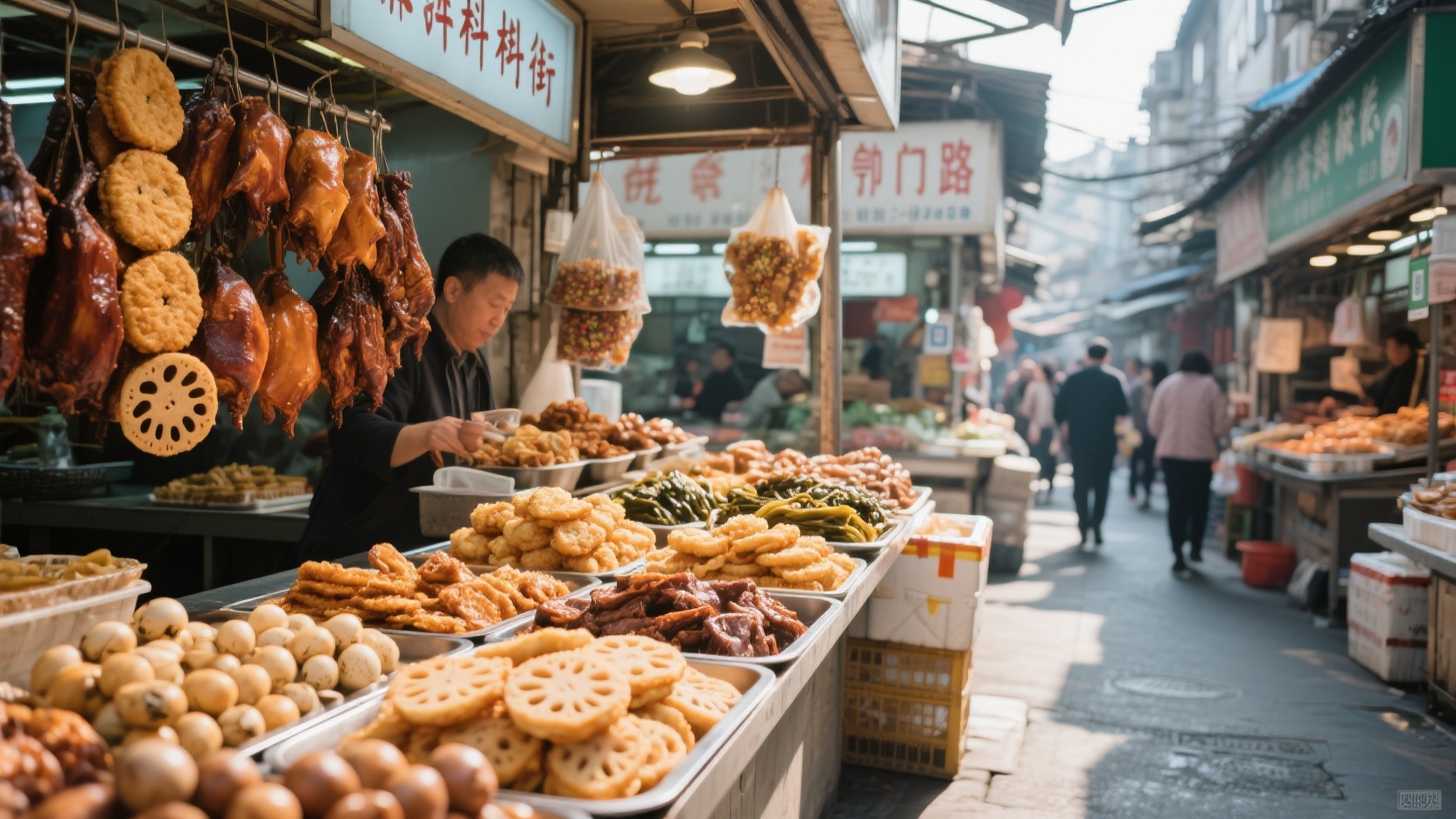
Half of Nanjing's culinary secrets lie hidden in its wet markets. Compared to chain stores around tourist attractions, Kexiang Market and Nengrenli Market better represent the daily choices of locals: the former was established during the Republic of China era and still retains a large number of cooked food and handmade food stalls; the latter has been operating in a residential area in the south of the city for over thirty years, with densely packed stalls and a vibrant, bustling atmosphere. The following ten foods are recommended to be viewed in the order of "cooked dishes—snacks—pickled and cured meats—fresh foods."
Cooked food stall: braised dishes, smoked and grilled dishes, and lotus root cakes
The freshly fried lotus root cakes from Kexiang are one of the top sellers at the market. Good lotus root cakes have two characteristics: the oil should be clear and not black, and the lotus root pieces should be coarsely cut so you can still taste the texture. The batter usually includes minced ginger and chopped scallions. Fresh out of the pan, they are crispy on the outside and soft on the inside. Don't pack them to keep them soft; they're best eaten hot. If you bring them home, you can reheat them in an air fryer for three minutes; they're even better with congee. Don't buy too many at once; the cakes soften noticeably after cooling. Buying enough for two people is just right.
When choosing a braised young chicken from the same area, look for golden-red skin and slight cracks at the leg bone connection – these are signs of thorough braising. Hand-shredding is better than knife-cutting, as it retains the juices. Chicken breast tends to be dry, so it's recommended to shred it and mix it with a little braising sauce, chili oil, or minced garlic – it's more flavorful than eating it plain. If you buy a whole chicken, you can keep the carcass to make soup base; a bowl of noodles makes a meal.
In Nanjing markets, smoked fish is usually written as "爆鱼" (bào yú). It's made by deep-frying chunks of grass carp or silver carp until crispy, then soaking them in a sweet and sour braising sauce. Choose fish chunks that are evenly thick, with a firm cross-section, and a clear, non-cloudy braising sauce. The standard way to eat it is cold; the skin softens and absorbs the sauce, making it suitable as a noodle topping. If reheating, it should be added to the pot along with the braising sauce to prevent the fish from drying out. A sweet flavor is characteristic of Nanjing smoked fish; tourists from other places can buy half a pound to try first.
Handmade desserts: the aroma of rice, the texture of glutinous rice and egg skin
Fermented rice stalls are mostly located further inside Ke Lane. The rice grains are whole, hand-fermented, and the liquid is a clear, slightly yellow color. When choosing, smell it: a sweet, fermented aroma is fine; a sour smell or excessive bubbles indicate over-fermentation. It's best eaten chilled to cut through the richness, or with osmanthus sauce or cooked with small glutinous rice balls. However, avoid prolonged high-temperature cooking, as this will cause the aroma to evaporate. Ask the stall owner for an extra spoonful of liquid; it's perfect for soaking fruit or adding to yogurt at home.
Nengrenli's handmade egg dumplings are a perfect combination of egg skin and meat filling. Good egg dumplings have a golden-yellow egg skin with a firm seal, and the meat filling is lean but not dry. After buying them, it's not recommended to fry them. Instead, arrange them on a plate and steam for ten minutes, or add them to clear broth or hot pot; the aroma of the egg will come out before the aroma of the meat. If you buy in bulk, you can freeze them for later use. Once frozen solid, you can divide them into smaller portions to prevent them from sticking together.
For sweet osmanthus lotus root, choose lotus roots with holes filled with glutinous rice and no hollow areas on the cut surface. After cooling and slicing, the glutinous rice becomes firmer, and when drizzled with the original juice and dried osmanthus flowers, the texture is glutinous but not mushy. If you buy a firmer lotus root, you can steam the whole section for five minutes before slicing, but do not boil it, as this will easily cause it to lose its sweetness. Freshly sliced lotus roots vendors usually give you a small bag of osmanthus juice; don't waste it, it adds fragrance when mixed with lotus root slices or rinsed with water.
Pickled and preserved vegetables: Nanjing locals' "basic necessity" for eating with rice.
The pickle stalls in Nengren Village offer pickled mustard greens, pickled radish, pickled cucumbers, and pickled mustard greens year-round. When choosing, check if the bottom of the jar is clear, and the color of the sauce should be a natural dark rather than bright; the stems should be crisp and not mushy when squeezed. The most practical way to eat them is to dice them and stir-fry them with edamame or serve them with rice porridge; the savory flavor can make a simple breakfast. You can ask the stall owner to weigh out a little of each type and mix them together, then divide them into portions and refrigerate them at home; they'll go well with congee or steamed buns.
Liuhe pig's head meat is commonly found at the cooked food stalls in the Chengnan Market. Choose pieces with a shiny skin and meat jelly on the cut surface, as these have more collagen. After slicing it cold, dip it in balsamic vinegar or stuff it into freshly baked sesame flatbread; the combination of lean and fat is not greasy. If you refrigerate it after buying it, you can let it warm to room temperature for ten minutes before eating; the texture will be more tender than eating it cold. Cuts with skin are more worthwhile to buy than purely lean meat, as the collagen and aroma come from the junction of the skin and fat.
Seasonal fresh foods: live pearls and local fruits
Live eggs are a hidden gem in Nanjing's wet markets, known for their adventurous nature. When selecting eggs, choose those with intact shells and a slight wobble when shaken, indicating normal embryonic development. The proper way to eat them is to first crack open a small hole to suck out the broth, then peel the shell and dip them in salt and pepper. For those who don't like the texture of a half-egg, half-chicken combination, ask the vendor for a "whole egg" that's in its early stages, closer to a boiled egg; those who prefer a richer flavor can choose a "half-chicken, half-egg" combination for more broth. Consume on the same day you buy them; they shouldn't be kept for long.
Don't miss the seasonal fruit stalls outside the market. Late spring brings local strawberries and loquats, while early summer offers blueberries and peaches. When choosing fruit, don't focus on size; instead, look for fresh stems and a fragrant aroma at the bottom. Local loquats tend to be small but intensely flavorful, perfect for chilling and enjoying as a refreshing after-dinner treat. If you find loquats with leaves, firm leaves indicate they were recently picked, meaning the flesh will be more juicy.
Visiting the local market is the best way to experience a city. Tourist attractions showcase Nanjing's "face," while the market nourishes its "inner self." When you queue for a pot of lotus root cakes in Kexiang Alley, or watch the vendors skewer egg crepes in Nengren Lane, the aroma of aged braising sauce, the sweetness of rice wine, and the saltiness of pickled vegetables will speak for themselves, telling you that this city doesn't rush or compromise on taste.