
Exploring the Flavors of Nanjing: A Guide to Authentic Local Cuisine and the Culinary Imprints of the Ancient Capital
Nanjing, an ancient capital steeped in a thousand years of history, boasts an equally profound and captivating culinary culture. Unlike the spiciness of Sichuan cuisine or the refinement of Cantonese cuisine, Nanjing cuisine stands out with its delicate, fresh, and tender characteristics, making it a quintessential representative of Jiangnan culinary culture. This guide aims to provide XOOTOUR travelers with a professional, objective, and practical guide to Nanjing's culinary delights, helping you deeply experience the flavors of Jinling (Nanjing).
Must-try signature dishes list
1. Salted duck
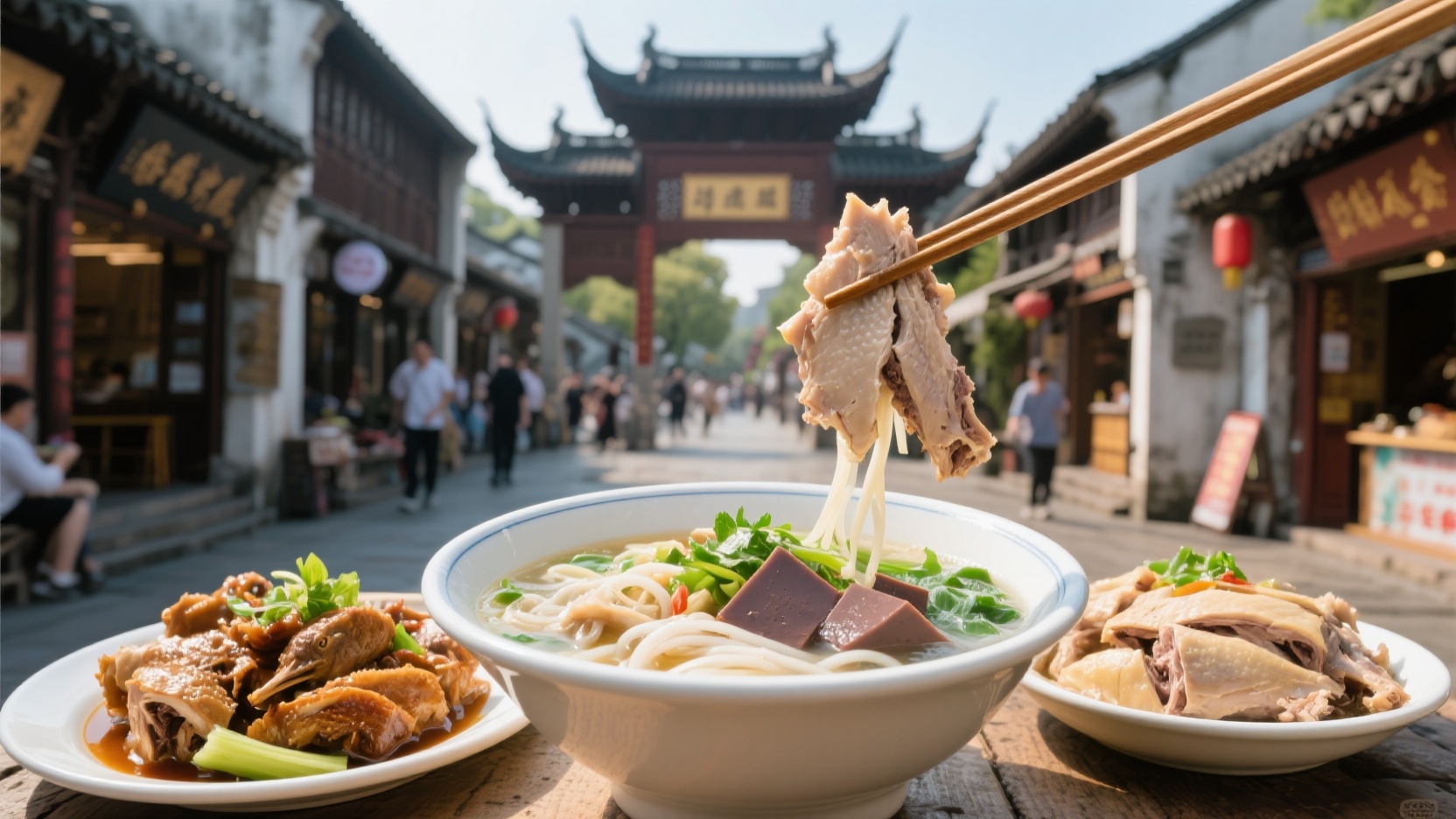
Nanjing Salted Duck is a representative dish of Jinling cuisine, with a history of over a thousand years. Its preparation is meticulous, using high-quality lake ducks and undergoing multiple processes including marinating and braising. The finished product has white skin and tender meat, is fatty but not greasy, has a balanced saltiness, a rich aroma, and a refreshing taste. When tasting it, the sweetness of the duck meat intertwines with a subtle salty aroma, making it a true "touchstone" for judging the quality of Nanjing cuisine.
2. Duck blood and vermicelli soup
This nationally popular snack is a must-try for almost every tourist visiting Nanjing. The broth is made from duck blood, intestines, liver, gizzard, and other duck offal, resulting in a rich and flavorful soup. Served with chewy vermicelli, vibrant cilantro, and a touch of duck oil, it offers a complex and satisfying taste. Authentic duck blood and vermicelli soup features smooth, non-fishy duck blood, chewy vermicelli, and a rich, flavorful broth—a comforting and satisfying choice.
3. Beef potstickers
Nanjing's beef potstickers are renowned for their unique preparation process and flavor. The dough is pan-fried until golden and crispy, while the filling is made with fresh beef and a secret seasoning, resulting in a juicy and flavorful dish. One bite releases an explosion of aroma from the crispy exterior and the savory juices of the filling, accompanied by the rich flavor of the beef, creating an unforgettable experience. They are typically crescent-shaped, with a crispy bottom and a soft, chewy top.
4. Soup dumplings
Nanjing's soup dumplings come in various styles, such as chicken broth soup dumplings and crab roe soup dumplings. They are characterized by their thin skin, generous filling, and abundant broth. When eating, one must carefully lift the dumpling, first sucking out the broth before savoring the filling. The broth is sweet and flavorful, the filling is firm, and the dough is remarkably chewy. Chicken broth soup dumplings are particularly classic, with the savory chicken broth and rich meat filling perfectly blended.
5. Sweet Taro Sprouts
As a traditional Nanjing dessert, sweet taro soup is beloved for its soft, glutinous, and sweet taste. It's made with locally grown red-skinned taro, which is peeled, boiled, and then simmered with osmanthus syrup. The taro is soft, sweet, and has a subtle osmanthus aroma; the syrup is thick and has a smooth, mellow flavor. It's an excellent choice for after a meal or afternoon tea, especially suitable for autumn and winter.
6. Dried tofu strips (blanched dried tofu strips/boiled dried tofu strips)
Dried tofu strips are a classic dish of Huaiyang cuisine and are also very popular in Nanjing. Dried tofu is cut into thin, hair-like strips, then blanched or simmered in broth, accompanied by shrimp, shredded chicken, mushrooms, and other ingredients. The result is a refreshing dish with tender tofu strips and a flavorful broth. Blanching the tofu strips emphasizes the original flavor, while simmering results in a richer broth. The exquisite knife skills showcase the delicate nature of Nanjing cuisine.
Local favorites for food
1. Laomendong Historical and Cultural District
Laomendong is not only a cultural landmark of Nanjing but also a hub for delicious food. It's home to numerous time-honored brands and specialty snack shops, such as Jiang Youji's potstickers, Jiming soup dumplings, and Lan Laoda's sweet rice porridge with lotus root. Compared to Confucius Temple, Laomendong has a less commercialized atmosphere, allowing you to experience more authentic Nanjing street life and cuisine. At night, the streets are brightly lit, offering a unique charm.
2. Mingwalang (a type of covered walkway)
Hidden near Xinjiekou, Mingwalang is a favorite snack street among Nanjing locals. While lacking fancy decor, it's home to many highly-rated hole-in-the-wall restaurants, such as Yiji Pig Skin Noodles, Jin Hongxing Duck Blood Vermicelli Soup, and Lu Family Duck. Affordable prices and authentic flavors make it the perfect choice for experiencing genuine Nanjing cuisine. It's recommended to avoid peak meal times to avoid long queues.
3. Lion Bridge Food Street
Located in the Hunan Road commercial district, Shiziqiao was once a famous food street in Nanjing. Although some shops have changed in recent years, many time-honored brands and specialty restaurants have been preserved, such as Yin's Chicken Broth Dumplings and Nanjing Da Pai Dang (although it is a chain, its decoration and dishes still have Nanjing characteristics). The environment here is relatively clean and suitable for tourists visiting Nanjing for the first time.
4. Confucius Temple and Qinhuai Scenic Area (Food Foraging Strategy)
Confucius Temple is a landmark scenic spot in Nanjing. Although it attracts many tourists, there are still many delicious foods worth exploring in the surrounding area. It's recommended to avoid the overly commercialized shops within the main scenic area and instead seek out century-old shops hidden in the alleys or snack stalls frequented by locals. For example, Qifangge and Lianhu Pastry Shop near Confucius Temple still offer authentic Qinhuai snacks such as assorted vegetable buns and red bean dumplings. The key is to "explore" rather than "surface."
Tips for avoiding overpriced and overpriced shops and tourist attractions
1. Beware of "queue marketing" and "over-packaging": Some trendy restaurants create a false sense of prosperity by hiring people to queue and exaggerating their advertising. Authentic food is often hidden in unassuming alleyways, and the queues are mostly made up of local residents. Be wary of shops with overly ornate decor and prices significantly higher than the market average.
2. Choose restaurants within scenic areas with caution: Restaurants in popular scenic areas such as Confucius Temple and Sun Yat-sen Mausoleum are generally overpriced and have mediocre taste. It is recommended to choose small restaurants outside the scenic areas or in local residential areas before or after visiting the scenic spots, which will provide better value for money and a more authentic experience.
3. Check reviews from multiple sources, but prioritize local reputation: When choosing a restaurant, you can refer to platforms like Dianping and Xiaohongshu, but be careful to verify the authenticity of the reviews. A more reliable way is to ask local residents or observe whether there are many local diners in the restaurant. Restaurants frequented by locals usually have better food and more reasonable prices.
4. Avoid "tourist recommendations" or "signature set meals" on the menu: Some restaurants offer expensive set meals or recommended dishes for tourists, but these dishes are often not good value for money. It is recommended to directly order the classic dishes on the menu, or observe what locals at the next table are ordering.
5. Try street food stalls, but be mindful of hygiene: Nanjing's streets and alleys are home to many delicious snack stalls, such as plum blossom cakes and candied lotus root. These stalls are often affordable and authentic. However, when trying them, please always pay attention to the hygiene of the stalls.
The cuisine of Nanjing is not just a treat for the taste buds, but also a microcosm of the city's history and culture. Slow down, use your taste buds to experience the everyday life of Jinling, and savor the stories and traditions behind each dish.