
Nanchang in the Markets | 10 Local Specialties Frequently Purchased by Locals in the Old Markets of Dunzitang and Ximazhuang
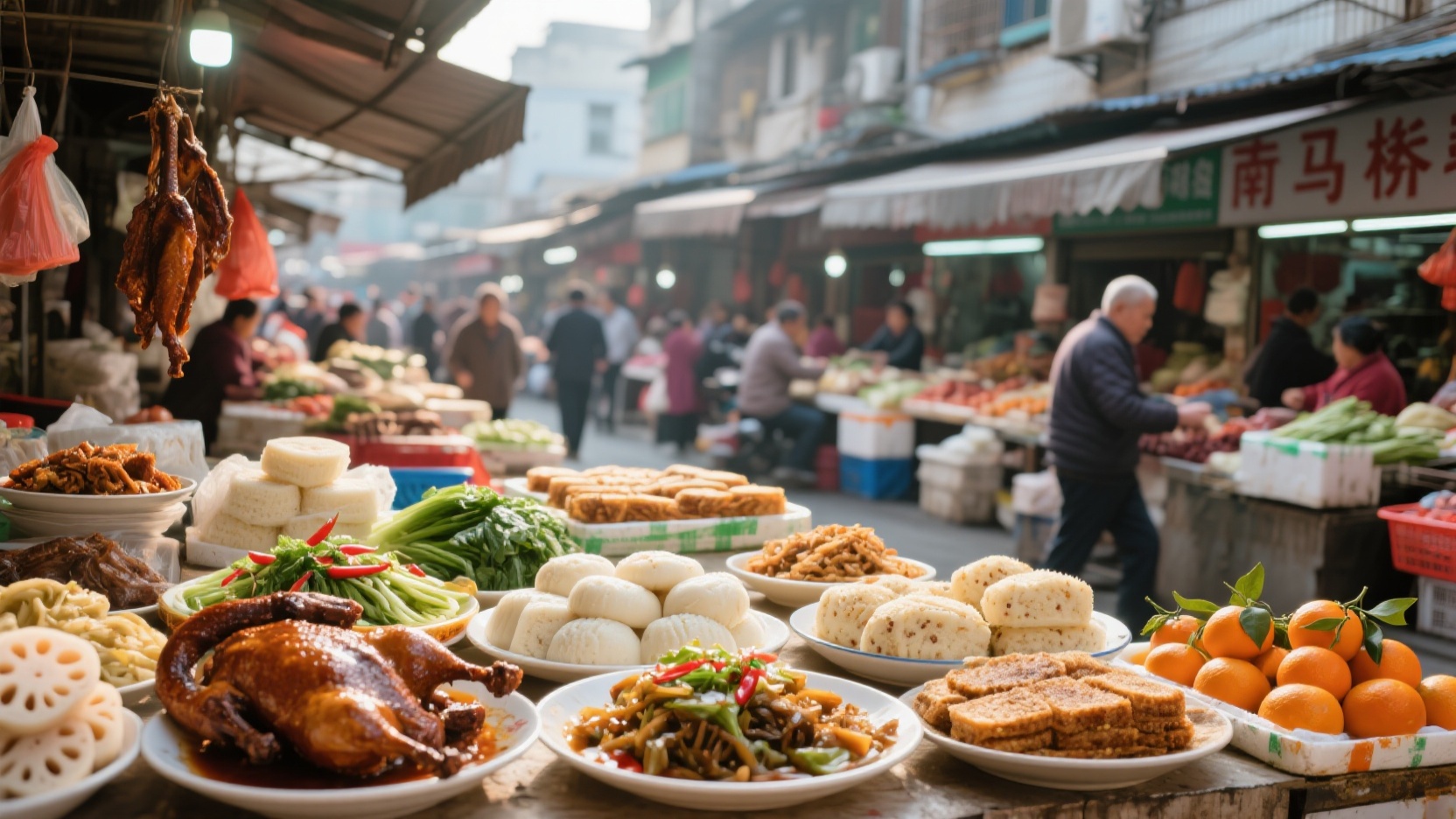
The most authentic flavors of Nanchang aren't found in the restaurants of the commercial districts, but in two farmers' markets in the old city: Dunzitang Farmers' Market and Ximazhuang Farmers' Market. The former is already bustling with people at six in the morning, while the latter is home to numerous stalls with shops in the front and workshops in the back. Below, we'll break down 10 must-buy items for locals, categorized into four types: cooked dishes, handmade snacks, pickled and preserved vegetables, and seasonal fruits.
Cooked food stall: braised duck, fermented fish, and cold lotus root slices.
In Nanchang's wet markets, cooked food stalls usually take the lead at the entrance. The braised duck is made from local Muscovy ducks, repeatedly marinated in soy sauce, sugar, and spices, resulting in a deep brown color. When choosing, check if the duck legs are firmly connected, the skin isn't sticky, and it should smell of soy sauce mixed with a slight caramel aroma, not a rancid, oily smell. After buying it, chop it into pieces and eat it directly, as the flavor is most penetrating in the bone crevices; alternatively, you can shred it and mix it into rice noodles for a more complex flavor profile than a separate topping.
Fermented fish is another hidden gem. Grass carp chunks are first pan-fried and then soaked in fermented rice wine, sealed in a ceramic or glass jar. Good fermented fish has firm flesh, a dark red color, and the fermented rice wine is grain-like rather than mushy. Steaming is the best way to enjoy it, as it rekindles the aroma of the wine. It pairs well with hot rice or noodles. Cold lotus root slices and sausage knots are often served at the same stall; in Nanchang, they are called "mixed lotus root" or "heart and lungs." When selecting lotus root slices, choose thin, crisp ones with clear chili oil. The sausage knots should be stewed until easily biteable, not overly soft. It's served fresh, with a high level of spiciness, making it suitable as an afternoon snack or with drinks.
Handmade desserts: white sugar cake, rock sugar steamed cake, and mustard green dumplings
Handmade pastry stalls are often hidden in the alleys of the market, identifiable by the steam and the aroma of oil. White sugar cake is a traditional Nanchang glutinous rice pastry, made by twisting small dough balls into rings, deep-frying them, and then rolling them in granulated sugar. The freshly fried version at the market has a slightly crispy exterior and a stringy interior. When choosing, check if the sugar coating is even and white, and avoid those that have softened from being stored for too long. It's best eaten hot, and a cup of hot tea can balance the sweetness.
Rock sugar steamed cake is made by fermenting and steaming rice flour with rock sugar. When cut open, it has a fine, honeycomb-like texture. When buying it, you can ask the vendor to cut a small corner to check if the cut surface is dry and if it has a natural rice aroma. When eaten cold, it has a chewy texture with a sweet aftertaste of rice flour and is a common breakfast item in many Nanchang families. Mustard green dumplings are distinctly seasonal, more common in spring. They are made with mustard green juice or mugwort juice and glutinous rice flour, filled with cured meat, dried tofu, and diced bamboo shoots. The outer skin should be a uniform dark green and should not collapse after steaming. There are two ways to eat them: steam them thoroughly for their delicate fragrance, or slice them and pan-fry them in a little oil until both sides are slightly browned for a more concentrated savory aroma.
Pickled and preserved vegetables: fermented tofu, chili cakes, and dried radish
Pickled and preserved vegetables in the market are mostly sold in bulk in large earthenware jars or glass containers, and Nanchang locals often rely on them to enhance the flavor of their porridge and rice noodles. Fermented tofu comes in two types: white and red. When choosing, check if the mycelium is intact, if the oil or brine it's soaked in is clear, and if the texture is neither too hard nor too soft. To eat, use clean chopsticks to remove it, drizzle a few drops of sesame oil, and it's delicious with white porridge or mixed rice noodles.
Chili cakes are a unique side dish from Jiangxi province, made by sun-drying a mixture of chili peppers, glutinous rice flour, and pumpkin. They are typically dark red or brownish-red in color. Good chili cakes have a direct but not pungent spiciness, with a slightly fermented sour taste. Before eating, they can be steamed until soft or cut into small pieces and lightly stir-fried in oil; they are a perfect accompaniment to rice. For dried radish, choose those with slightly wrinkled skin that crack when broken, and smell of naturally fermented sour aroma, not a pungent sourness. People in Nanchang often use them, diced and stir-fried with edamame or cured meat. A small dish served with porridge at breakfast provides the framework for the meal.
Seasonal fruits: Nanfeng tangerines and Gannan navel oranges
Fruit stall displays change seasonally, with Nanfeng tangerines and Gannan navel oranges being the best buys in autumn and winter. Nanfeng tangerines are small, thin-skinned, and have few seeds. When choosing them, prioritize those with fine, dense oil cells on the peel, a slight elasticity when gently squeezed, and a distinct tangerine aroma when brought close. They are not suitable for long-term storage and are best consumed on the same day, especially as a palate cleanser after meals. Gannan navel oranges, on the other hand, are best when they are oval-shaped, with a slightly concave navel, and feel firm to the touch. After purchase, they can be sliced and eaten directly or juiced; their sweetness and acidity are more concentrated than regular oranges. If you happen to visit in spring, when local loquats or early-ripening peaches are available, you can follow the same principle: choose the seasonal, small-quantity, and most fragrant fruit from the fruit stalls at the market, as these are often riper than refrigerated goods from supermarkets.
Exploring the local market is the best way to experience a city. Nanchang's markets don't put on a show; the color of the braised duck, the air pockets of the steamed cake, the mycelium of the fermented tofu, and the aroma of a basket of Nanfeng tangerines all illustrate the relationship between produce and people. Ask a stall owner, "How do you eat this?" and the vendor's swift, precise knife work provides a more concrete answer than any travel guide. Pick up a braised duck, weigh half a pound of dried radish, and pack a few pounds of tangerines—the flavor of Nanchang seeps out from the plastic bags. To truly understand a city, don't just visit tourist attractions; start with its markets.