
7 Seasonal Dishes from Jiaxing | Blogger's Personal Review: A Seasonal Limited List After Tricking 3 Common Mistakes (Not Available Year-Round)
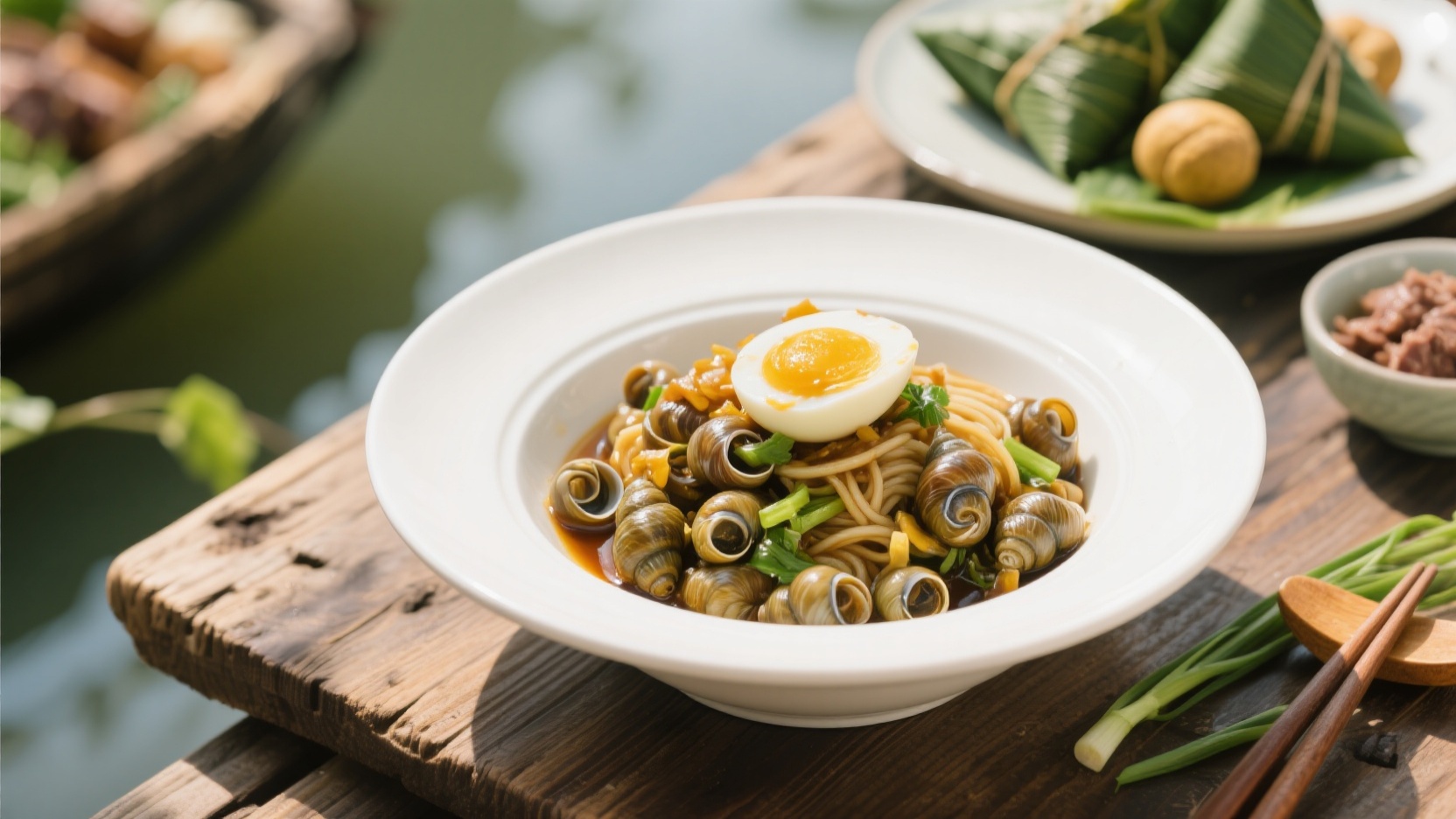
To truly understand Jiaxing's seasonal delicacies, I traveled to five counties and two districts, encountering three typical pitfalls: rushing to Tongxiang in the summer for mutton noodles only to be jokingly turned away by the owner; eating snails after Qingming Festival with my mouth full of seeds; and buying water chestnuts from Nanhu after Mid-Autumn Festival only to be warned by a market vendor that "this batch of water chestnuts is already old." These three experiences convinced me that what's truly worth writing about in Jiaxing isn't which restaurants, but rather "when to eat what."
This article compiles 7 limited-edition flavors that can only be enjoyed during specific seasons, perfect for those planning weekend getaways, family trips, or solo food adventures. Choose the month that best suits your taste.
Springtime from Qingming to the Beginning of Summer: Snails and sprouted wheat cakes
Snails caught before the Qingming Festival are a rare and easily overlooked delicacy in Jiaxing's river network. A local saying goes, "Qingming snails are better than geese," because at this time, the green-shelled snails have just emerged from hibernation, their meat is plump and tender, and they haven't laid eggs yet. After the end of Qingming, they become full of small snails, and the taste drops drastically. Jiaxing locals prepare them simply, mainly by stir-frying them with soy sauce. Before serving, a spoonful of local Shaoxing wine and green garlic are added, and the snail meat is sucked out along with the broth. It's best enjoyed with a bowl of rice porridge.
Sprout wheat pancakes are a true "wild grass limited edition" for Qingming Festival in Jiaxing, Tongxiang, and Haining areas. They are made with the tenderest mugwort and sprouted wheat harvested before Qingming, with the crust fried until crispy and the inside chewy and slightly grassy. After Qingming, the mugwort fibers harden and become bitter, resulting in a less fragrant pancake. Locals often buy a few after tomb sweeping, enjoying them with a pot of hot tea as a cold snack.
Summer, from the Dragon Boat Festival to the sixth month of the lunar calendar: Yellow in the fifth month, Yellow in the sixth month
In Jiaxing, the Dragon Boat Festival isn't just about zongzi (sticky rice dumplings). Elders in the family place great importance on the "Five Yellows": eel, yellow croaker, cucumber, salted egg yolk, and realgar wine. This combination isn't for novelty's sake, but rather a traditional way of eating in the Jiangnan region to ward off dampness and detoxify during the summer. Eels reach their fattest and most delicious period around the Dragon Boat Festival. The local Jiaxing way is to stir-fry eel segments with onions, the sauce thickened until the eel's back is slightly split open, and the meat is springy.
True connoisseurs in Jiashan eat "June Yellow" crabs in the sixth lunar month, which are still small, immature hairy crabs. Their shells are soft, and the roe has already solidified. Unlike adult crabs, they are not oily. They are eaten stir-fried with the shell on or coated in batter, and chewing the shell is gentle on the mouth. This stage is very short, generally from late June to mid-July in the lunar calendar. After that, they molt into ordinary river crabs, and their price and flavor change.
Autumn - From White Dew to Mid-Autumn Festival: Water Chestnuts from Nanhu Lake and Mooncakes from Xincheng
Nanhu water chestnuts are Jiaxing's first seasonal highlight of autumn. Only for less than a month around the Mid-Autumn Festival are the Nanhu hornless water chestnuts closest to being eaten raw as fruit – crisp, sweet, and juicy, resembling water chestnuts but finer. Elderly people at the market will peel them for you to taste, and they don't need long cooking time when stir-fried or used to make water chestnut rice. After this period, the shells thicken and the starch content increases, making them only suitable for steaming as a staple food.
Xincheng mooncakes are a Mid-Autumn Festival "freshly baked limited edition" for Jiaxing locals. The Suzhou-style crust is flaky and layered, with classic fillings like pepper and salt, mixed nuts, and red bean paste. They are available regularly, but only in the days leading up to the Mid-Autumn Festival can you find freshly baked ones still warm. Locals are used to buying them by the tube, letting them cool on the windowsill at home, and pairing them with a cup of stir-fried greens to bring out their sweet and savory aroma.
Winter Solstice to Winter Begins: Lamb Noodles, Longan and Egg Stew
Tongxiang mutton noodles officially open after the start of winter. It's not that they don't serve it in summer, but local chefs adhere to the principle of "not eating mutton during the hottest days of summer." After the start of winter, mutton with skin is stewed in a large pot until tender, then cut into chunks and placed on top of thin noodles, topped with a spoonful of dark red mutton broth. The proper way to eat it is to sprinkle it with chopped garlic leaves, add a couple of drops of chili oil, eat the meat first, then slurp the noodles, and finally drink the soup. The period before the winter solstice is the optimal time for mutton quality; the later it is served, the more likely it is to become fatty.
On the night of the Winter Solstice, people in Jiaxing may skip dinner, but they absolutely must have a bowl of longan and poached egg. This dish is extremely simple: longan pulp, red dates, brown sugar, and a whole poached egg. It's sweet and piping hot, a "Winter Solstice ritual" that locals have enjoyed since childhood. It only appears on the eve and day of the Winter Solstice; if eaten after those two days, it's just a regular sweet soup, lacking the seasonal sentiment of the whole family gathering around the table.
In summary, these seven seasonal dishes from Jiaxing share common characteristics: the ingredients have short growth cycles, and the cooking methods are extremely dependent on the "marginal state" of seasonal produce. Once you miss them, it's not that you can't eat them anymore, but that you'll be eating a completely different dish.
Practical tips: 1. From Qingming to Lixia, prioritize visiting Tongxiang and Haining, and enjoy sprouted wheat cakes and wild rice together; 2. From Dragon Boat Festival to the sixth lunar month, head to Jiashan and Pinghu, where you can enjoy both the "Five Yellows" and "June Yellows" in one meal; 3. Before Mid-Autumn Festival, visit Nanhu Market and Xincheng Old Street, where you can also buy freshly baked mooncakes and tender water chestnuts; 4. After Lidong, head straight to Tongxiang for mutton noodles, and on the Winter Solstice night, stay in Jiaxing city or a guesthouse in Wuzhen to cook longan and egg stew. Eating according to the solar terms is the right way to experience a city.