
Market Treasure Hunt: 8 Must-Try Local Delicacies from Hong Kong's Local Markets
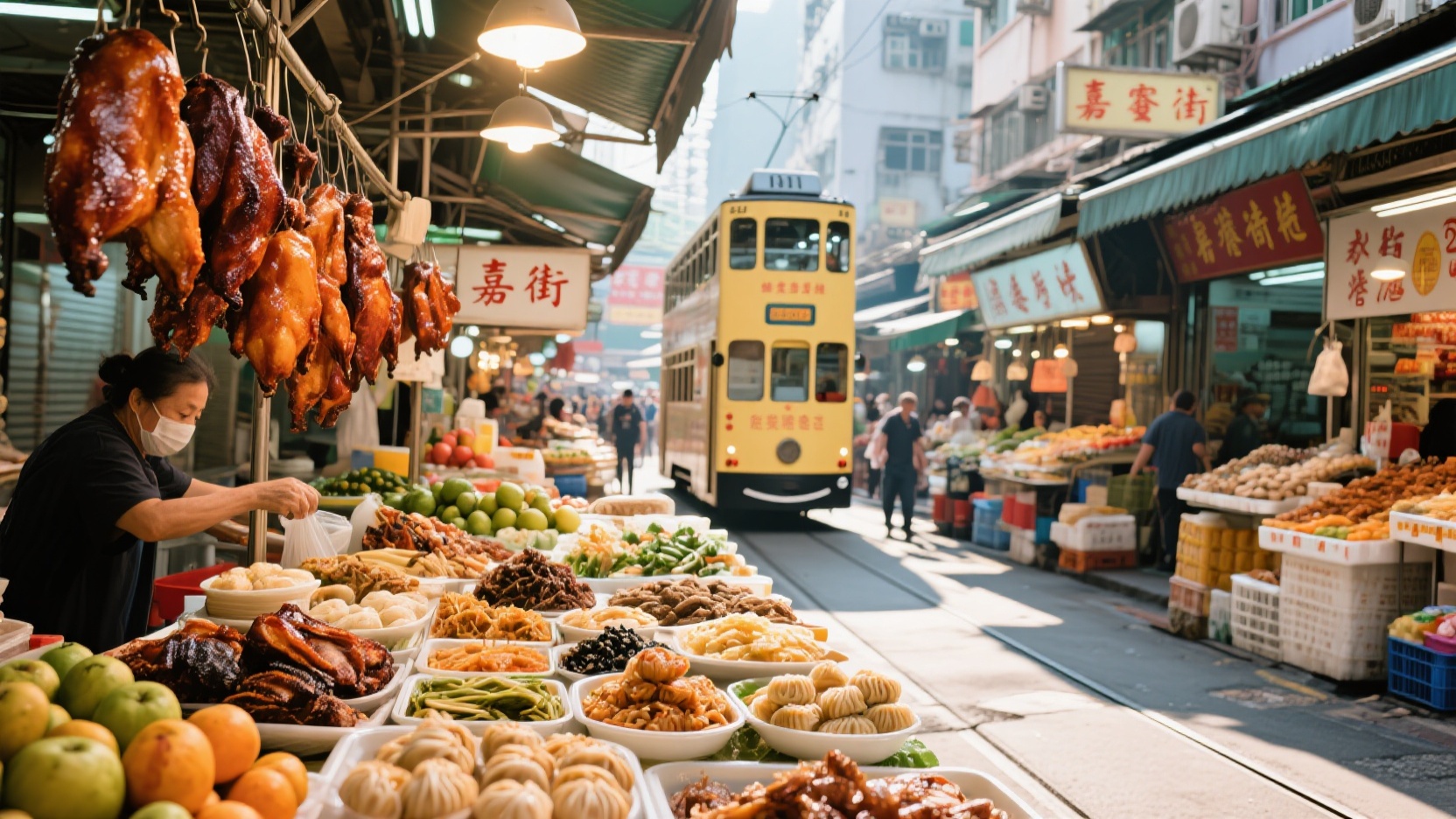
Hong Kong's wet markets are never just places to buy groceries; they're more like an open culinary guidebook. If you want to avoid the standard flavors of chain restaurants, Graham Street Market and Chun Yeung Street Market are two of the most direct routes: the former is one of the oldest open-air markets on Hong Kong Island, preserving the layout of an old-fashioned wet market; the latter allows trams to pass between the stalls, where Shanghai and Fujian flavors from the old neighborhood of North Point converge.
Graham Street Market: First look for four kinds of sauces, preserved meats, and cooked food.
The dried goods and sauce stalls at Graham Street Market are worth slowing down for. The first items are local shrimp paste and fermented soybean paste. When choosing, look for a deep, glossy brown color and a fermented, salty, savory aroma, not a pungent, fishy smell. Shrimp paste is suitable for steaming pork belly and stir-frying water spinach; fermented soybean paste can be used to braise spare ribs or steam fish, enhancing the flavor without overpowering it.
The second item is Chinese sausage and pork intestines. They are especially suitable for purchase in autumn and winter. For Chinese sausage, choose sausages with tight casings, that spring back when lightly squeezed, and that have an oily surface but do not produce excess oil; pork intestines are dark red in color and have a rose fragrance if desired. Chinese sausage is best steamed whole on top of white rice and then sliced to allow the oil to seep into the rice; pork intestines are suitable to be served with glutinous rice or chopped and scrambled eggs.
The third item is dried seafood. Choose dried shrimp that are whole, orange-red in color, and without broken shells. Soak them in warm water until soft before making soup or shrimp rice noodle rolls. Dried oysters should be dry, with slightly curled edges, and have an oyster aroma. Dry-roasting them in a pan before making soup will further remove any fishy smell.
The fourth item is the roast meat stalls in the market. For roast pork belly, choose one with thin skin that pops evenly, distinct layers of fat and lean meat, and lean meat that isn't whitish. Don't steam it again after buying it; it's best to cut it into thick pieces at room temperature and serve it with white rice and mustard sauce. For soy sauce chicken, check if the skin color is natural, and the broth should be salty with a hint of sweetness. Ask the stall owner to add an extra spoonful of soy sauce before chopping it into pieces.
Chun Yang Street Market: Find six more Fujian and Shanghai-style snacks and handmade pastries
Chun Yeung Street Market is crowded due to the trams passing through, but it's a hub for old-fashioned North Point food. The fifth item is Fujian fish balls. Good fish balls aren't perfectly round; their surface is slightly rough, and they're elastic when squeezed. When making soup or adding them to noodle soup, put them in cold water and slowly raise the temperature to bring out the fish's freshness; don't boil them over high heat.
The sixth items are taro cake and radish cake. For taro cake, choose ones with clearly visible taro fibers and a thick texture. After slicing them at home, pan-fry them slowly with a little oil until golden brown on both sides. They're best served with sweet chili sauce. For radish cake, choose ones with a firm texture and clearly visible radish strips. Pan-frying is better than steaming.
The seventh item is Shanghai-style pickled vegetables, such as pickled mustard greens, braised bamboo shoots, and pickled cucumbers. When buying loose pickled vegetables, ask the vendor to drain the sauce as much as possible to avoid them being too salty at home. Pickled mustard greens are suitable for chopping and stir-frying with shredded pork and rice cakes; pickled cucumbers can be rinsed briefly and served with congee; braised bamboo shoots can be directly mixed with noodles after purchase.
The eighth item is handmade Cantonese dim sum. For white sugar cake, choose one with fine, even pores on the cut surface and a slightly elastic texture. It will soften after steaming for a while after you buy it. Bowl cake comes in brown sugar and white sugar, with the brown sugar version having a stronger aroma. Before eating, use a small bamboo skewer to run it around the edge of the bowl before unmolding.
The ninth item is braised snacks, especially cuttlefish and red sausage. Don't slice the cuttlefish too thinly for a crisp texture; dipping it in minced garlic and white vinegar will cut through the richness. Choose red sausage with a natural color and no excessive starch on the cut surface. Both are suitable for buying a small platter and pairing with ice-cold beer.
The tenth item is seasonal fruit. The advantage of fruit stalls in farmers' markets is their fast turnover, and they are more likely to have local yellow-skinned fruits, longans, or Taiwanese wax apples with short seasons than supermarkets. When choosing, first smell the fruit to see if the aroma is clean, and then gently press the fruit to judge its ripeness; don't just look for a perfect appearance, slight blemishes often indicate a sweeter fruit.
What makes Hong Kong's markets worth a special trip isn't any particular famous stall, but rather the honest sense of the season and the warmth of human connection they retain. The stall owners will tell you which fish balls were just made, which piece of roast pork belly is the best, and whether the pickles are too salty; this information is more accurate than any travel guide. The wet market is the digestive system of a city, and the most direct and accessible way to experience Hong Kong.