
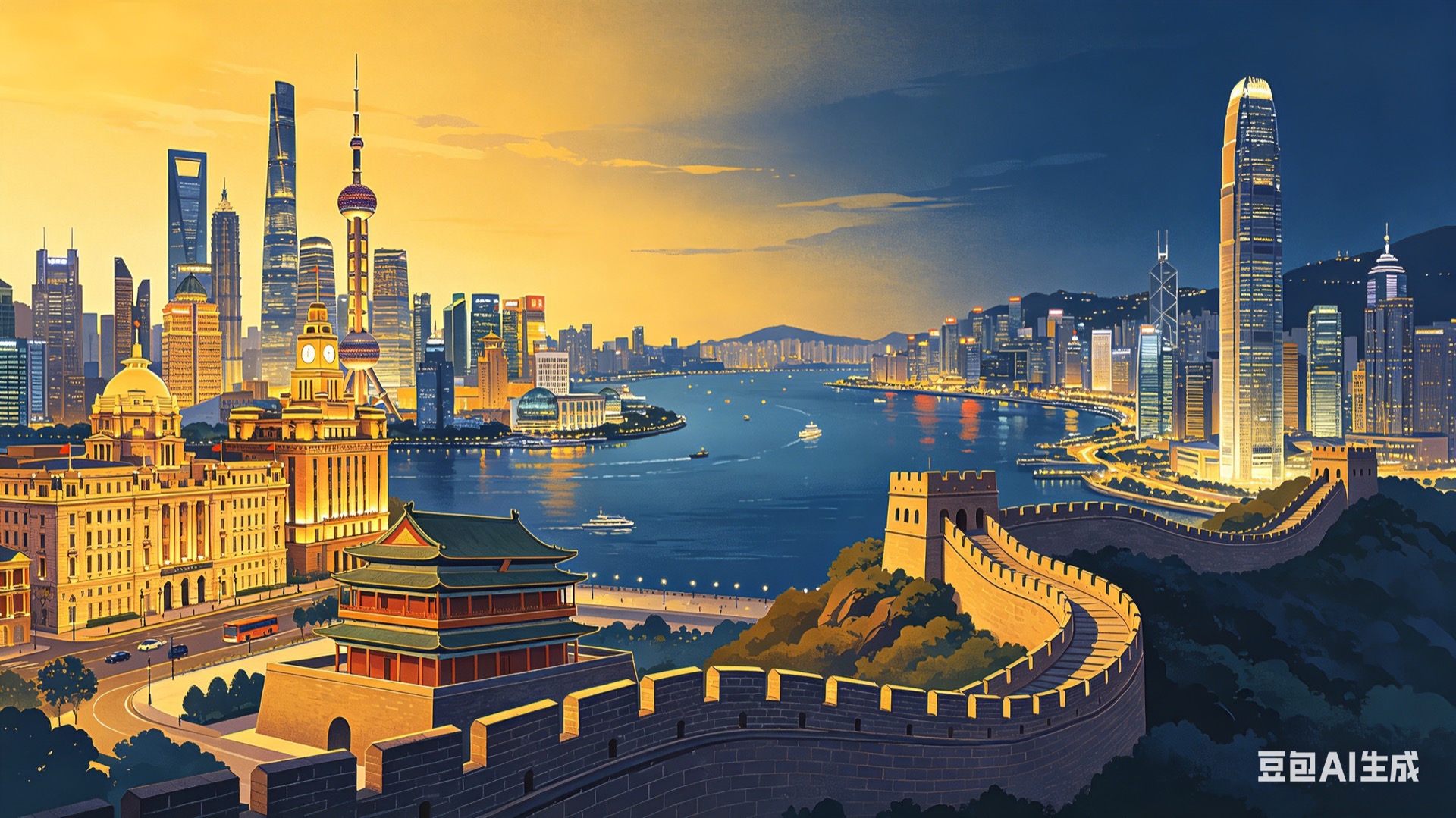
Transit travel offers "extra scenery": Dual-city experiences become a new trend.
With the Mid-Autumn Festival and National Day holidays approaching, many people have already started checking their itineraries and booking flights. Unlike the traditional direct journey to their destination, more and more travelers are now willing to add a stop on their trip—choosing connecting flights and using the layover time of a few hours to a few days to explore the streets and sample the local cuisine of the transit city, making "dual-city experiences" a new holiday trend. Behind the rise of transit travel is the combined effect of convenient policies, upgraded services, and industry integration, gradually forming a new travel ecosystem that benefits passengers, airlines, airports, and cities alike.
Transit model breaks out of its circle
In the past, transit was often a "last resort" due to constraints on itineraries and ticket prices. However, thanks to policy dividends and supply-side efforts, transit convenience has greatly improved. Han Tao, an expert from the China Civil Aviation New Think Tank, analyzed: "The core factors driving transit tourism are the optimization of transit policies, the upgrading of airline hub networks, and the improvement of airport service capabilities."
In recent years, the visa-free transit policy has been comprehensively relaxed and optimized. The 240-hour visa-free transit policy is essentially a "city experience card" for transit passengers in applicable countries. Li Baijie, manager of the Passenger Service Center of China Southern Airlines Beijing Ground Service Department, introduced that, according to market feedback, more and more inbound passengers are choosing to experience visa-free tourism in transit cities, achieving "one trip, multiple experiences." Regarding international routes, cities with advantages in international routes, such as Beijing and Guangzhou, as well as border hub cities such as Kunming and Urumqi, are favored by inbound and outbound passengers.
The "15th Five-Year Plan for the Development of Integrated Transportation Services" clearly proposes to promote the integrated development of transportation services and tourism. It calls for advancing the connection of facilities across various modes of transportation, matching of transport capacity, sharing of time slots, optimization of organization, and interoperability of ticketing, while vigorously cultivating intermodal transportation service brands. It also calls for optimizing security check procedures among civil aviation, railways, and urban rail transit, and strengthening the integrated design of security check services for entering and exiting stations (terminals).
Upgraded services from airlines and airports have made transit travel both more affordable and hassle-free. Major aviation hubs are offering transit passengers "gift packages," including accommodation vouchers, meal vouchers, discount coupons for attractions, and transportation vouchers. "This essentially transforms the sunk costs of transit waiting into benefits, lowering the barrier to extra spending on travel and allowing passengers to exchange idle time for additional experiences," said Han Tao. Coupled with the abundance of transit travel guides on social media, this model is rapidly expanding its reach.
Data shows that in the first half of this year, Daxing International Airport handled over 3.259 million transit passengers, accounting for 12.22% of the total passenger throughput, an increase of 366,000 passengers compared to the same period last year, representing a year-on-year growth of 12.6%. Transit business growth for various airlines was significant. China Southern Airlines and China Eastern Airlines saw year-on-year increases of 19% and 8% respectively in their same-airline transit volume at Daxing Airport, while China United Airlines saw an increase of 48%. Currently, Air China, China Eastern Airlines, and China Southern Airlines have fully implemented international and domestic through-flight services at Daxing Airport, eliminating the need for passengers to re-check their baggage. "Air China, China United Airlines, and other airlines have opened up single-segment fares and supported cross-airline flight connections. Air China alone achieved sales of 2,000 flight segments in a short period. China Eastern Airlines and China Southern Airlines are actively connecting with overseas airlines to further expand their international through-flight cooperation, providing passengers with more diverse transit options," said a relevant负责人 from the Daxing Airport Aviation Business Department.
Improve hub elements
The conversion of transit tourists into visitors and the overall travel experience depend on well-developed hardware and software infrastructure. Han Tao stated that a suitable hub airport for transit tourism should meet four criteria: breadth and frequency of route networks, transit procedures and efficiency, 30-minute access to the main urban area, and highly recognizable short-haul cultural and tourism resources. Mature transit hubs possess four core advantages: network coverage, efficiency, transportation, and cultural and tourism resources.
A broad and dense route network is the foundation of passenger traffic. A high-quality transit hub needs a comprehensive route network connecting domestic and international destinations to attract large-scale transit passenger flows from across China and even the world. For example, Beijing Daxing International Airport connects to 180 domestic and international destinations, including 135 domestic destinations and 45 international and regional destinations. Intermodal routes are continuously evolving, and emerging transit cities such as Sanya, Dalian, and Hangzhou are rapidly developing. The Northeast region of China is the core transit market, with cities like Harbin, Changchun, and Dalian accounting for a significant proportion of transit passenger traffic. Meanwhile, a smooth network connecting Urumqi, Guangzhou, Guiyang, Shenzhen, and other cities is gradually taking shape. International and regional transit spans Eurasia, and the transit network covering the entire country and connecting globally is becoming increasingly comprehensive.
Efficient and integrated transfer services are the core guarantee. The main concerns of transit passengers are flight connection failures and cumbersome baggage transfers. Mature hubs have fully implemented standardized services such as cross-airline baggage check-in, through-ticketing, fast security checks, and emergency transfer support. China Southern Airlines has created the "Enjoy Your Journey" transfer service brand at Daxing Airport, forming a full-chain transfer support system. Li Baijie introduced that China Southern Airlines has established a "Transfer Concierge" to provide dedicated guidance, priority security checks, fast airport transfers, and on-site rebooking services for passengers with urgent transfers and special groups such as the elderly; currently, China Southern Airlines offers baggage check-in service for all inbound and outbound flights at Daxing Airport.
Fast, accessible, and comprehensive ground transportation is crucial. Transfer travel often involves short stays, requiring high efficiency. High-quality airport hubs typically offer direct access to the main urban area within approximately 30 minutes, with seamless connections to subways, urban expressways, and core commercial districts, allowing travelers to complete a complete loop of sightseeing, dining experiences, and return journey within a limited time. In Beijing, Daxing Airport has launched two direct bus services, stopping at Universal Studios, with three daily departures covering the entire day, effectively solving the problem of long and circuitous transfers within the city.
Highly concentrated and easily recognizable cultural and tourism resources are the driving force for transformation. Transit tourism focuses on lightweight and efficient experiences, requiring a high concentration of core urban landmarks, distinctive food streets, boutique commercial districts, and suburban scenic spots. "The clearer the city's brand, the higher the conversion rate of transit passengers," said Han Tao. Currently, cities like Chengdu, Chongqing, Xi'an, Kunming, and Harbin have become popular domestic transit destinations due to their distinctive cultural and tourism features; while Wuhan, Zhengzhou, and Changsha continue to attract cross-regional transit passengers thanks to their mature air-rail intermodal transport systems.
Building a win-win ecosystem
Transit tourism not only allows travelers to visit an additional city, but also has a greater spillover effect—it optimizes the supply structure of the aviation market and drives the cultural and tourism industry, forming a win-win ecosystem for all parties.
Experts say that the integrated development of "aviation + culture and tourism" allows transit passengers to transform their waiting time into local consumption, extending from airport commerce to urban catering, hotels, scenic spots, retail and other business formats, further expanding consumption scenarios. During this year's summer travel season, Beijing Capital International Airport launched exclusive benefits under the slogan "Many Transit Gifts, Eat and Shop in the Capital," allowing inbound passengers to enjoy exclusive discounts in multiple shopping districts such as Sanlitun and Xiangyun Town with their international boarding passes. It also partnered with organizations like China Travel Service to offer a variety of Beijing half-day tours, night tours, hutong tours, and multi-day tours. Beijing Daxing International Airport, leveraging the 240-hour visa-free transit policy, partnered with the Fengtai District Commerce Bureau and Beijing Wildlife Park to offer discounts such as "airfare + flower show ticket" and "airfare + zoo ticket," channeling transit passengers into urban consumption scenarios.
By creating urban communication touchpoints, transit tourism can enhance the brand influence of hub cities. Han Tao analyzed that transit tourism, as a lightweight urban experience entry point, allows travelers to form a first impression of the city through a short stay, converting transit passengers into potential repeat visitors. Transit tourism projects enable travelers to become spontaneous promoters of the city's image, increasing the global reach of the city's tourism brand. At the same time, to handle the influx of transit passengers, cities will continuously optimize transportation infrastructure, public services, and the cultural and tourism environment, promoting the upgrading of the city's service system.
Li Baijie stated that vigorously developing transit business can not only enrich the passenger base and increase flight load factors for airlines, but also significantly enhance the competitiveness of transit hub networks and build a "hub-driven" business model. For passengers, it can allow them to experience the tourism, culture, and cuisine resources of transit destinations, enriching their travel experience. For transit destinations, it can drive local economic growth and improve their local economic level and service capabilities.
Airlines also remind passengers choosing connecting flights that they need to confirm with the airline in advance regarding baggage check-through services and international visas, as customs policies and airport support capabilities vary. If they have not purchased a through ticket, they must allow sufficient transfer time for both segments of the flight.
The recently released "15th Five-Year Plan for Civil Aviation Development" proposes that during the 15th Five-Year Plan period, the civil aviation industry will adhere to the directions of intelligentization, greening, and integration. In the future, with the continuous improvement of the aviation hub network, the increasing maturity of the air-rail intermodal transport system, and the continuous optimization of urban transit facilities, transit tourism will develop towards standardization, high quality, and normalization, allowing passengers to enjoy additional scenery while promoting the high-quality development of civil aviation and the upgrading of urban cultural tourism industries. (Source: Economic Daily)