
Become a craftswoman for half a day in Xuzhou: Local experiences from Yunlong Mountain Temple Fair to the Sachet Opera Stage
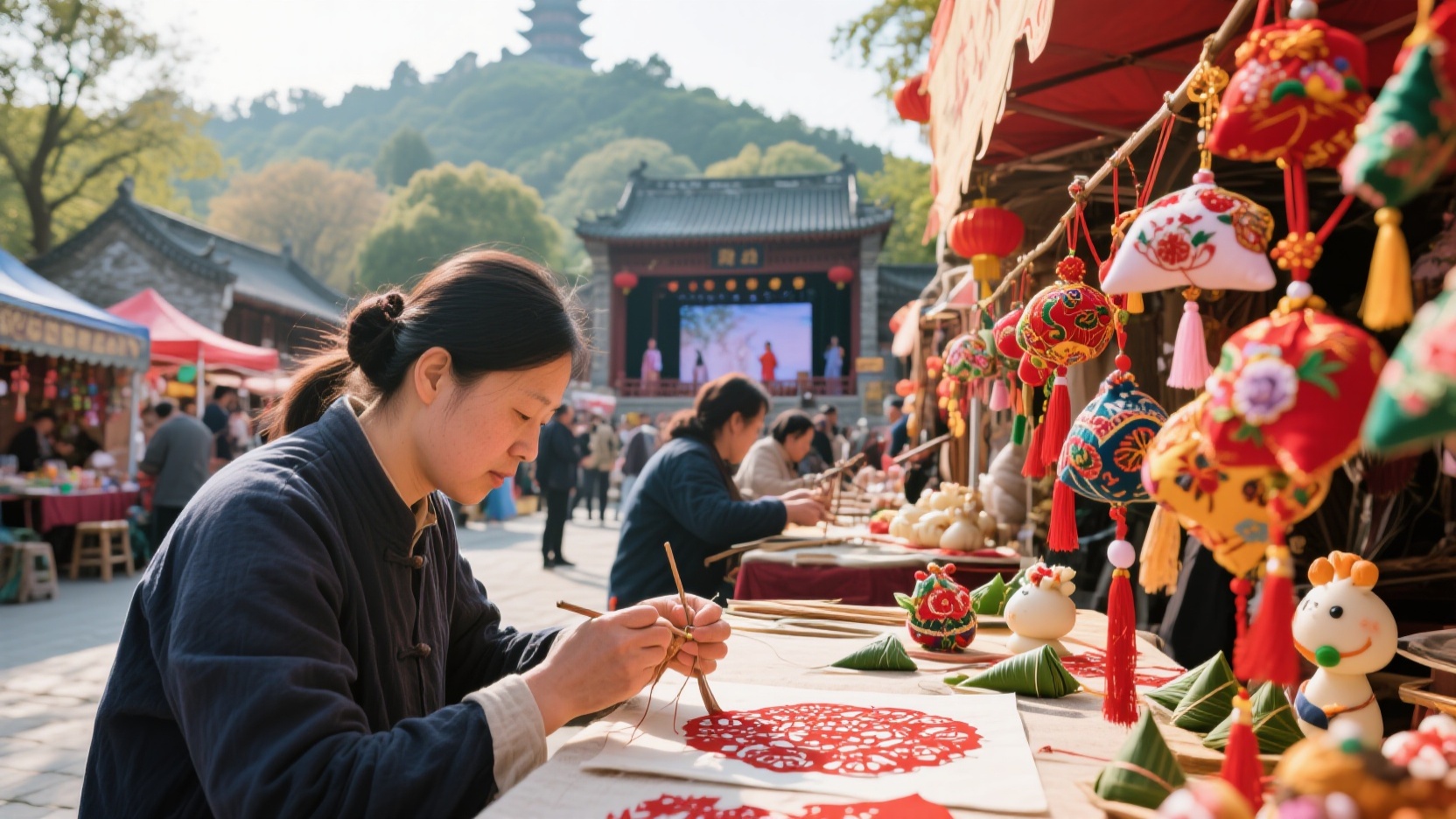
A cultural and artistic journey in Xuzhou is more than just Han Dynasty tombs and terracotta warriors. What truly captivates visitors, allowing them to linger and feel like locals for a while, is the vibrant folk festival atmosphere comprised of temple fairs, sachets, paper-cutting, and traditional folk opera. Located at the intersection of Jiangsu, Shandong, Henan, and Anhui provinces, Xuzhou's festivals blend ancient Chu-Han Dynasty traditions with folk beliefs from southern Shandong and northern Jiangsu, resulting in a distinctively eclectic character in its handicrafts and theatrical performances. The following four experiences can be arranged individually or strung together into a one-day intangible cultural heritage tour.
Yunlong Mountain Temple Fair: Folk Customs on the 19th Day of the Second Lunar Month
The Yunlong Mountain Temple Fair, centered around the birthday of Guanyin at Xinghua Temple, peaks from the 18th to the 20th of the second lunar month, now stretching from the North Gate of Yunlong Mountain all the way to Pengzu Garden. This temple fair can be traced back to the Northern Wei Dynasty, initially a pilgrimage for believers, but later gradually evolved into the largest folk market in the Huaihai region. The stalls are mostly run by artisans from the surrounding Xuzhou area, selling more than just generic tourist souvenirs: Pizhou paper lion heads, Xuzhou paper-cutting, sugar paintings, and clay toys crowd both sides of the stone-paved road. The Pizhou paper lion heads, a national intangible cultural heritage, are particularly noteworthy. Made from mulberry bark paper and bamboo strips, and then painted in bright red and green, they were once the "headpiece" for lion dances in rural areas. The experience is simple: ask a paper-cutting artist to cut a lion according to your zodiac animal, or buy an unpainted paper lion and watch the artist add the final touches. There are often makeshift troupes performing Bangzi and Liuqin operas near the fair; no tickets are sold, just gather around and listen. It is recommended to arrive before 9:00 AM, walk slowly along the stone steps of Yunlong Mountain, and find a quiet paper-cutting stall on the side slope. You can see the rhythm of the paper-cutting better than on the main road.
Huilongwo Sachet Workshop: Stitching in Memories of the Chu and Han Dynasties
Xuzhou sachets are a national intangible cultural heritage. The Cao family sachets and Mazhuang sachets both retain three-dimensional shapes, with pomegranates, tiger heads, and lucky bags being the most common. Around the Dragon Boat Festival and at weekend markets, sachet workshops are set up in the Huilongwo Historical and Cultural District. On the tables are scraps of cloth, mugwort, fennel, and mint. A piece of pomegranate-red cloth is selected, stuffed with the prepared herbs, and the opening is closed with a flat stitch. Then, beads and tassels are sewn on; the whole process takes about an hour. Common ingredients include mugwort, atractylodes, angelica, and mint, with a bitter aroma. Hanging them in summer is believed to repel insects and ward off evil. The inheritors explain that Xuzhou sachets are not flat pouches, but rather round, bulging sculptures, reflecting the aesthetic of the ancient Chu-Han region, which favors red, black, and sculptural forms. Wearing sachets during the Dragon Boat Festival to ward off disease is also associated with the "Five Auspicious Symbols" motif found in Han Dynasty stone carvings in Xuzhou. The finished sachets, with their medicinal fragrance, have a more handmade feel than machine-embroidered versions, making them suitable as small travel souvenirs.
Hubushan Intangible Cultural Heritage Market: Seventy-two Transformations of a Single Red Paper Sheet
The weekend market outside the ancient residences of Hubu Mountain is quieter than the temple fair, but more suitable for sitting down and learning a craft. Intangible cultural heritage inheritors of Xuzhou paper-cutting and Tongshan dough figurines often set up stalls here, with a square table serving as a temporary workshop. Xuzhou paper-cutting is known for its "delicate, skillful, and continuous" techniques, capable of cutting out flowers, birds, and figures without a draft; local wedding and New Year window decorations still use these hand-cut patterns, rather than machine-carved multi-layered paper-cuts. The experience begins with paper folding, first learning to cut round flowers, then the outlines of the twelve zodiac animals; a quick hand can complete two pieces in half an hour. Tongshan dough figurines use glutinous rice flour mixed with colors to sculpt small tigers, pomegranates, or opera figures, which can be steamed and taken away after shaping. The significance here lies not in the exquisite craftsmanship of the works, but in understanding the master's saying, "The skill of a single cut lies in the mind and spirit," and the old custom of offering sacrifices to the earth god in dough figurines.
Hubu Mountain Qinshu Teahouse: Listen to a "soul-stirring tune" and learn a couple of lines.
Both Xuzhou Qinshu (a type of storytelling with musical accompaniment) and Liuqin Opera are listed as national intangible cultural heritage. Teahouses in the ancient residences of Hubu Mountain often host evening performances, complete with square tables, covered teacups, a huqin (a two-stringed bowed instrument), and a pair of clappers. Summer night performances are mostly held in open courtyards, while in autumn and winter they move indoors. Listening to storytelling by a charcoal fire is a regular pastime for local elders. Liuqin Opera, known as "Lahunqiang" (meaning "soul-pulling tune") because of its octave-high endings, was once said in southern Shandong and northern Jiangsu as "listening to Lahunqiang makes you forget your father and mother." Xuzhou Qinshu is sung in the local dialect, with stories mostly drawn from folk tales and moralistic texts. The experience doesn't require formality: first listen to a section of "Lu Mengzheng Goes to the Temple" or "Drinking Noodles," then learn a couple of high-pitched endings from the performer, or play a few clapper notes. After the performance, the performers often sit under the eaves and chat, reminiscing about their early days performing on the streets.
These four experiences can be strung together in a single day: in the morning, attend the Yunlong Mountain Temple Fair; in the afternoon, make sachets at Huilongwo and browse the intangible cultural heritage market at Hubu Mountain; in the evening, listen to storytelling with musical accompaniment. If it coincides with the hottest period of summer, finish with a bowl of mutton soup. If the temple fair is not held during the festival, the sachet workshops, markets, and teahouses can be booked year-round; festivals simply bring these traditional crafts to the forefront. Spending half a day here allows you to better understand that Xuzhou's "Chu and Han culture" lives in its craftsmanship, rather than visiting ten tourist attractions.