
A 7-day, 6-night leisurely tour of Tangshan | Itinerary guides for families and retirees, featuring industrial sites, Qing Dongling Mausoleum, or wetland hot springs.
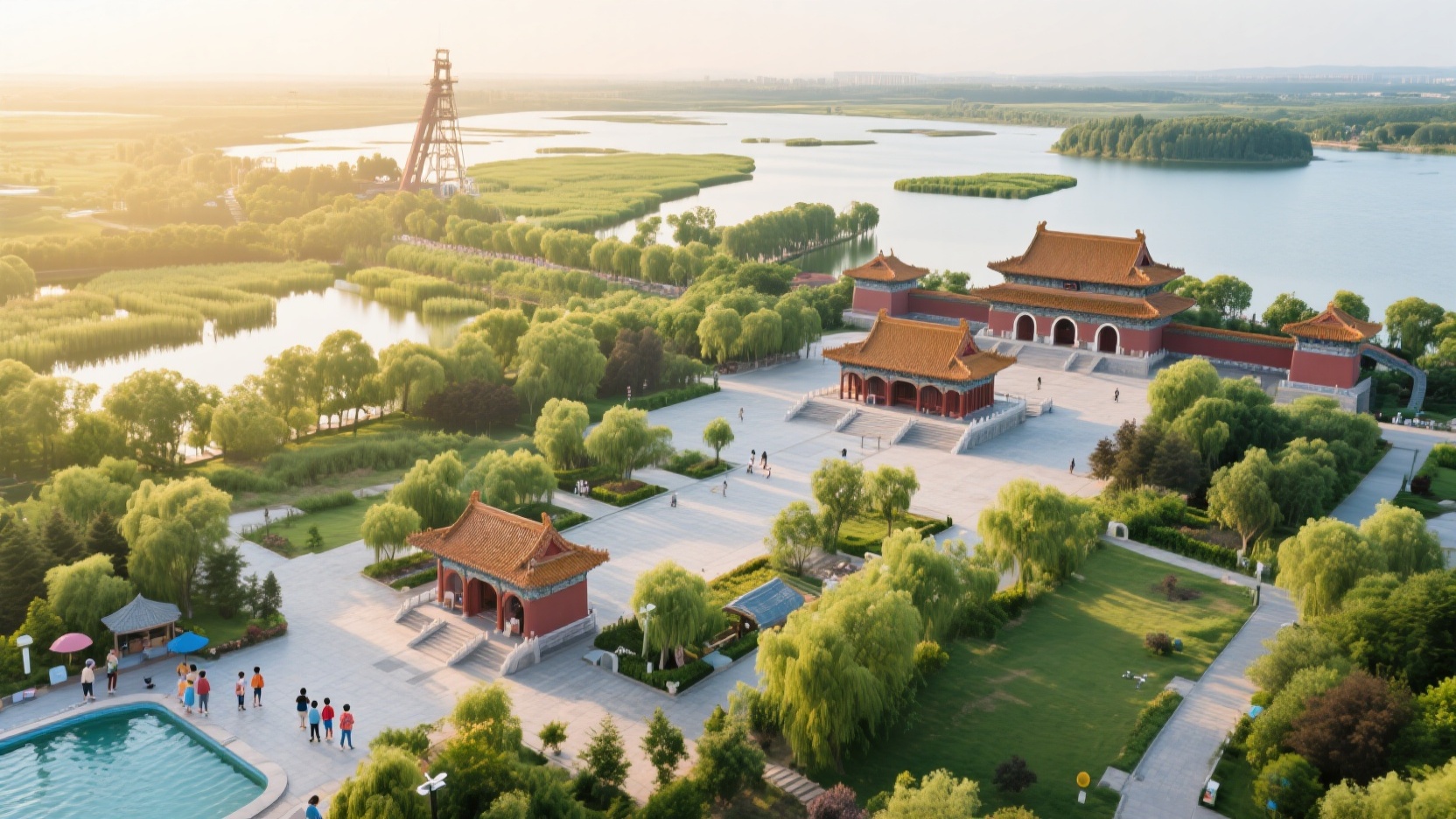
Tangshan is perfect for a leisurely trip; you don't need to pack your itinerary full. A 7-day, 6-night trip can be broken down into "3 days of industrial and cultural sightseeing in the city + 2 days of suburban excursions + 2 days of mountain retreats," with only 2-3 key destinations planned for each day, leaving the rest of the time for lunch breaks and flexibility. The following itinerary mainly involves gentle walking and shuttle bus service, making it suitable for those taking time off work, families with children, and retirees.
Day 1: After arrival, visit Nanhu Lake first, and have dinner at Tangshan Banquet.
After arriving in Tangshan city, instead of rushing to tourist attractions, we'll visit the Nanhu Scenic Area in the afternoon. Nanhu was formerly a coal mining subsidence area, but now its water surface and green spaces are well-preserved. We'll stroll along the Longquan Bay Trail from the World Horticultural Exposition entrance area; the lake is expansive, and the trail is gentle, suitable for both the elderly and children. In the evening, we'll move to Tangshan Banquet, which is both a food museum and a hub for snacks. We can try small portions of various local specialties like chess piece sesame cakes, fried dough twists, and Hao family-style baked buns, and have dinner there as well.
Day 2: Morning visit to Kailuan Mine, afternoon visit to earthquake ruins, evening visit to Peiren Street.
In the morning, visit Kailuan National Mining Park. The surface museum and underground exploration tour offer a wealth of information, providing insights into the origins of modern Chinese industry and railways. The underground passages have a few steps, so those with mobility issues can simply visit the surface exhibits. In the afternoon, go to the Tangshan Earthquake Relics Memorial Park. The memorial wall and ruins are best viewed along a quiet route, with no long uphill climbs. In the evening, if you still have energy, take a short walk in the Peiren Historical and Cultural District; the red-brick buildings are perfect for a low-intensity stroll.
Day 3-Day 4: Choose one of two branches near the suburbs
Branch A: Eastern Qing Tombs + Hot Springs. Day 3: Travel from the city to the Eastern Qing Tombs in Zunhua, spending a full day visiting the underground palace of Emperor Qianlong's Yuling Mausoleum, the mausoleum of Empress Dowager Cixi, and the main spirit path of the Xiaoling Mausoleum. The scenic area is large, but shuttle buses connect the sites, avoiding continuous uphill climbs. Overnight in the Tangquan area of Zunhua. Day 4: Enjoy a leisurely soak in the hot spring pools at Tangquan Palace in the morning, then return to the city in the afternoon. If the hot springs are open in the evening, you can watch the light and water show at Nanhu Lake. This itinerary is suitable for those interested in historical architecture and hot springs, and is also relatively rain-friendly.
Branch B: Wetlands and Ancient Towns. On Day 3, in the morning, visit Caofeidian Wetland and the Provincial Nature Reserve for Birds, observing birds along the boardwalk (avoiding areas not open to the public). In the afternoon, head to Luanzhou Ancient City and stay overnight to see the nighttime waterways. On Day 4, leisurely stroll through Luanzhou Ancient City and along the Luan River in the morning, then check out and return to the city center in the afternoon. This route focuses more on natural wetlands and the experience of a northern water town; be aware of mosquitoes in summer.
Day 5: Indoor Cultural Day in the City
In the morning, we visited the Tangshan Museum, followed by the China Tangshan Ceramic Culture and Creative Center to learn about bone china and overglaze decoration—a perfect spot for hot, rainy weather. In the afternoon, we strolled through Phoenix Mountain Park. The mountain isn't high, and the stone steps are gentle. From the pavilion, you can see the city, or you can simply walk around the park at a leisurely pace without climbing to the top. All three locations are in the city center, providing ample time for lunch and rest.
Day 6: Slow Walk at Shanyekou National Geopark
Qian'an Shanyekou National Geopark offers gentle wooden walkways and electric shuttle buses. Its conglomerate terrain is suitable for families with elderly members and children. The main tour route is recommended in the morning, with an optional visit to the Baiyangyu Great Wall in the afternoon. However, the Great Wall steps are quite steep, so it's not recommended for those with mobility issues. Overnight in Qian'an or back to the city center is an option to avoid continuous travel.
Day 7: City tour concludes, return trip
No long-distance travel is planned for the last day. In the morning, you can visit the Tangshan Earthquake Memorial Square, followed by a photo shoot on the east bank of Nanhu Lake or buying souvenirs at Tangshan Banquet. Depart early according to your return train schedule, and allow ample time to travel to the station after lunch.
Recommended gentle slope routes suitable for the elderly and children
Nanhu recommends a round trip from Gate 3 to Longquan Bay and then to the Botanical Garden; for Qingdongling, prioritize the shuttle bus plus the flat walkways to Qianlong Yuling and Cixi Mausoleum; for Caofeidian Wetland, return via the original wooden boardwalk; for Shanyekou, choose the electric cart uphill and the gentle boardwalk downhill. The continuous steps of Baiyangyu Wild Great Wall and Jingzhong Mountain are not suitable for young children or those with weak knees.
Local frequently used apps list
Use Gaode Maps or Baidu Maps for navigation and ride-hailing; use "Tangshan Travel" or "Palm Bus" for real-time bus information; use "Leyouji" and scenic spot WeChat official accounts for ticket reservations; use "Caiyun Weather" or "Moji Weather" for weather forecasts; refer to Dianping for dining options; and use 12306 for train tickets.
Clothing suggestions for rainy season and dry season
Tangshan's rainy season is concentrated in July and August, so you need to bring a folding umbrella, non-slip walking shoes, and quick-drying clothing. Spring and autumn are windy with significant temperature differences between day and night, so bring a light down jacket or windproof jacket. Winters are dry and cold with large temperature differences between indoors and outdoors, so it's suitable to wear layers. In open areas such as the Eastern Qing Tombs and Caofeidian Wetland, where it's windy near water, it's recommended to bring an extra jacket compared to the city center, both during the rainy and dry seasons.