
Don't go to the Humble Administrator's Garden to count heads | Local's firsthand experience: A list of ways to avoid the pitfalls of a 4-day, free trip to Suzhou.
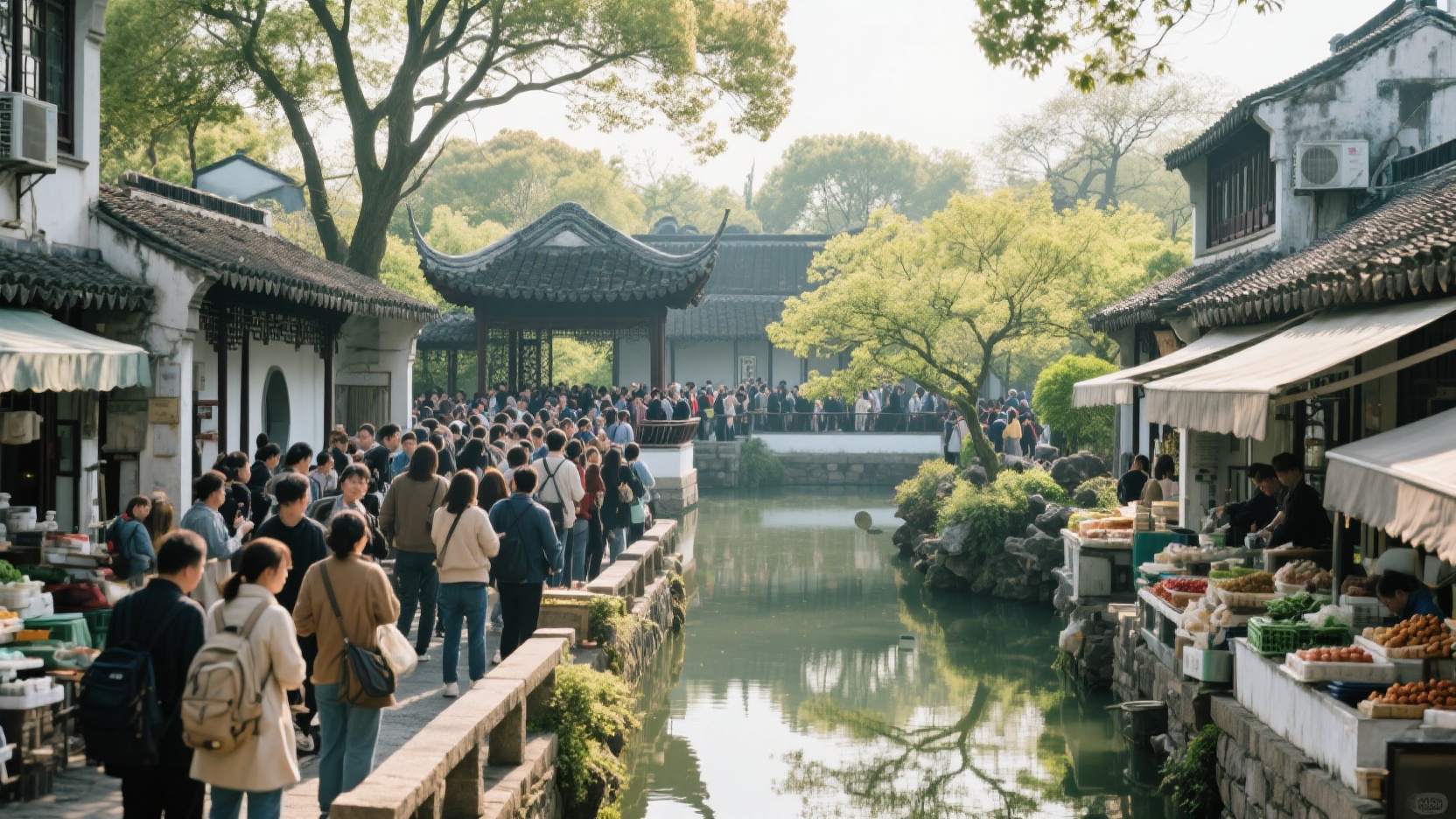
Having lived in Suzhou for five years, I dare to say this definitively: spending a whole day browsing guides for the Humble Administrator's Garden, Lion Grove Garden, and Lingering Garden is essentially making tourists spend a lot of money to see the back of their heads.
While tour groups crowded the ticket gates, local grandmothers were picking the first harvest of the day's bok choy on Fengmen Heng Street; while tourists lined up on Pingjiang Road with bamboo tubes of milk tea, an old tailor in nearby Niujia Lane had just laid out a stack of fabric under the sun. Suzhou's true character has never been hidden in its ticket prices. The following four-day itinerary, which avoids all major paid attractions and focuses on a different theme each day, might cost less than a combined garden ticket, including transportation and meals.
Why is the "free zone" closer to old Suzhou?
The paid gardens certainly have their value, but the crowds during peak season and the endless stream of anecdotes on the audio guides have long since diluted the sense of daily life of the garden owners. On the contrary, the vegetable markets, alleys, and old factories that do not charge admission still retain the most authentic Suzhou people's early to bed and early to rise, drinking tea and eating noodles, and washing clothes by the river.
Locals don't recommend going to the Humble Administrator's Garden during peak season to count the crowds, nor do they recommend squeezing your way along Pingjiang Road from south to north. If you really want to see the old town, venture into the alleys perpendicular to the main street; after walking less than fifty meters, the noise level and tourist density will drop dramatically.
Day 1: Market Day: From Fengmen Hengjie to Shuangta Market, my mouth was busier than my camera.
The first day's theme was exploring the local markets. Around 7 AM, we went to Fengmen Hengjie, not a tourist attraction, but one of Suzhou's most vibrant morning markets. Elderly people bought vegetables, sold rice cakes and dumplings, fried fish, and steamed buns; the entire street was filled with steam and the aroma of oil. Go on an empty stomach, and you can eat your way from one end of the street to the other for just a few dozen yuan per person.
At noon, I went to Shuangta Market. Entry was free, and the market and food stalls were clean and tidy, but the shoppers were still mostly local residents. I could have a bowl of Suzhou-style noodles or a plate of pan-fried dumplings and sit at the shared long table listening to the aunties chat about vegetable prices. In the afternoon, there was no need to rush. I walked along the river to the vicinity of Loumen Market and watched the everyday things like drying quilts, repairing shoes, and getting haircuts. It felt more like a trip than rushing to the market.
Day 2: University Area Day: Shiquan Street and the outskirts of Soochow University; young people don't go to tourist attractions.
While you might not be able to get into the main campus of Soochow University, don't be disappointed; the surrounding area is even more interesting. Starting from Shiquan Street, it's a popular spot for local young people during the day, with affordable snacks, cafes, secondhand bookstores, and tailor shops all mixed together, without the touristy price markups. The nearby Baibu Street and Wangxing Bridge areas are perfect for a leisurely stroll or a bike ride.
Walking to Xiangmen Bridge in the evening, the moat walkway is open to the public free of charge, offering views of the city walls, the river, and the old and new rooftops on the opposite bank. As students walk home, elderly people stroll, and joggers pass by, you suddenly realize: in the daily lives of Suzhou residents, there's absolutely no need to buy tickets.
Day 3: Transformation of Old Industrial Areas: Sulunchang and Lanyuan – New Daily Life Emerging from the Factory Buildings
On the third day, we explored another side of Suzhou. The Suzhou Cotton Mill was converted from an old cotton mill; the red brick buildings and old chimneys remain, but the interior has been transformed into a bookstore, exhibition hall, and dining area. Entry is free, and it's not crowded on weekdays, making it suitable for taking photos, or simply walking around the old buildings without doing anything else.
Also worth a visit is the Blue Sport Cultural and Creative Park, where some old warehouses have been converted into sports fields and creative spaces. Local residents often come here to play sports and walk their dogs. There's no entrance fee, and spending is very flexible; you can simply look around without buying anything. Walking along the Panmen River in the evening, the old factories and traditional houses huddled together create a rugged atmosphere rarely seen in Suzhou.
Day 4: Old Town Alleys Day: Avoiding Pingjiang Road, we explored Wuqufang and arrived at Zhuanzhu Alley.
The last day is reserved for the most intricate alleyways. Starting from Wuqufang, you'll find many small shops that locals have frequented for decades, offering affordable meals. After enjoying a bowl of noodles or wontons, head south into Tangjia Alley and Zhuanzhu Alley, where you'll find handmade palm fiber bandages, old-fashioned barbershops, and residents washing vegetables by the well—almost entirely devoid of tourists.
Further west, at Changmen Hengjie and Xizhongshi, the scale of the arcade streets from the Republican era is almost surreal. Look up at the wooden windows and clotheslines on the second floor, look down at the moss growing in the cracks of the stone slabs. There's no entrance fee, but every step reminds you: Suzhou isn't just a few enclosed gardens, but a living, breathing community.
What season and what types of people are best suited for this free-entry route?
It's best suited for spring and autumn, with comfortable temperatures and cool, humid alleyways. In spring, from March to May, the morning market offers wild vegetables and qingtuan (a type of glutinous rice dumpling); in autumn, from September to November, cycling through the alleys is even cooler. Summer is too hot, and the sparsely wooded areas of the old town are too sunny; winter is damp and cold, and one can't stay at the market or riverside for long.
This route is perfect for solo travelers on a budget, students, those who dislike queuing, and second-time visitors to Suzhou. If you're traveling with elderly people or children, you can compress it into two days, choosing only days for the farmers' market and the alleyways. Packing light, taking your time, and avoiding early mornings to see the sights are the only important things to do.
In closing: Don't ask the locals if I didn't tell you.
First, you should go to the farmers' market early, preferably between 7 and 8 a.m. After 10 a.m., many stalls will close up shop and the atmosphere will be gone.
Secondly, try not to point your phone at the elderly in the alleys. Nod and smile before passing by, as many residents don't like being directly photographed.
Third, shared bicycles are the best mode of transportation in the old city, but don't ride them into narrow alleys; it's more polite to push the bike.
Fourth, if you see people eating at low tables outside their homes, don't be curious and peek inside; that's their private living room. If you want to experience a sense of community, go sit and eat at a small noodle shop at the end of the alley.
Fifth, when dining alone, there's no need to order elaborate dishes. Buying a half-portion of pan-fried dumplings, a bowl of wontons, and a piece of cake along the street is Suzhou-style "snack freedom."
Sixth, you can skip the entrance fee, but bring a pack of tissues and some change, as some stalls only accept cash and you'll need them to wipe your mouth and hands.