
3 Days 2 Nights Solo Trip to Suzhou | Blogger's Personally Tested Safety Checklist for Effortless Solo Dining and Photography (Avoiding Common Pitfalls in Autumn)
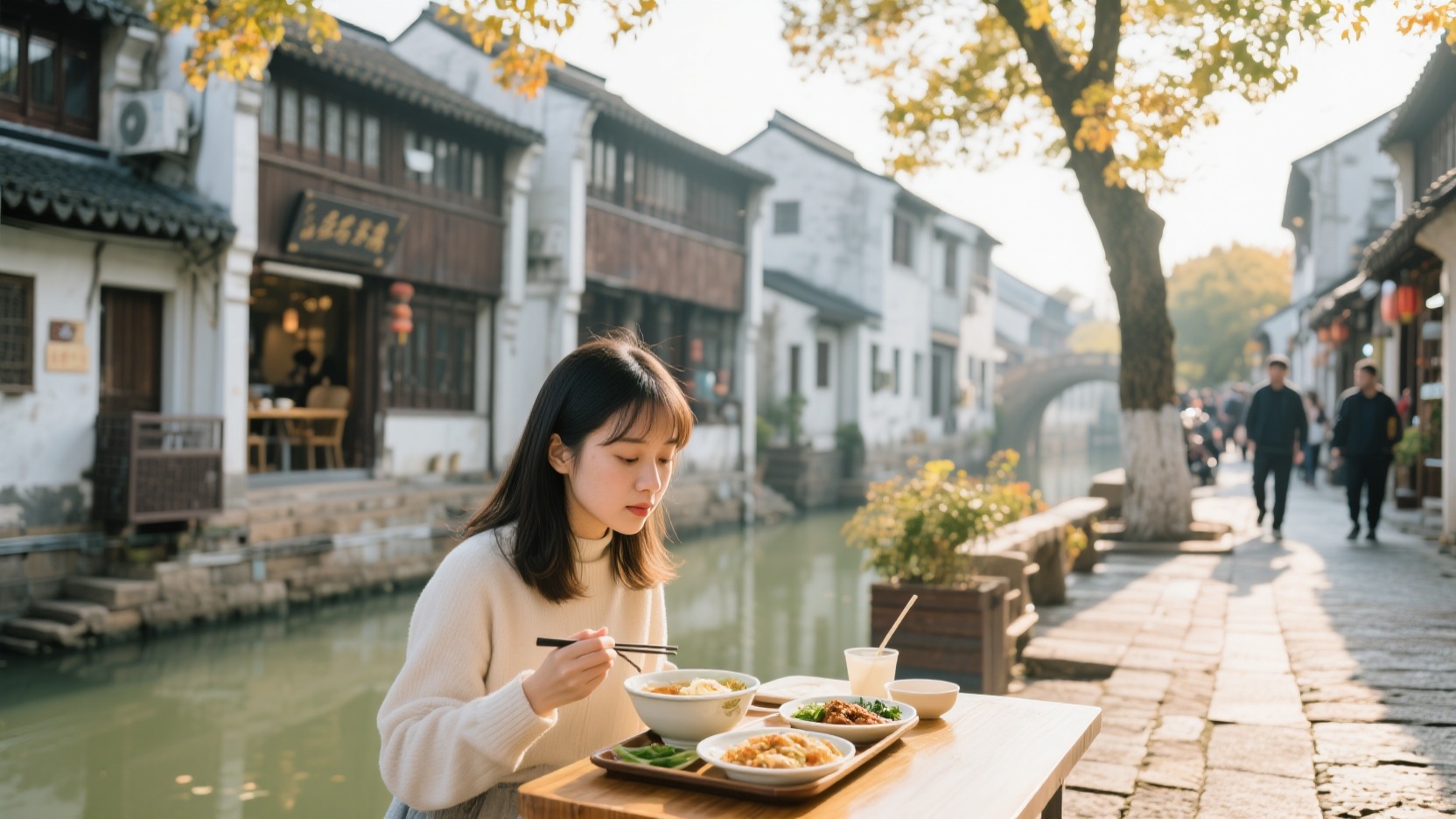
This is my third solo trip to Suzhou. The first two times, I was swept along by the crowds on Pingjiang Road and gave up after queuing for forty minutes at a popular noodle shop. This autumn, I took a different approach, prioritizing "safe accommodation, comfortable dining, great photo opportunities, and a clear mind." I retraced the steps of the outer areas of Gusu District and the lakeside of the Industrial Park, and compiled this personally tested guide, perfect for solo travelers.
Why I recommend staying in the Shiquan Street-Wuqueqiao area for your first night when traveling alone.
Many people choose guesthouses on Pingjiang Road, but after experiencing some issues, I found that the lighting in some alleys was dim after 9 pm, and I felt a bit uneasy after the tourists left. In contrast, the area from Shiquan Street to Wuque Bridge is more suitable for solo travelers: there is a high density of convenience stores, drugstores, and snack shops that are open until late at night on both sides of the main road, there are often security guards on duty at the entrances of older residential areas, the subway station is within walking distance, and you don't have to walk through long alleys to get back to the hotel.
This area has a significantly higher proportion of locals, and you can still see residents having late-night snacks at 10 pm. For those on a budget, chain hotels are an option; for a quieter environment, consider apartment-style hotels around Fenghuang Street. It's easier to find rooms with windows and individual air conditioning of the same standard compared to those on Pingjiang Road. Alternative accommodations are near the Xinghai Square subway station in the industrial park; the area is safe, but less lively at night than Shiquan Street, making it suitable for solo travelers who prefer a quieter atmosphere.
Three small restaurants I've personally tried that make dining alone less awkward
When traveling alone, the worst thing is going into a large restaurant and being "preferentially treated" as a display area. After personally testing it out, I've settled on three places: First, Rongyanglou near Shiquan Street, where the braised pork noodles with fried dumplings at the morning market are common, and sharing a table is the norm, with everyone eating by themselves, costing only a few dozen yuan per person; second, the red bean dumplings at Shuangta Market, where after buying them, you take your tray to the long table in the middle, surrounded by tourists taking photos and eating alone, but it doesn't feel out of place at all; and third, Lvyang Wonton on Fenghuang Street, where you can have wontons in a bubble soup and a side of pan-fried dumplings, and the auntie will only ask you "how many ounces do you want?" without saying much else.
It's worth noting that famous restaurants like Yaba Shengjian (哑巴生煎) with long queues aren't ideal for solo travelers. It's easy to get overwhelmed by the long lines, waiting, and getting your food alone. I skipped those places this time, and the experience was actually much better. When eating noodles, keep your phone and bag in front of you, don't hang them on the back of your chair—a lesson I learned after losing my power bank in Suzhou.
Four lesser-known camera spots where you can take photos without asking for help
The first spot is Canglang Pavilion. Around 3:30 PM, the latticed windows under the west corridor cast shadows on the white wall. Simply place your phone upside down on the stone railing and set a timer to take a picture; it's easier to get a good shot than photographing the artificial hill. The second spot is the ginkgo trees in Dinghui Temple Lane. From late October to mid-November, there are almost no tourists before 7:30 AM, and the stone path and temple gate create a natural sense of depth.
The third spot is on the lakeside next to the Dushu Lake Church. There's a flat lake rock that can serve as a natural tripod, perfect for quietly capturing the lake's reflection and sunset. The fourth is the arcade buildings in Xizhongshi, Changmen. Using your phone's panoramic mode and shooting upwards from the pillars, you can compress the old shop signs and traffic into a cinematic image, all without bothering anyone. I recommend bringing an octopus tripod; you can wrap it around railings or bench armrests, which is much more reliable than handheld shooting.
How to travel in three days and two nights: A solo travel rhythm without rushing.
Arrive at noon on the first day and check into the Shiquan Street area. In the afternoon, first go to Canglang Pavilion to relax and take photos. In the evening, take a walk around the perimeter of Suzhou Park. Have dinner at Shuangta Market and take some night photos. On the second day, have braised pork noodles at Rongyanglou in the morning, take the subway to Dushu Lake Egret Park, find lunch on the east side of the lake or return to the ancient city, walk the Xiangmen section of the ancient city trail in the afternoon, and go up the Xiangmen city wall before dark to take photos of the moat boats.
On the third day, there's no need to get up early. Go to Fengmen Hengjie to watch the locals buy groceries, have a bowl of wonton soup, and then slowly check out and leave. This itinerary avoids peak crowds at places like the Humble Administrator's Garden and Qili Shantang, and allows you to adjust your itinerary based on your energy levels. If it rains, replace Dushu Lake with the Suzhou Museum West Branch; the indoor area is also suitable for solo exploration.
Three ways to reliably group buy and find temporary companions
Traveling alone doesn't mean being lonely the whole time. The first method is to book a half-day or full-day city walk or autumn scenery tour through a reputable travel platform, prioritizing those labeled "small group, licensed, no shopping." The second method is to ask on the front desk or in the shared kitchen, "Anyone want to share a meal tomorrow?" when staying in hostels or apartments with common areas, without revealing your room number. The third method is to attend official free guided tours at places like the Suzhou Museum and gardens; after the tour, you can often naturally strike up a conversation, as long as you maintain appropriate boundaries.
It's important to note that you shouldn't easily trust day trips or low-priced carpooling offers offered by roadside vendors within the ancient city, especially private cars approaching you at the scenic area exit in the evening. If traveling alone, try to use ride-hailing services and share your itinerary with them. When choosing travel companions on platforms, only accept initiators with genuine reviews and verifiable identities to avoid bookings via private transfers.
Ten Safety Tips for Solo Travel in Suzhou
Rule 1: Upon arrival, immediately send the hotel's location and front desk phone number to family or close friends. Rule 2: Carry two fully charged power banks and a short data cable. Rule 3: Do not accept opened drinks from strangers; if approached for conversation, stand in well-lit areas. Rule 4: When returning to your accommodation at night, prioritize main roads with streetlights and avoid deserted backstreets and alleys.
Article 5: Set up emergency contacts on your phone and enable location sharing. Article 6: Keep cash separate; do not keep all documents and cards in one pocket. Article 7: When dining alone, leave the table briefly; do not touch uneaten food or drinks upon returning. Article 8: Check behind you before taking photos; do not place tripods near water railings or the edge of steps. Article 9: Check the last subway train time in advance; do not schedule overnight trips by taking taxis. Article 10: If you feel physically or emotionally unwell, return to your hotel to rest; do not force yourself to complete tasks.
The blogger concludes: Suzhou is actually great for solo travel, provided you choose areas that are "popular but not crowded," simplifying dining and photography into everyday activities. Following this checklist, a three-day, two-night trip won't require any compromises; in fact, it offers a more liberating perspective than traveling with companions. Autumn is especially recommended from late October to mid-November, when the ginkgo trees in Dinghui Temple Lane and the light and shadow at Canglang Pavilion are at their best.