
These 8 Suzhou Restaurants: A Local Must-Have List I Compiled After Three Trips (Non-Trendy, Avoid-the-Trouble Version)
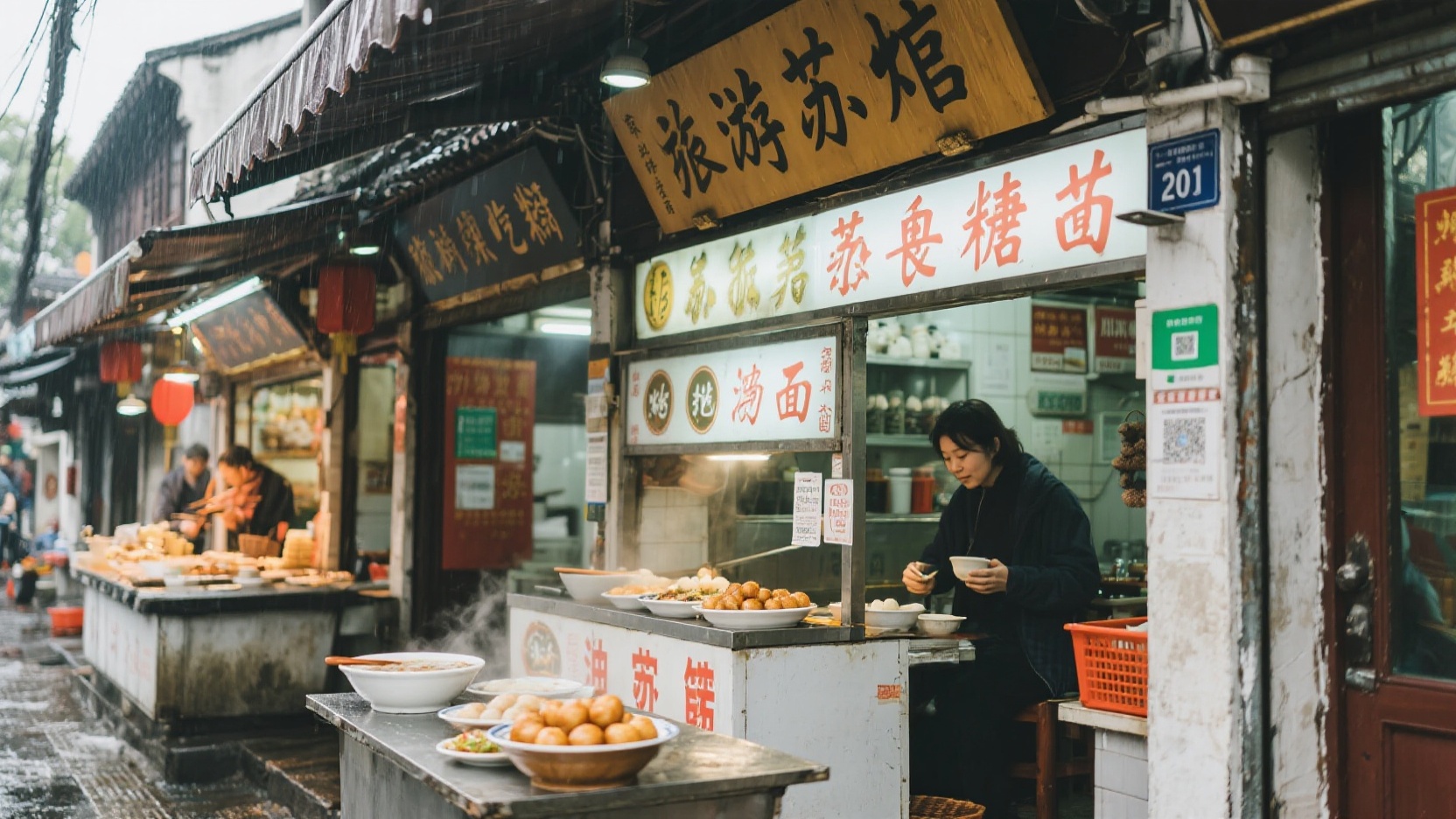
On my three trips to Suzhou, I deliberately avoided Guanqian Street, Shantang Street, and those online must-eat lists, spending my time in farmers' markets, old neighborhoods, and on rainy afternoons. It wasn't that those places were bad, but I wanted to find places where "locals would stop by for a bite after work." The following eight restaurants are not currently advertising, some even have faded names, but I'm willing to make a special trip just for them.
First trip: Navigating the market and side streets, I first bought three breakfast items.
There's a neighborhood glutinous rice ball shop on Changmen West Street, its storefront half-hidden by plane trees, only open for the morning market. Elderly locals often come in with enamel bowls, buying a dozen or more at a time. Why is it worth it? The glutinous rice balls have a soft, chewy skin that isn't mushy, and the meat filling bursts with juicy flavor when you bite into it—far superior to frozen ones. The menu features a combination of fresh pork glutinous rice balls and a radish glutinous rice ball, a sweet and savory pairing with a hint of pork fat. Don't rush off after you buy yours; the braised pork and fried fish at the adjacent deli window are usually sold out by 11:00 AM.
In the middle section of Fengmen Hengjie, there's a stall selling deep-fried dumplings. They start frying around 3 PM, with the oil fryer set up at the alley entrance. People line up with their own paper bags. The dumplings have a crispy outer layer and a chewy inside, with a meat filling that's infused with soy sauce flavor. You have to blow on them a couple of times before taking a bite, right after they come out of the fryer. On the way, you can also buy arrowhead slices and shrimp roe soy sauce from Hengjie. These two are perfect for adding to noodles or as a snack—very Suzhou-style.
There's a noodle shop in an alley behind Xiangmen Houzhuang that's only open for breakfast and lunch, with toppings stir-fried to order. The owner makes his own scallion oil, and the braised fish is a bit sweet, but it's just right when mixed with the scallion oil noodles. The signature order is to order the noodles without soup, add a piece of braised pork, and ask the owner for an extra spoonful of scallion oil. The pine flower dumplings from the pastry shop next door are worth buying a couple; they're chewy but not cloyingly sweet.
Second trip: After avoiding the tourist attractions, two handwritten menus and a mutton hot pot.
Near Panmen, there's a small family-run restaurant that only serves a few tables at lunchtime. The menu is handwritten, and the owner makes whatever he buys from the market that day. The braised eel in sizzling oil is served still hot; you have to mix it while it's hot before taking pictures. The stir-fried river shrimp are small but fresh, and a touch of vinegar enhances the flavor. It costs around 100 yuan per person, but you can tell the ingredients were just received that morning. You can buy a bag of pickled vegetables as a souvenir from the market entrance next door; it's much more affordable than the plastic containers sold in tourist areas.
There's a mutton restaurant on Baitaxi Road without a sign. In autumn and winter, they serve Zangshu mutton, but in spring they switch to cold mutton offal salad and mutton potstickers. Not many people know about it. The mutton hot pot broth needs cabbage and glass noodles added, and you can add a little chili oil on your second bowl. The cold mutton offal salad is served with plenty of cilantro; it's crisp and chewy with absolutely no gamey taste. The candied lotus root stall next door only makes a limited quantity each day; you can buy half a piece if you pass by.
There's a small restaurant serving Taihu Lake boat cuisine on the outskirts of Mudu Ancient Town, about a ten-minute walk from the scenic area. Locals drive here to eat. The salted river shrimp is seasonal; the shells are thin and the meat is sweet. The stir-fried snails in soy sauce can be asked to be a little spicy—they're great with rice. The silverfish fried eggs are a hidden menu item; they might not be listed, but just ask the owner and they'll know. Grab some Mudu jujube paste sesame cakes from the side—choose the old-fashioned paper-wrapped kind.
Third trip: Went to verify on a rainy afternoon, and only two or three shops were still open.
Next to the flower and bird market on Pishi Street, there's a sweet rice porridge stall run by an elderly woman. She only cooks one pot of red bean paste sweet rice porridge, setting up her stall at 2 PM, even on rainy days. The red bean paste is stir-fried with lard, and after stirring, it's incredibly fragrant. The osmanthus-flavored lotus root can be cut into a small piece for a sweet finish. The radish pancakes at the entrance of the nearby flower and bird market are a bit of a gamble; the vendor's opening hours are unpredictable, but the freshly fried ones are definitely worth the wait.
There's a small pan-fried dumpling shop in an old neighborhood in the industrial park. They don't do delivery; you can't even find them on online platforms. Their pork pan-fried dumplings have a thin, crispy skin and are very juicy. You have to bite a small hole first to sip the soup before dipping them in vinegar and chili sauce. The curry beef soup isn't the watery kind; it's a perfect accompaniment to the dumplings to cut through the richness. A small shop next door sells Suzhou-style mung bean soup in cups with straws; you can buy a cup to go if you're passing by.
Blogger's Summary and Tips on Avoiding Pitfalls
These 8 restaurants are perfect for a half-day itinerary: start in the morning at Changmen West Street and Xiangmen Houzhuang, have lunch at Zhuanpanmen or Mudu, then head to Fengmen Hengjie and Pishi Street in the afternoon, and finish with a mutton hot pot in the evening. The overall rhythm is "noodles in the morning, vegetables at noon, and soup in the evening," and the average cost per person per day is only around 100 yuan.
Finally, three things to avoid: First, don't queue during peak meal times. These small shops have few seats and slow service, and queuing will only kill your appetite. Second, don't just order the dish listed on the signboard; ask "What else do they have today?" for many hidden dishes. Third, remember to bring some cash. At least two or three places only accept cash or are not familiar with QR code payments, especially at sweet rice porridge stalls and cooked food windows in the market.