
During the first month of the lunar calendar, a journey through Shijiazhuang unfolds: from Gaocheng palace lanterns to Changshan war drums, four seasonal intangible cultural heritage experiences trans
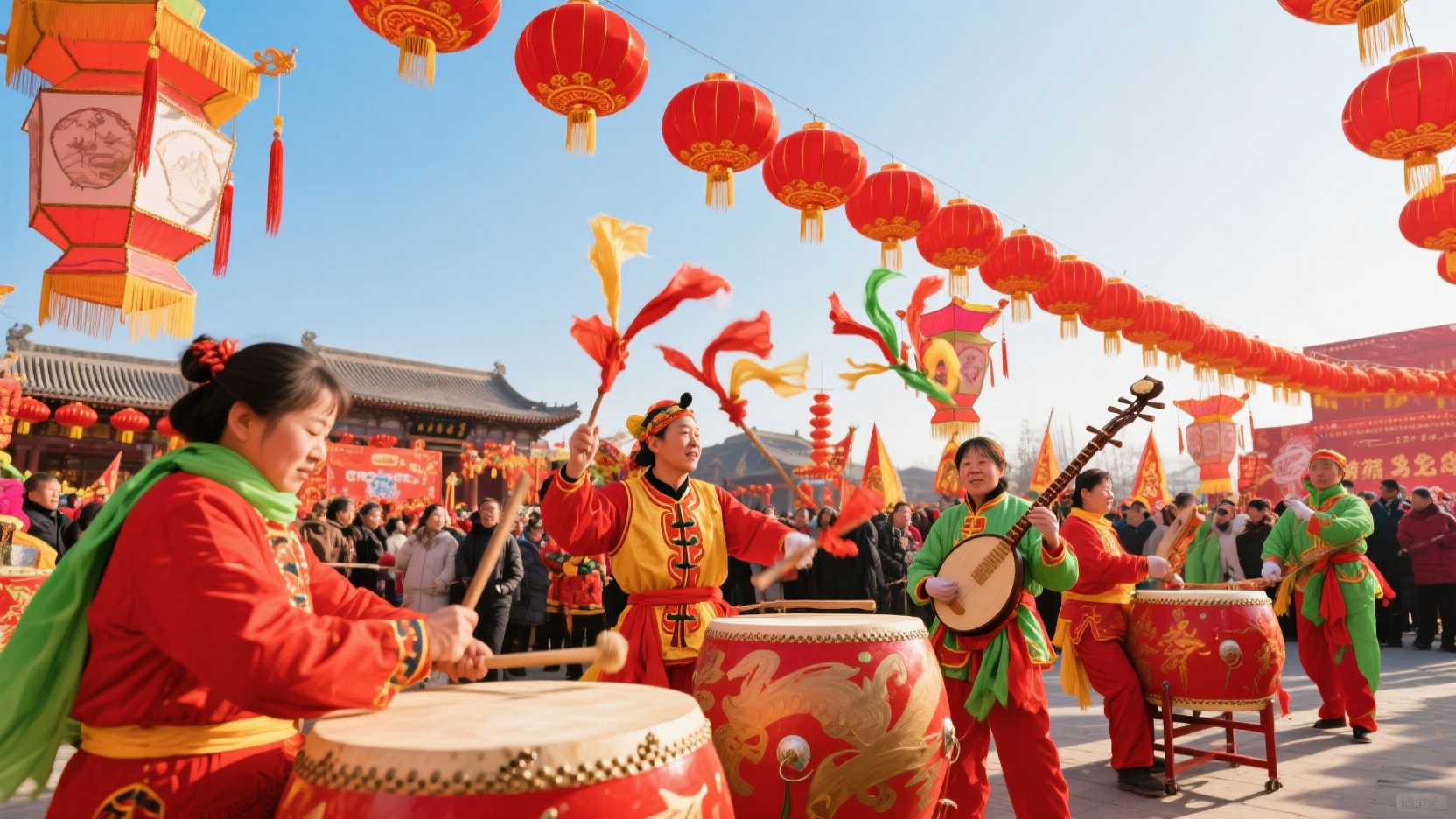
The cultural experience in Shijiazhuang doesn't have to be confined to display cases. If you schedule your visit around certain seasonal events, the war drums of Zhengding Ancient City, the lantern displays of Gaocheng workshops, the traditional paper-cutting performances in Jingxing villages, and the traditional string music in the city's opera houses can all allow visitors to sit back and feel like a local for half a day. The following four routes are arranged chronologically and are suitable for incorporating into weekend trips or short excursions.
From the twelfth lunar month to the first lunar month, Gaocheng Palace Lanterns: Making a lantern to capture the essence of the New Year.
The experience is concentrated in the month before the Spring Festival until the Lantern Festival on the fifteenth day of the first lunar month, with the Gaocheng Palace Lantern Workshop and Palace Lantern Museum being the most bustling. The process is not complicated: first, an oval frame is bent out of bamboo strips, then red silk is pasted on it, cloud-shaped gold edges are attached, and finally tassels and hooks are added. The key is the "support" step; the tightness of the bamboo strips determines whether the lantern shape is full. The cultural story can be traced back to the Eastern Han Dynasty. Legend has it that the people of Gaocheng used red silk lanterns to celebrate the harvest. During the Ming and Qing Dynasties, they were selected as tributes to the imperial court. Today, Tuntou Village still retains the tradition of "every family making lanterns before the New Year." The experience takes about two hours, and you can take one home to hang at home during the Spring Festival, giving it a more authentic feel than mass-produced souvenirs.
From the fifth day of the first lunar month to the Lantern Festival, the Zhengding Changshan War Drums: Following the drum team on a city patrol.
From the fifth to the fifteenth day of the first lunar month, Changshan war drum performances are frequently held around the South Gate and Yanghe Tower area of Zhengding. The drum formations range from a dozen to over a hundred drums, with drummers dressed in ancient costumes, their drumsticks flying like battle flags. Visitors can arrive early and ask the drummers for basic rhythms during breaks, such as "The Crow Perches on a Branch" and "Breaking Through the Heavenly Gate Formation." The experience isn't about how loudly the drums are played, but about stepping correctly in the procession: the left foot strikes the beat hard, while the right foot moves lightly to the rhythm. As the procession passes through the city gate, the drumbeats echo between the brick walls, creating a completely different atmosphere. Changshan war drums originate from Zhengding's ancient name, Changshan, and are related to the hometown of Zhao Yun from the Three Kingdoms period. The drum scores retain many military formation elements. Participating in a performance during the first lunar month is like memorizing the rhythm of the ancient city with your own body.
January Temple Fair - Jingxing Flower Dance: Learn a "Shoulder Twist and Wrist Flip" routine
Jingxing La Hua (a type of folk dance) is concentrated in the ancient villages of Jingxing, such as Tianchang Town and Yujia Stone Village, during the temple fair in the first month of the lunar calendar. Performers hold colorful fans or umbrellas, walk with a "slanting gait," continuously twist their shoulders, and flick their wrists. Beginners don't need to pursue the complete routine; they should first learn three basic movements: shoulder twisting, wrist flicking, and slanting gait. The trick is to relax the upper body, allowing the power to travel from the waist to the shoulders, and then to the wrists, naturally creating a undulating motion like carrying a load on a mountain path. La Hua is said to have been circulating in Jingxing since the late Yuan and early Ming dynasties. It was originally a folk "street parade" performance, later absorbing elements of Shanxi and Hebei Yangge (a type of folk dance), forming a style that combines strength and gentleness. Joining a La Hua troupe and walking along half a village lane will give you a more engaging experience than just watching from the outside.
Weekend Routine in Shijiazhuang: Sitting Backstage at the Opera House
Shijiazhuang silk string opera performances are mostly held on weekends or during festivals, and can be seen at silk string opera theaters and traditional folk art societies in the city. It is recommended to arrive half an hour before the start of a short opera to watch the actors apply their makeup, headgear, and costumes backstage. The hands-on experience usually starts with painting a face mask or learning a set of water sleeves: the water sleeves emphasize "shaking, raising, and flicking," which seems easy but actually requires the use of the shoulders and back. Veteran performers will explain the rhythmic patterns and dialect pronunciation of silk string opera. Shijiazhuang silk string opera is a native vocal style of southern Hebei, retaining the charm of Yuan opera's "stringed singing," and the lyrics often contain local slang. Sit down and listen to an excerpt from "The Empty Seal Box" or "The White Robe," and then try to learn a line of dialogue; you'll understand why old opera fans say, "When the silk string opera sounds, my heart is at ease."
These four events don't need to be completed all at once: making palace lanterns in the twelfth lunar month, watching war drums and performing flower-pulling in the first lunar month, and listening to traditional stringed instruments on weekdays and weekends. Each experience is limited to half a day. The key is not to complete a piece or learn a routine, but to get into the local people's seasonal rhythm.