
These 8 seasonal flavors of Shenzhen | A list I've personally tested and dared to share after chasing the seasons all year (not the trendy ones)
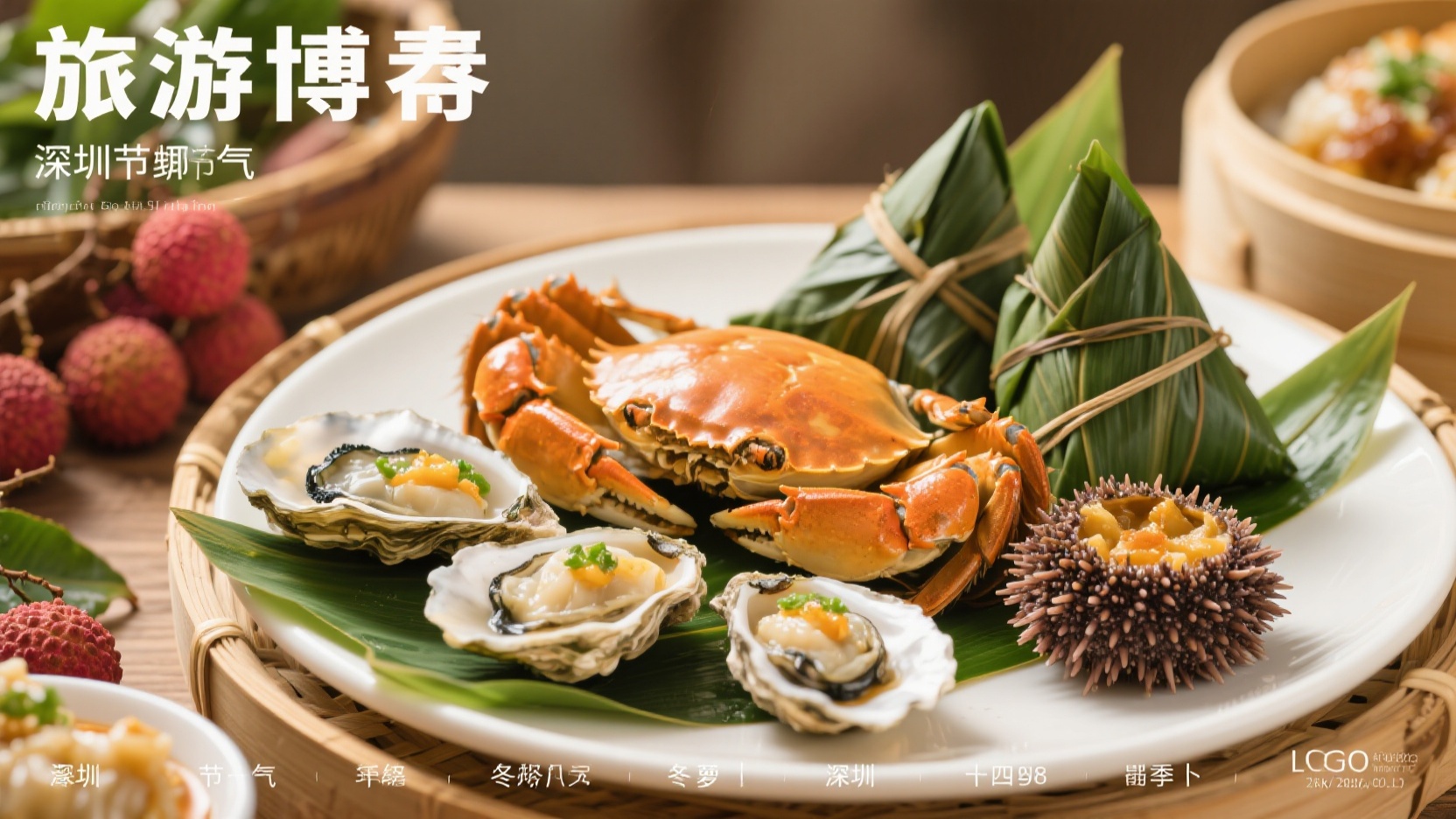
The biggest mistake I made in finding good food in Shenzhen was blindly following trending food lists. Later, I spent a whole year traveling between Dapeng, Shajing, Gongming, and Nanshan, eating my way through wet markets and following the rhythms of local grandmothers, before I dared to say I'd grasped the basics: the truly unique flavors of Shenzhen aren't found in chain restaurants, but rather in the gaps between the solar terms like Qingming, Summer Solstice, Autumn Equinox, and Winter Solstice. Below are eight dishes I've personally tested and compiled according to the seasons; each one is a prime example of a dish whose flavor changes drastically after a certain point in time.
Springtime from Qingming to Dragon Boat Festival: Mugwort cake with sea urchin, a bite of wild mountain flavor and a bite of sea flavor.
In the Hakka villages of Shenzhen around the Qingming Festival, the mugwort shoots are just beginning to sprout along the field ridges, and local grandmothers are already out picking them with bamboo baskets. Mugwort cakes are a sign of Qingming; only the tenderest part of the mugwort is used, blanched and then kneaded with glutinous rice flour to a dark green color, wrapped around dried radish, peanuts, and sesame seeds. Biting into one releases a wild, slightly bitter aroma, followed by a sweet aftertaste. Locals traditionally let it cool for a few minutes after steaming to allow the outer layer to tighten, then enjoy it slowly with a cup of light tea. After Qingming, the mugwort fibers become coarser, and the bitterness intensifies, making it impossible to achieve that "soft but not sticky" texture.
Also catching the tail end of spring are the sea urchins of Nan'ao. From March to May each year in the lunar calendar, the purple sea urchins of Nan'ao in Dapeng are at their fattest, and local fishermen go out to sea at dawn to open them. Sea urchin rice dumplings are a hidden gem, only available before the Dragon Boat Festival. They consist of glutinous rice, black-eyed peas, salted egg yolks, and freshly opened sea urchins, wrapped in bamboo leaves and steamed, resulting in a sweet and savory flavor with a hint of sea breeze. Pure sea urchin fried rice requires even more precise control of the heat; the sea urchin is added last, stirred while still half-cooked, allowing you to taste its "molten" center in every bite. Once this season is over, the seawater temperature rises, the sea urchins release their essence and become thinner, and locals refuse to order them anymore.
Summer – From Summer Solstice to Great Heat: Lychees should not be picked overnight, and yellow crabs should be steamed.
Summer in Shenzhen isn't about checking the thermometer, it's about watching the Nanshan lychees come into season. A week after the summer solstice, the Nanshan Nuomici and Guiwei lychees reach their peak flavor. The Nuomici has thick flesh and a small seed, cloyingly sweet; the Guiwei has a fragrant osmanthus aroma, a delicate sweetness with layers of flavor. Locals are extremely particular about eating lychees – "not left on the branch overnight," ideally picking them in the orchard early in the morning while the shells are still glistening with dew. I tried buying them in the afternoon and putting them in the refrigerator that evening, and the aroma was half gone by the next day. So, if you visit Nanshan during this season, be sure to include a meal of "lychees under the tree."
Even rarer than lychees are the Fuyong butter crabs. These crabs are a "miracle of oil transformation" among mud crabs; the crab roe melts into golden-yellow oil under high temperatures, covering the crab's body. They only appear from May/June to August in the lunar calendar, peaking around the time of the Great Heat (a solar term). Local gourmets have only one way to eat them: steam the whole crab, without cutting or washing it, allowing the steam to extract the butter. After opening the shell, first suck out the crab oil, then eat the crab meat. Butter crabs are scarce, and many restaurants don't list them on their menus; you need to confirm with the owner in advance. After the Mid-Autumn Festival, the crab oil turns into crab roe, and the taste is completely different.
Autumn – From the Autumn Equinox to Frost's Descent: The North Wind Rises, Oysters Are Fat and Cured Meats Are Fragrant
As soon as the Autumn Equinox arrives, oysters take over the dining tables of Shajing residents. Shajing is known as Shenzhen's "Millennial Oyster Town." The oysters raised in ponds store nutrients rapidly as the seawater cools in autumn and winter, resulting in crisp, flavorful meat. Locals are quite restrained when eating oysters; their first choice is simply blanched, dipped in a little soy sauce to enjoy the original flavor. If they want a stronger aroma, they bake them with ginger and scallions, but never add excessive spice to mask the freshness. Oyster porridge is especially delicious; the oysters are added just before the porridge is finished cooking, and the heat is turned off after a few seconds, leaving the oysters with a tender, crisp texture. If you order large, plump oysters in Shenzhen during the summer, they are most likely not local oysters; locals will say it's because of the "low water season."
As soon as the north wind blows, the cured meats of Gongming and Songgang are displayed. Gongming sausages are short and firm, with a perfect balance of lean and fat, and a subtle hint of Fenjiu liquor flavor. Songgang cured ducks are made from Muscovy ducks and air-dried until the skin is glossy. When locals are too lazy to cook in autumn and winter, they steam a few slices of sausage and place them on top of rice, letting the cured oil seep into the rice grains; braised taro with cured duck is especially tender and absorbs the sauce. These kinds of cured meats can only be easily dried in Shenzhen's dry northerly winds; cooking them in southerly winds will cause them to become damp and moldy, so they only appear in large quantities from the autumnal equinox to the winter solstice.
Winter Solstice to Minor Cold: Steamed Radish Cake and Nourishing Chicken with Yellow Wine
In Shenzhen during the Winter Solstice, white radishes are at their sweetest in the markets, and Hakka people begin making radish cakes. The wrappers are made of glutinous rice flour, and the filling consists of shredded radish, dried shrimp, cured pork, and celery segments. After steaming, the cakes are soft and chewy, then pan-fried until golden brown on both sides. The white radishes, after being touched by frost, have less fiber and a sweet flavor, perfectly complementing the oily aroma of the cured pork. Many local Hakka restaurants only sell these around the Winter Solstice; they become hard to find after the Lesser Cold solar term. Don't rush to eat them; the freshly cooked radish cakes will be scalding hot. Bite into one and blow on it to release the hot steam, allowing the filling juices mixed with the sweetness of the radish to burst forth.
Often served alongside radish cakes is a pot of Hakka-style chicken stewed in yellow wine. Although Shenzhen winters aren't cold, they're damp, and locals emphasize nourishing the body after the winter solstice. The stew is made with homemade glutinous rice wine, old ginger, and free-range chicken, resulting in a rich, warming broth. The typical way to eat it is to first drink the soup, then eat the meat, with the chicken dipped in soy sauce for added flavor. In the villages of Dapeng and Pingshan, people also make rice cakes and "pen cai" (a traditional Cantonese dish) for the winter solstice, but chicken stewed in yellow wine is the most common dish in ordinary households. Even if you miss the period from the winter solstice to the minor cold, yellow wine chicken is still available, but the atmosphere paired with radish cakes lacks the festive feel of the season.
In summary, Shenzhen's seasonal delicacies have an inherent "countdown" quality, with almost every dish tied to a specific solar term, sea surface temperature, and northerly winds. My personal experience tells me: don't look by administrative region, look by time window. Go to Dapeng during Qingming Festival, Nanshan during the Summer Solstice, Shajing during the Autumn Equinox, and Pingshan during the Winter Solstice—it's more reliable than any food street.
Practical Tips: 1. Sea urchin rice dumplings and mugwort cakes from Nan'ao are most popular from Qingming to Dragon Boat Festival. It's recommended to go to Dapeng in the morning for more choices before noon. 2. During lychee season, it's best to wear long pants and mosquito repellent when visiting Nanshan Orchard. Pick and eat them fresh, and don't overindulge, as it can cause internal heat. 3. Butter crabs must be ordered in advance. When you arrive, ask "Do you have butter crabs today?" Don't just look at the menu. 4. Boiled oysters from Shajing are the best way to see their quality. Local food stalls will have "oyster-opening nights" in autumn and winter. If you go at noon, the selection may not be complete. 5. Radish cakes are most reliable around the winter solstice. Many Hakka restaurants make them in limited quantities, so it's recommended to arrive before noon. 6. These times are popular but parking is difficult. Take the subway or a taxi if possible.
Eating according to the seasons is the right way to experience a city.