
Avoid Paid Attractions in Shanghai | Local Testimonial: Four Days of Free Travel – Explore Markets, Universities, and Old Factories – Don't Be Fooled by Travel Guides!
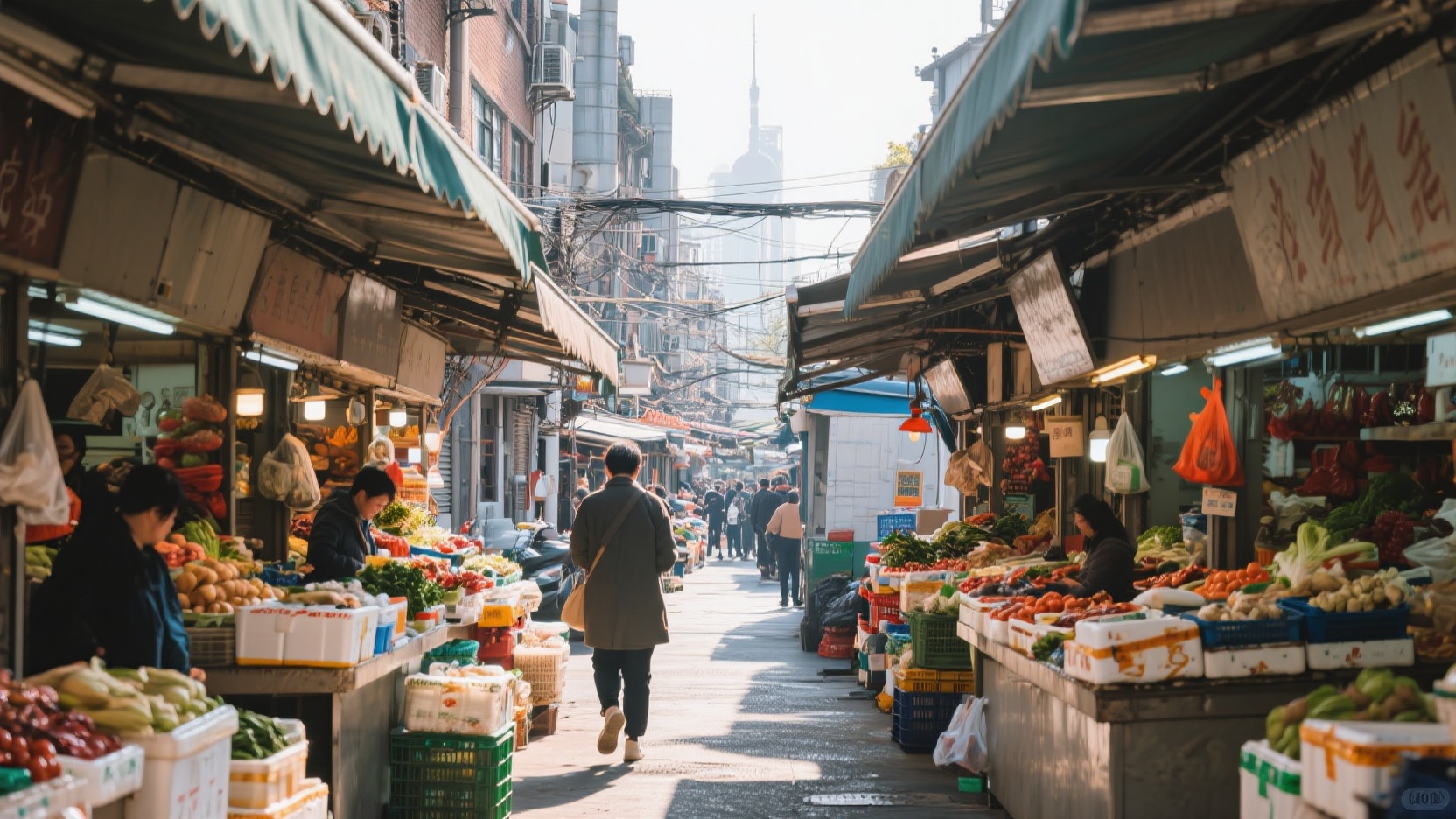
I've lived in Shanghai for seven years before I dare to say this: the Bund and the Oriental Pearl Tower are the two places in this city that are least like Shanghai. It's not because they're not beautiful, but because when everyone is raising their phones from the same angle, the real Shanghai has already slipped away behind you in those deserted streets, markets, and old factories.
This four-day itinerary avoids buying tickets to major tourist attractions and skips those staged photo spots that make you feel like you're in Europe. It's perfect for solo travelers to stroll, eat at their own pace, and wander into side streets whenever they feel like it. If you're on a budget and dislike noise, you can copy this itinerary directly.
Day 1: Delving into the community farmers' market, even more Shanghai-style than the City God Temple.
Avoid the over-photographed trendy farmers' markets; they're now packed with people holding coffee and cameras, and the real shoppers have long been squeezed onto the next street. Choose a regular neighborhood market, preferably arriving before 9 a.m., when the air is filled with the aroma of fermented bean curd, fried dough sticks, and cooked food wafting from the stalls.
The best thing about shopping at a market alone is that you can buy things in small quantities: a freshly made scallion pancake, half a box of freshly sliced fried fish, a few water chestnuts still covered in mud. If the vendor sees you really want to try them, they'll readily show you how to cut and heat them. There are no tourist trap prices here; a breakfast plus snacks can be quite satisfying for just a few dozen yuan per person.
After you've finished browsing, don't rush off. Stand for a while at the fruit stalls and small grocery stores outside the market. You can hear the most authentic Shanghainese dialect and see how local residents choose their vegetables and haggle over prices. This level of detail is something no paid tourist attraction can offer.
Day 2: Around the university, we ate at the old local restaurants.
I often go to the vicinity of Tongji and Fudan Universities, not because the school gates are particularly beautiful, but because the restaurants, used bookstores, and copy shops that have been around for many years near the back gates of the schools form a daily ecosystem that can thrive even without filters. Students leaving get out of class, residents buying groceries, and the elderly taking walks—three lines of movement overlap here.
One can leisurely stroll along the school wall, stopping at any shop with a full load of shared bikes to grab a bowl of noodles or a rice bowl. These shops are mostly inexpensive, with oily menus, but the taste is closer to the everyday life of locals than the chain restaurants in shopping malls. Don't deliberately look for the "must-eat" recommendations online; just follow the locals wearing flip-flops.
Another advantage of living near a university is the abundance of public spaces. In the afternoon, you can easily find an open green space outside the campus to sit for a while and watch people playing chess by the roadside. No one will bother you, and no one will pressure you to make a purchase.
Day 3: Transformation of an old industrial area; romantic, free-to-use ruins along the Huangpu River.
The most underrated scenery in Shanghai actually lies in the old industrial areas along the Huangpu River. Along the Yangpu Riverside and Xuhui West Bund, old factories, gantry cranes, railway tracks, and flood control walls have been preserved and transformed into free public walkways. Here, there are no human walls like on the Bund, but you can see a more powerful urban fabric.
I recommend going after 3 PM, taking a leisurely walk along the river or riding a shared bike. The wind blows from the river, and the red brick walls of the old warehouses and the distant high-rises overlap, like a city documentary without subtitles. Many areas don't even have fences; there are only joggers, fishermen, and dog walkers.
Don't treat this place as a backdrop for photos; it's better suited for quiet contemplation. If you get tired, sit on the concrete steps by the river and watch the ferries come and go. You'll discover that the most luxurious things in Shanghai are often free.
Day 4: Old town alleys, avoid Tianzifang to count heads.
If you're already standing at the entrance of Tianzifang, I advise you to turn around. That's no longer "Old Shanghai," but rather a touristy shopping street just like any other in the country. The truly authentic alleyways, still bearing traces of daily life, are hidden in the unmarked side streets of old Nanshi and Hongkou districts.
When walking through alleyways alone, remember: only use public passageways, don't push open doors, don't peek out, and don't disturb residents. You only need to look at the clothes drying on bamboo poles, the water basins by the door, the moss in the corners of the walls, and the aroma of soy sauce wafting in the evening. They are not exquisite, but they are all real.
I also enjoy buying a bottle of water at the little tobacco and cigarette shop at the alley entrance and chatting with the owner for a bit. These shops don't have touristy prices, and no one will pressure you to buy souvenirs. For an individual, this undisturbed freedom is more precious than any "immersive experience."
Zero-entry-rate connections: treating the subway and ferry as tourist attractions
I hardly needed to take a taxi during these four days. Shanghai's subway system is dense enough, and ferries are a hidden gem of transportation that tourists often overlook. Choose a ferry line on the Huangpu River, swipe your public transport card to board, and stand at the stern to watch Lujiazui slowly shrink. It's quieter and cheaper than sightseeing cruises.
I often take the ferry connecting Nanshi and Pudong, which is most comfortable in the evening. After boarding, don't rush for seats; go straight to the open deck and watch the sunset paint the river orange. Most of the passengers are locals riding electric bikes home; this mix is what makes Shanghai so special.
The subway can also be a "mobile observation deck." For example, on the surface sections of the line, you'll see old residential areas, overpasses, and old neighborhoods undergoing renovation flashing past the window. Instead of looking down at your phone, treat your commute as an opportunity to observe the city.
In closing: 6 hassle-free tips I didn't tell you, so don't ask the locals.
1. Don't book hotels near tourist attractions. Stay in older neighborhoods within the inner ring road; you'll find local breakfast stalls right outside your door in the morning, and it won't be noisy at night. 2. Use a public transport card or mobile payment code for transportation. Choose regular ferry routes; there's no need to take sightseeing cruises.
3. It's best to arrive at the market before 9:00 AM; after 10:00 AM, many cooked food stalls will have very little left. 4. Don't ride shared bikes deep into old alleyways; it's easy to get lost and there's a risk of scratches. Lock your bike at the alley entrance and walk in—it's much safer.
5. Weekdays are the best time to visit areas around universities and old industrial zones; weekends are even more crowded. 6. Learn the Shanghainese phrase "谢谢侬" (thank you), and you'll receive more patience and smiles in alleyways, markets, and on ferries.