
Sanya Slow Travel with Parents | 5 Days 4 Nights Personally Tested and Tested Checklist to Avoid Common Pitfalls (Including 20 Packing Tips and Medication Reminders)
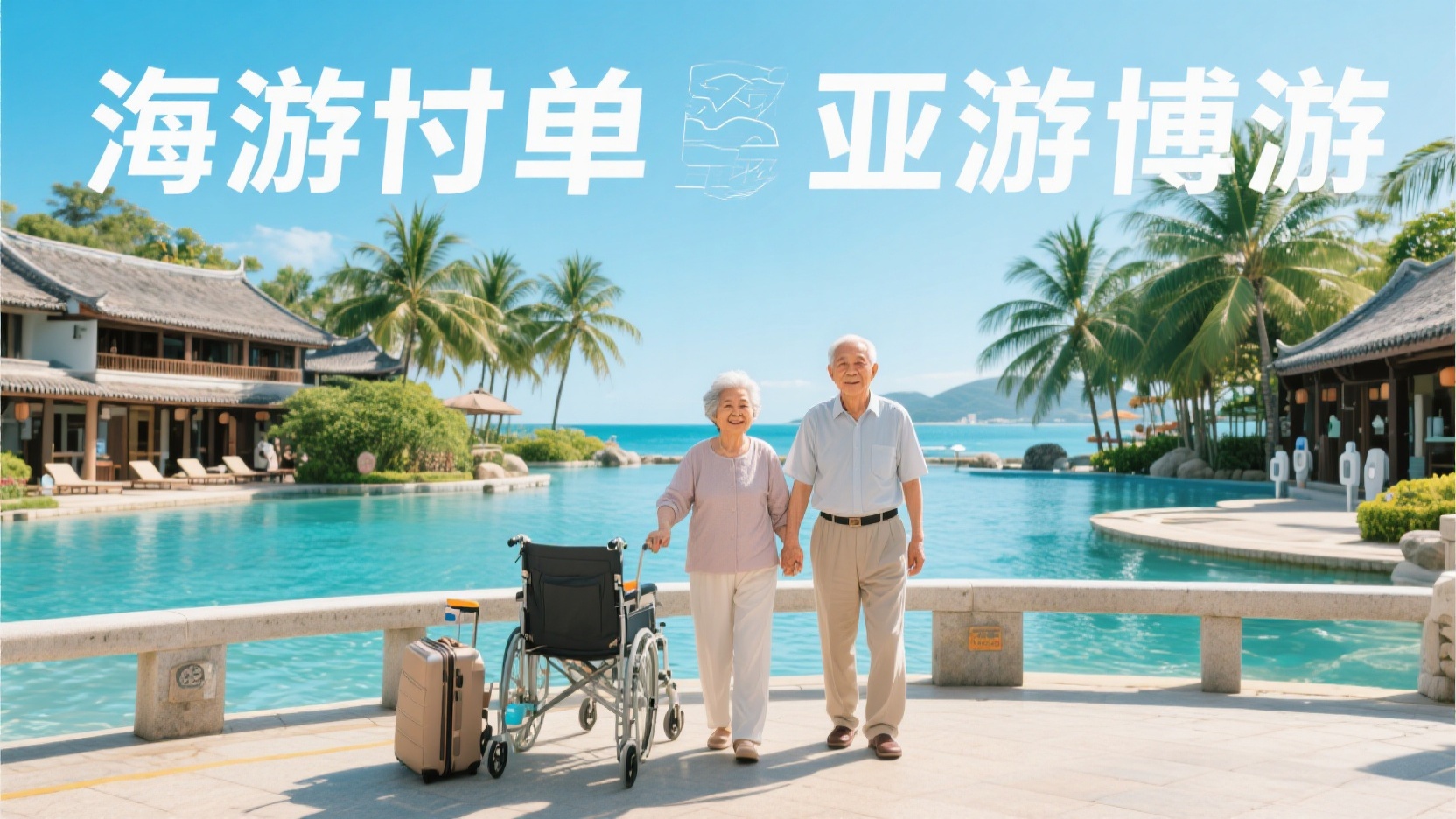
I spent five days in Sanya with my parents. Each day I only planned one or two places to visit, returning to the hotel for a two-hour nap at noon – without fail. Three years ago, I overscheduled in another city, and my mother's old knee injury flared up. Since then, I've made a rule for myself: when taking elderly people out, I first check the straight-line distance to hospitals and the density of toilets, then look at the scenery. This post won't focus on trendy tourist spots; it will only record the truly useful, low-risk, slow-paced travel experiences for seniors during these five days.
1. Choosing a bay and accommodation: First look at the hospital and elevator, then the sea view.
Sanya Bay and Dadonghai are my top choices. The roads are flat, the amenities are well-developed, and they're all within a 15-20 minute drive of any hospital in the city center. Yalong Bay and Haitang Bay are more suitable for young people's vacations. Many hotels there are too large, requiring you to walk through a garden from the lobby to your room, which could be a burden for parents with mobility issues. The coastal walkway east of Haiyue Square in Sanya Bay has continuous barrier-free access, allowing wheelchairs to be pushed along the way, and there are public restrooms every few hundred meters, which is crucial.
I only consider three key criteria when choosing a room: whether the elevator goes directly to the lobby and the room, whether the breakfast restaurant is within a five-minute walk from the room, and whether the nearest level-two or above hospital is within a twenty-minute drive. A sea view is acceptable, but these three criteria are non-negotiable. We stayed in the same room for four consecutive nights to minimize the physical exertion of packing each day. In the room, I also check the bathroom's non-slip mat and shower seat first; if they're missing, I ask the front desk to provide them.
II. Daily Rhythm: One hour in the morning, return to the hotel at noon, and go out again in the evening.
For five days and four nights, we left home at 9 a.m. every day and returned to the hotel before 11:30 a.m., taking a two-hour nap every noon without fail. After 3 p.m., we decided whether to go out again based on my parents' condition. In the evening, we only took walks on the flat trails near the hotel, each no more than 800 meters. I kept the total number of steps I took each day between 4,000 and 6,000; my parents would get noticeably tired if they walked more than 6,000 steps.
Here's a suggested itinerary for the day: Day 1: After landing, spend only 20 minutes walking along the beach near the hotel in the afternoon; Day 2: Visit the shady section of Coconut Dream Corridor in the morning, return to the hotel for lunch and rest at 11:00 AM, and then go out again to watch the sunset at 4:00 PM; Day 3: Choose either the hot springs or the ancient town; Day 4: Visit Dadonghai Square in the morning, and rest in the afternoon; Day 5: Return home after lunch. This way, you'll visit no more than two key attractions each day, so your parents won't feel rushed.
3. Day 3: Choose one of two options: hot springs or the ancient town, depending on your parents' condition that day.
The third day was a rest day for the entire trip. I gave my parents two options: spend half a day soaking in a hot spring hotel, or take a leisurely stroll through Yazhou Ancient Town. The criteria for deciding wasn't which was more famous, but rather the quality of their sleep the previous night and the condition of their knees that day. My parents ultimately chose the hot spring because their knees were tight from walking too much at the beach the previous two days, and the hot water provided significant relief.
If I choose the ancient town, I'll go after 3 PM to avoid tour groups, only walking along the main street's flat sections, and avoiding old houses with many steps. If I choose the hot springs, I'll confirm beforehand whether the changing area has benches, non-slip mats, and handrails, and whether there are continuous handrails around the pools; these details are much more important than the number of pools. Regardless of which option I choose, I'll only allocate half a day, returning to the hotel for a rest in the afternoon as usual.
IV. Personally tested specific locations suitable for senior citizens and tips on avoiding pitfalls
What's suitable for seniors isn't necessarily must-see attractions, but rather places with plenty of shade, easy seating, and gentle slopes. Based on my own experience, the Coconut Dream Corridor in Sanya Bay, the coastal section of Dadonghai Square, and the Linchunling low-lying trail (excluding the hiking section) all meet these criteria. The Coconut Dream Corridor offers a pleasant sea breeze after 5 PM, with ample seating, making it a favorite spot for my parents to sit and watch the sunset.
Avoid these pitfalls: Nanshan Cultural Tourism Zone is famous but very large, requiring transfers by electric cart and a lot of walking. If your parents are not physically fit, either only visit the Guanyin statue area or skip it altogether. Wuzhizhou Island pier has a hilly terrain and long queues for boarding, making it unsuitable for elderly people with knee problems. The Xiaodonghai reef area is slippery, so it's not recommended to take your parents there. The Tianya Haijiao scenic area has a long trail; it's advisable to only walk to the vicinity of the wedding photography platform and then turn back, rather than trying to walk the entire length.
V. Eating and using the restroom: Details more important than attractions
When taking the elderly out to eat, I skipped all the trendy restaurants and those with long queues, opting only for those within a five-minute walk of the hotel, with air conditioning and handrails in the restrooms. We ordered mainly soups, steamed dishes, and soft staple foods, avoiding raw marinated foods, iced drinks, overly spicy foods, and fish with bones. Most seafood processing shops in Sanya require walking through slippery seafood markets, so I didn't take them there even once on this trip.
Before each trip, I mark the locations of public restrooms along the way on a map. There are restrooms every few hundred meters along the Sanya Bay trail, as well as at the scenic area entrance and visitor center. Even so, I still remind my parents after each stop, "Use the restroom as soon as you see one, don't wait." The biggest anxiety for seniors when traveling isn't not seeing the scenery, but not finding a restroom. Paying attention to this detail greatly increases the sense of security throughout the trip.
VI. Blogger's Summary + 20 Packing Items for Seniors When Traveling and 5 Types of Commonly Used Medications Reminder
My biggest takeaway from the five days was: slow and steady wins the race. Skipping one stop each day, taking a two-hour lunch break, and researching hidden safety precautions like hospitals, elevators, and restrooms beforehand is far more effective than any travel guide. Below is a checklist I prepared before departure and revised upon return; I recommend saving a screenshot.
20 items to pack for seniors traveling: 1. ID card; 2. Medical insurance card; 3. Chronic disease medical record summary; 4. Emergency contact card; 5. Non-slip soft-soled shoes; 6. Light jacket; 7. Sun hat; 8. Sunglasses; 9. Knee pads; 10. Folding cane or hiking poles; 11. Folding cushion; 12. Insulated water bottle; 13. Tissues and wet wipes; 14. Emergency diaper pad; 15. Medicine box; 16. Blood pressure monitor (if needed); 17. Blood glucose meter (if needed); 18. Reading glasses; 19. Power bank; 20. Hotel business card or location card.
Five categories of commonly used medications: Category 1: Cardiovascular and antihypertensive drugs; divide into daily doses and carry with you. Category 2: Hypoglycemic drugs and insulin; pay attention to refrigeration and timing with meals. Category 3: Joint pain relief patches and oral analgesics; the dampness at the beach can easily trigger old injuries. Category 4: Gastrointestinal medications and oral rehydration salts; prevent traveler's diarrhea. Category 5: Cold and fever reducers and antihistamines; the large temperature difference between indoors and outdoors and abundant vegetation in Sanya can easily trigger rhinitis or chills. Keep all medications in their original packaging and instructions for easy verification during security checks and medical visits.