
A Stroll Behind Deer City: Eight Spiritual Corners of Sanya's Lesser-Known Culture
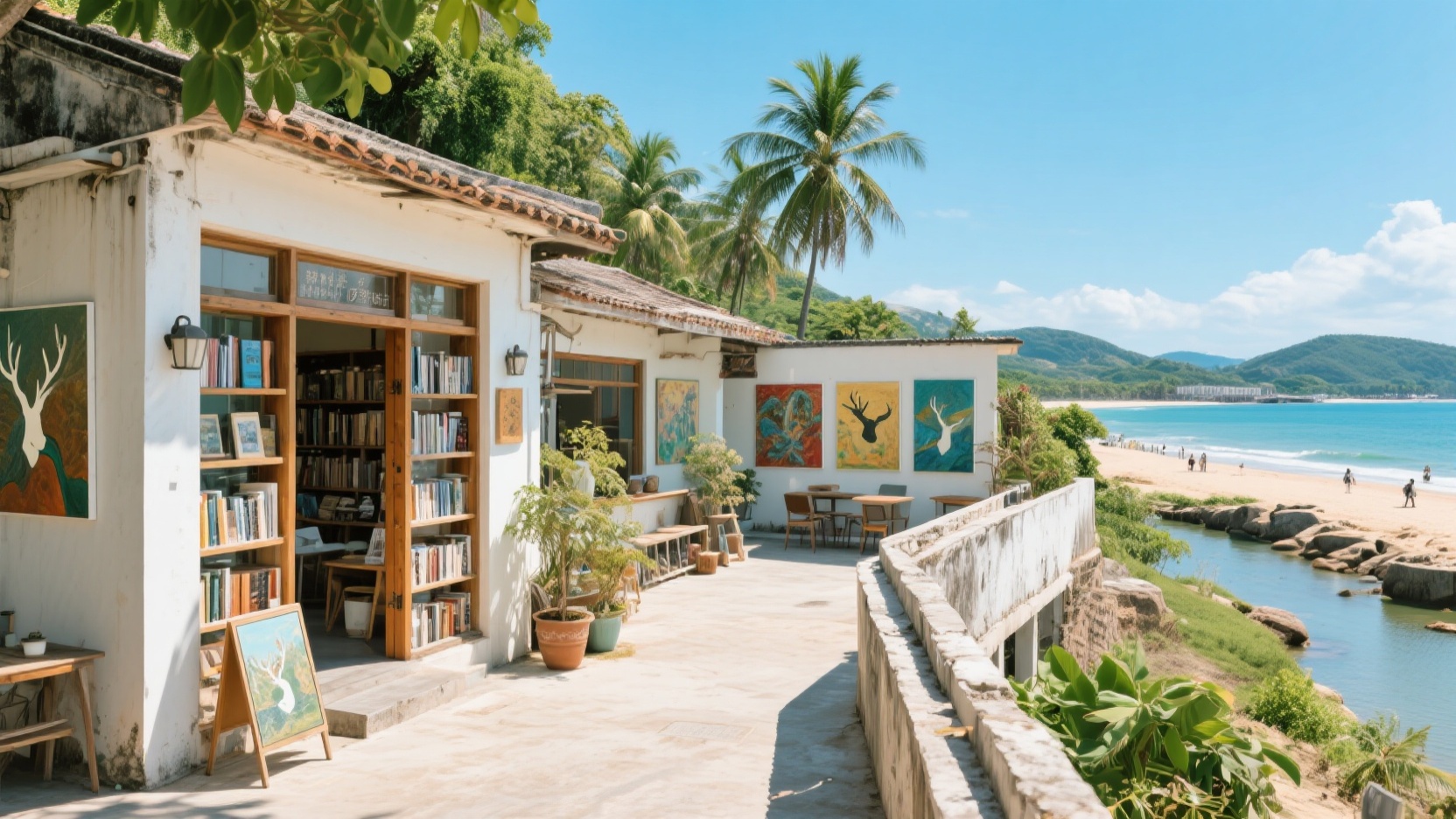
Sanya's cultural fabric extends beyond its bays and scenic spots. Away from the tourist routes, in older communities like Linchun River, Hongsha, and Lizhigou, a cluster of independent spaces transformed from old buildings is forming a pedestrian-friendly cultural thread. This route doesn't focus on a large number of sightseeing spots, but rather allows you to spend half a day to a full day exploring bookstores, art galleries, antique warehouses, and old factories, witnessing how local creators preserve another side of life in this island tourist city.
I. Echo Bookstore: Old Books and Local Documents by the Linchun River
Echo Bookstore, located on the ground floor of a residential building on Linchunhe Road, has a narrow storefront, but its bookshelves extend all the way to the attic. The store primarily features Hainan local chronicles, South China Sea island studies, and secondhand literature, with a small selection of independent publications. The ambiance is more like a private study, with old wooden floors and ceiling fans creating a cool atmosphere. Highlights include the "Hainan Island Special" bookshelf by the window and the owner's handwritten book recommendation cards. For photography, it's recommended to take advantage of the side lighting around 3 or 4 pm, shooting from a low angle at the corner of the attic stairs to capture the depth of the bookshelves, or framing old book covers alongside the coconut trees outside the window.
II. Haiyu Private Art Museum: Artistic Blank Space on the Peninsula
Haiyu Art Museum is nestled in a hillside community. The exhibition space is small, with permanent exhibitions primarily featuring Hainan-based oil paintings, mixed media, and small installations, occasionally including solo exhibitions by resident artists. The space's most distinctive feature is its abundance of white space; the white walls and concrete floors make the artworks the sole focal point. Highlights include the floor-to-ceiling window wall facing the inner courtyard and the catalog area where visitors can browse. For photography, it's recommended to wait until afternoon when natural light diffuses into the exhibition hall, capturing a silhouette of someone walking past the long window, or using the projections of the artworks to create a diagonal composition.
III. Hongsha Old Warehouse: A Time Specimen of Dock Life
The old warehouse near Hongsha Wharf is a converted two-story residential building, filled with furniture, fishing gear, enamelware, and ship timber components from the 1970s and 80s. It's not an elaborately arranged retro space, but more like a repository of wharf life. Highlights include walls covered with old doors and windows, rows of glass floats, and old Sanya photo albums to browse in a corner. For photography, it's recommended to use the warm yellow indoor lighting contrasted with the cool skylight outside, focusing on capturing the geometric lines of the old doors and windows and the translucent layers of the glass floats.
IV. Lizhigou Old Sugar Factory Cultural and Creative Park: A Complex Space Within Industrial Heritage
The cultural and creative park, transformed from the old sugar factory in Lizhigou, retains the original red brick workshops, chimneys, and truss structures. The interior is divided into design studios, small exhibition halls, and weekend market areas. Compared to mature cultural and creative parks in first-tier cities, this place is more raw and allows you to better appreciate the industrial scale of the factory buildings. Highlights include the unadorned red brick walls, the long public tables converted from old conveyor belts, and the light strips formed by the translucent roof panels. For photography, it's recommended to stand along the central axis of the workshop and use symmetrical composition to create a sense of spatial extension; the silhouette of the chimneys against the sunset at dusk also makes for great shots.
V. Slow Boat Café: An editorial space in the Jinjiling community
Slow Boat Coffee Shop is nestled in a quiet alley in the Jinjiling community. During the day, it sells coffee, and in the evenings, it occasionally transforms into a small sharing session or independent film screening venue. The shop regularly changes its themed desks, displaying books, magazines, and vinyl records related to the current topic. With a community living room vibe, its clientele mainly consists of nearby residents and freelancers. The highlights are the handwritten menu, themed desks, and a self-made map of independent spaces in Sanya. For photos, a window seat is recommended, capturing the coffee cup, the open book, and the people riding by on electric bikes outside – this adds to the everyday feel of the alleyway.
VI. South Gallery: A Small-Scale Curatorial Experiment at the Foot of Luhuitou Mountain
South Side Gallery is located in a small, single-story house with a courtyard at the foot of Luhuitou Mountain. While not large, its curatorial focus is clear: marine ecology, island migration, and young photographers. Exhibitions typically change every three to four weeks, sometimes with works hung directly on the courtyard wall. Highlights include the outdoor exhibition lines that interact with the courtyard, and limited-edition, handcrafted catalogues by the artists. For photography, it's recommended to use the shadows of the trees in the courtyard as a foreground before sunset to capture details of the artwork interwoven with natural light; indoors, take low-angle shots to showcase the contrast between the canvas frames and the concrete walls.
VII. Night Ship Bookstore: A dark reading room upstairs in the shopping street
Night Boat Bookstore is located on the second floor of an old building in the shopping street; you need to turn into the alley and go up a narrow staircase to find it. The bookstore focuses on literature, poetry, and social sciences, with deliberately dim lighting and a small lamp at each seat, resembling a late-night reading room. Highlights include a wall of poetry collections categorized by publisher, and handwritten notes left by readers inside the books. For photography, it's recommended to use the partial light from the lamps to capture the hands turning pages or the arrangement of book spines, avoiding flash and preserving details in the shadows to better showcase the space's atmosphere.
8. Baiyu Studio: Handmade Crafts and Woodwork in an Old Factory Building in Haipo Village
Baiyu Studio is a renovated old factory building in Haipo Village, combining woodworking, plant dyeing, and small exhibitions. The space retains the cement floor and iron-framed windows, with an extra-long workbench in the center, surrounded by piles of wood and semi-finished products. Highlights include a plant-dyed fabric sample wall where visitors can try their hand at it, and a furniture series pieced together from old ship timber. For photography, it is recommended to take a panoramic shot of the workbench through the iron-framed windows, using natural light to highlight the wood texture; side shots of people sitting by the window doing their crafts are also easy to take good photos.
These small, specific spaces are scattered among Sanya's old communities and factories, not far from each other, yet they conceal the everyday life of an island, different from the narrative of seaside tourism. Measure the spiritual corners of this city with your footsteps.